
How to Catch Tautog: Gear, Bait and Technique
Last verified:
By BCRods
Quick facts
- Where
- Jetties, wrecks, reefs, pilings and rock
- Best seasons
- Spring and fall; seasons vary by state
- Typical rod
- Short, heavy, fast: 6 to 7 foot medium-heavy to heavy
- Best baits
- Green or white crabs, sand fleas, clams
Tautog, also called blackfish or tog, are strong, structure-hugging fish that crush shellfish with their teeth. They reward anglers who fish close to the rocks and who accept losing some tackle. This guide covers where tautog live, the gear that survives them, the baits and techniques that work and how to treat a slow-growing fish with care. Tautog seasons and size limits differ by state and have been under review, so always check your state’s current rules guide.
Know the fish
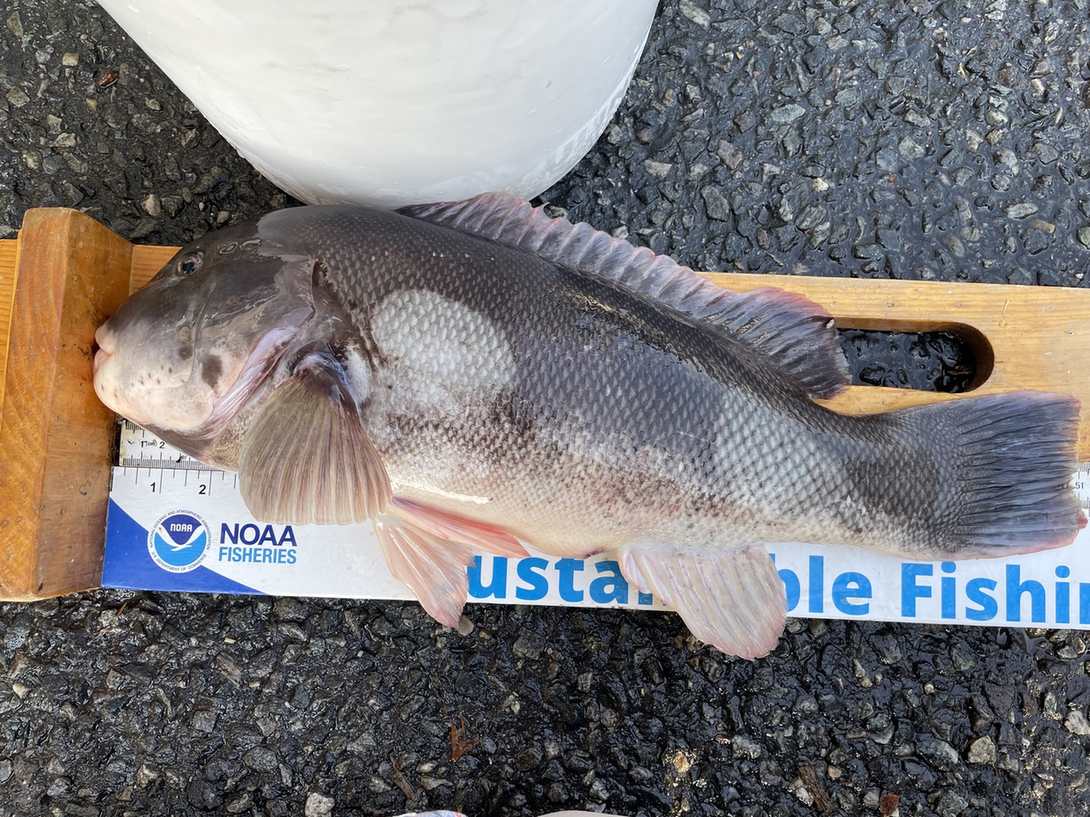
A tautog is a stout, dark gray to black fish with thick white lips and strong crushing teeth. Large males develop a white chin patch. They feed on mussels, crabs and barnacles, and they stay close to a home site on hard structure. They are relatively sedentary, slow-growing and long-lived.
According to the Atlantic States Marine Fisheries Commission (ASMFC), tautog range from Nova Scotia to Georgia and are most abundant from Cape Cod to the Chesapeake. Adults leave their home sites by day to feed and become torpid in cold water. South of Long Island they use wrecks, jetties, reefs and shellfish beds. They mature at 3 to 4 years, can live more than 30 years, and more than 90 percent of the harvest is recreational. ASMFC’s 2025 update lists the Delaware-Maryland-Virginia stock as overfished with overfishing occurring, and it has been considering new management measures.
Where to look
Tautog live on rock, wrecks, mussel beds, concrete and reef material, usually in 10 to 60 feet inshore and deeper on offshore wrecks in winter. Jetties, artificial reefs, bridge-tunnel rock islands and pilings are the classic spots. They sit tight to structure and bolt into crevices when hooked. They prefer moderate current and cool water, and they bite best in clear water. Fish within a few feet of the structure, because tog do not roam far from it.
Tackle that fits
Rod. A short, heavy, fast rod, roughly 6 to 7 feet and medium-heavy to heavy, pulls fish out of the rocks before they dive into them. A very stiff butt prevents snags, a sensitive tip shows the bite, and a short handle helps in tight jetty spots. Guides should resist abrasion.
Reel and line. A 4000 to 6000 spinning reel or a small conventional reel with a strong drag. Many anglers use 30 to 50 pound braid and a 30 to 50 pound fluorocarbon or heavy mono leader, because barnacles cut line. These are typical setups, not requirements.
Hooks and rigs. Strong 3/0 to 5/0 octopus or circle hooks on a one- or two-hook tog rig, with just enough weight to hold bottom, often 2 to 4 ounces inshore and more in current. Use hooks that bend before they break, and expect to lose rigs.
Baits and lures
Green crabs and white crabs are the standard baits, with sand fleas and clams as alternatives. Halve or quarter the crab and hook it through a leg socket or the shell edge so the point stays exposed. Keep the bait tight to the structure. A fresh bait for each drop helps, and a bait straight from the bag can spook fish in clear water.
Tog jigs and crab-pattern jigs work for vertical jigging with small lifts. Dark colors suit clear water and brighter colors suit stained water.
Three techniques
Jetty tog fishing. Check the tide and surge first, and choose rocks you can reach safely at mid to lower tide while wearing cleats. Tie a tog rig with enough weight to hold bottom. Lower the bait to the rock face or crevice instead of casting far, and keep a tight line with the rod tip high. At the first tick or weight, reel down and set the hook hard, then lift immediately to keep the fish out of the rocks.
Wreck or reef fishing from a boat. Anchor up-current of the structure so the bait drifts onto it. Use enough weight to stay vertical. Drop the bait to the bottom, reel up a turn and hold near the structure. Lift the fish immediately and keep pressure so it cannot reach the wreck.
Piers and pilings. Fish along pilings and rock bases with a short leader and compact rig. Drop the bait straight down beside the structure and lift the fish out quickly, using a heavy leader.
Seasons and conditions
Tautog seasons vary by state, and many close for part of the spring and summer. Fish are often on shallower structure in spring, prime in fall as water cools and moving to deeper wrecks and reefs in winter, when access is limited. Fish at slack to moderate current and avoid heavy surge on jetties.
Common mistakes
- Using a light rod and losing fish in the rocks.
- Fishing with a slack line, which hides the tick of a bite.
- Using too much weight, or a bait straight from the bag, in clear water.
- Fishing too far from the structure.
If you are not getting bites, move closer to the structure, switch crab type, reduce the sinker weight or fish a different tide. Bring extra rigs.
Handle fish with care
Tautog are slow-growing and long-lived, so limit your take, release large fish quickly, support them in the water and do not squeeze the belly.
Tautog in Delaware
Delaware’s tautog fishing is on the inlet rocks and the artificial reefs. See the Indian River Inlet and artificial reefs guides. In DNREC’s October 29, 2026 report, a tackle shop said keeper tautog were showing up at the inlet on sand fleas, and anglers at the Masseys Landing pier were catching them too. Tautog limits and seasons are not published on this site yet, so check the Delaware Fishing Guide, or the rules and license guide.
Build the rod to the water
A rod for the rocks needs a stiff butt, a sensitive tip and guides that survive barnacles. Tell us where you fish and what you target, and we can build the rod around it.
In Maryland
Maryland closes tautog to harvest for part of late spring and changes the daily limit by season. The 2026 rules we verified are in the Maryland rules guide, and the inlet and piers are covered in the Ocean City guide.
In Virginia
Virginia manages tautog through VMRC. We have not published the season or limits, so check VMRC. See the Virginia rules guide.
In New Jersey
New Jersey lists four separate tautog windows with different bag limits, and says nothing in its table about the dates between them. The New Jersey rules guide shows the windows we verified, and the Cape May and Island Beach guides cover the jetties where tautog are fished.
Fishing for it by state
- Tautog (Blackfish) Fishing in Delaware (Delaware)
Frequently asked questions
What is the best bait for tautog? +
Crabs, usually green or white crabs cut in halves or quarters, are the standard. Sand fleas and clams also work.
Why do tautog anglers lose so many rigs? +
Tautog live in crevices and snag-filled structure, and they dive into it when hooked. Expect to lose some rigs.
Sources
- ASMFC: Tautog (accessed October 24, 2026)
- 2026 Delaware Fishing Guide (PDF) (accessed November 1, 2026)