
New Jersey Dock Tales: Red Knots, a Concrete Ship and Shore Fluke
Last verified:
By BCRods
Dock Tales are researched stories from the waters in these guides. They are written by BCRods from published sources. They are not Adam’s stories and they are not first-person fishing experiences. The three New Jersey tales below rest mostly on one detailed source each, and each page says which source it uses and what we could not confirm. If you have a better source for any of them, we would like to see it.
Why a tackle shop tells stories
Fishing water has a history, and the history changes how you fish it. The birds on Delaware Bay explain why surfcasters leave the beach in May. A shore fluke program explains why a 16 inch fish is legal in one spot and not another. A concrete ship explains why a pile of rock and wreckage sits at the edge of the water at Cape May. We write these stories to give anglers the background to a place, and we hold them to the same rule as the guides: if we cannot source a claim, we leave it out or say so.
Tales you can read now
- A Bay Fed by Horseshoe Crab Eggs. Every spring red knots stop on Delaware Bay beaches to eat horseshoe crab eggs, a stop that depends on the crabs. In 2026 biologists counted more than 30,000 of the birds at the peak, still a fraction of the 1980s. It belongs with the Delaware Bay shore guide, since the crab spawn is also why surfcasters leave the beach in May.
- A Shore Fluke Program Built on One Park. Island Beach State Park lets shore anglers keep a 16 inch fluke, two fish, while the rest of New Jersey keeps 18 inch fish. The state’s program page describes the first season in 2014. It ties directly to the Island Beach guide.
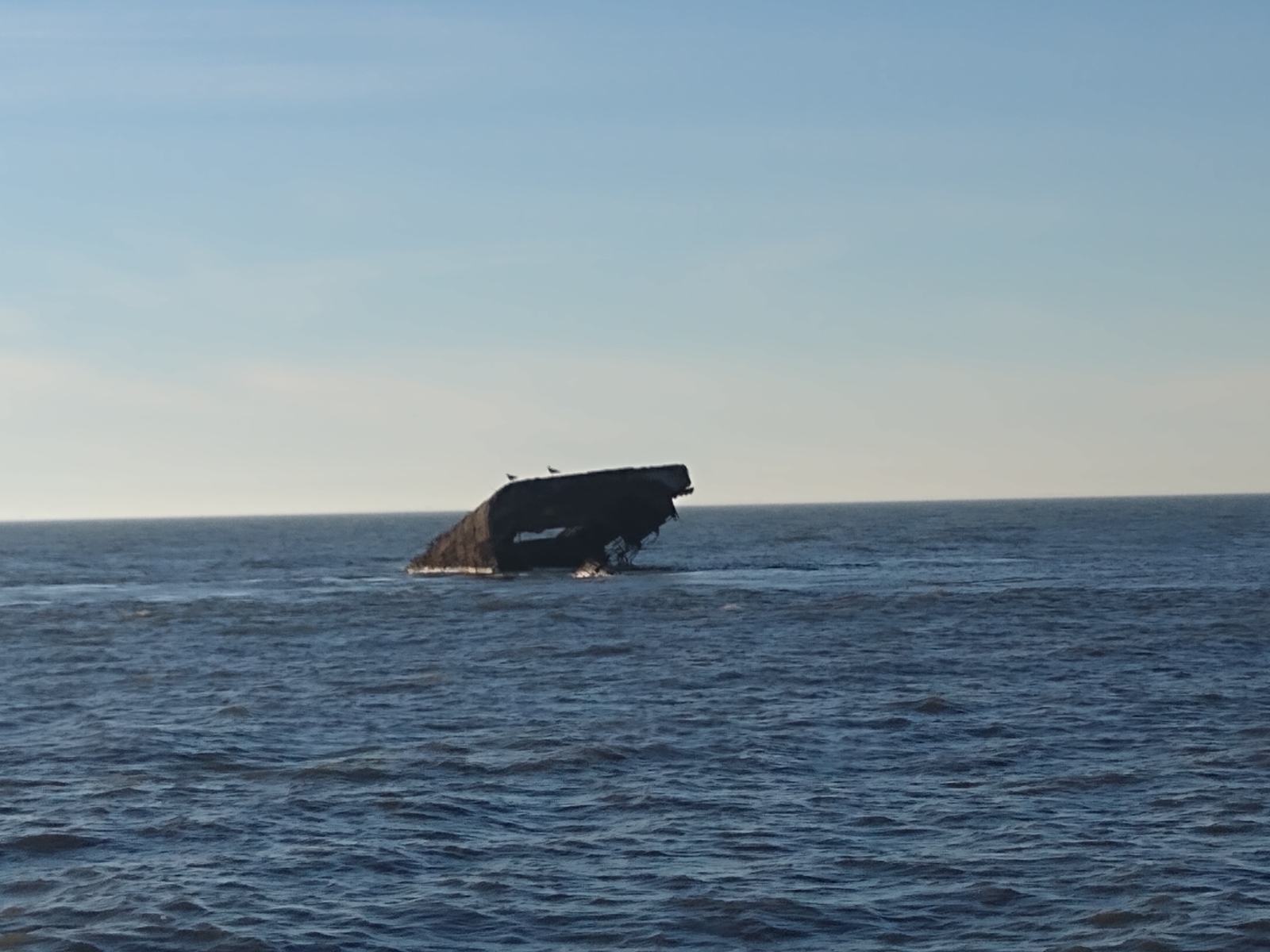
- A Concrete Ship Sunk Off Sunset Beach. The SS Atlantus was a concrete ship meant to anchor a ferry pier at Cape May. She broke loose in a storm in the summer of 1926 and ran aground about 150 feet from shore, where her remains lie today. The story belongs with the Cape May guide.
Tales we are working on
Our New Jersey list also includes the lighthouse at the tip of Sandy Hook, the Lewis Fishery shad netting at Lambertville, the canal that made Lake Hopatcong larger, two state records from Round Valley and the return of shad to the Musconetcong River. None is ready to publish. Each rests on a single short source, and we have not been able to read a second source for any of them. When a tale is ready, it appears above.
New Jersey state records
We did not read New Jersey Fish and Wildlife’s state record list this session, because the agency’s pages did not load. The Fisherman lists the lake trout record at 32 pounds 8 ounces and the brown trout record at 21 pounds 6 ounces, both from Round Valley, and a 2007 state spotlight lists a 6 pound 13 ounce state eel record from the same reservoir. Records change as new fish are entered, so we do not print a table. Check the state’s list for the current records.
How to read a tale
Each tale ends with a short list of sources and caveats, so you can see how much weight a claim can carry. A claim that comes from a single magazine article or a single news report says so. A date that two sources give differently is stated loosely or left out. If a tale mentions a rule, the rule comes from the guide it links to, where it carries the date we checked it, and not from the story itself.
Where these stories happened
- Delaware Bay: the red knots and the crab spawn, in the Delaware Bay shore guide.
- Island Beach: the shore fluke rule, in the Island Beach guide.
- Cape May: the Atlantus, in the Cape May guide.
- Round Valley: the reservoir records, in the Round Valley guide.
How we write them
Each tale is built from the sources we could read, and it says where sources disagree. We do not repeat a number that two sources give differently, and we do not tell a story we cannot source. See how we research for the method, and the New Jersey fishing hub for the waters themselves.
Dock Tales
A Bay Fed by Horseshoe Crab Eggs
Each spring red knots stop on Delaware Bay beaches to feed on horseshoe crab eggs. Why the bay matters, and why New Jersey bans taking the crabs.
A Shore Fluke Program Built on One Park
Island Beach State Park has its own fluke rule for shore anglers: 16 inches and two fish. How it differs from the rest of New Jersey.
A Concrete Ship Sunk Off Sunset Beach
The concrete ship SS Atlantus was meant to anchor a ferry pier at Cape May Point. Her 1926 end and what remains at Sunset Beach.
More fishing guides for New Jersey
Sources
- WHYY: Red knot populations improve slightly along Delaware Bay (Aug 2026) (accessed November 2, 2026)
- Cape May Magazine: Beneath the Surface, the story of the SS Atlantus (2016) (accessed November 2, 2026)
- The Fisherman: Island Beach fluke, last call for a sweet 16 (accessed November 2, 2026)
- The Fisherman: Round Valley Reservoir hot spot (accessed November 2, 2026)