
A Bay Fed by Horseshoe Crab Eggs
Last verified:
By BCRods
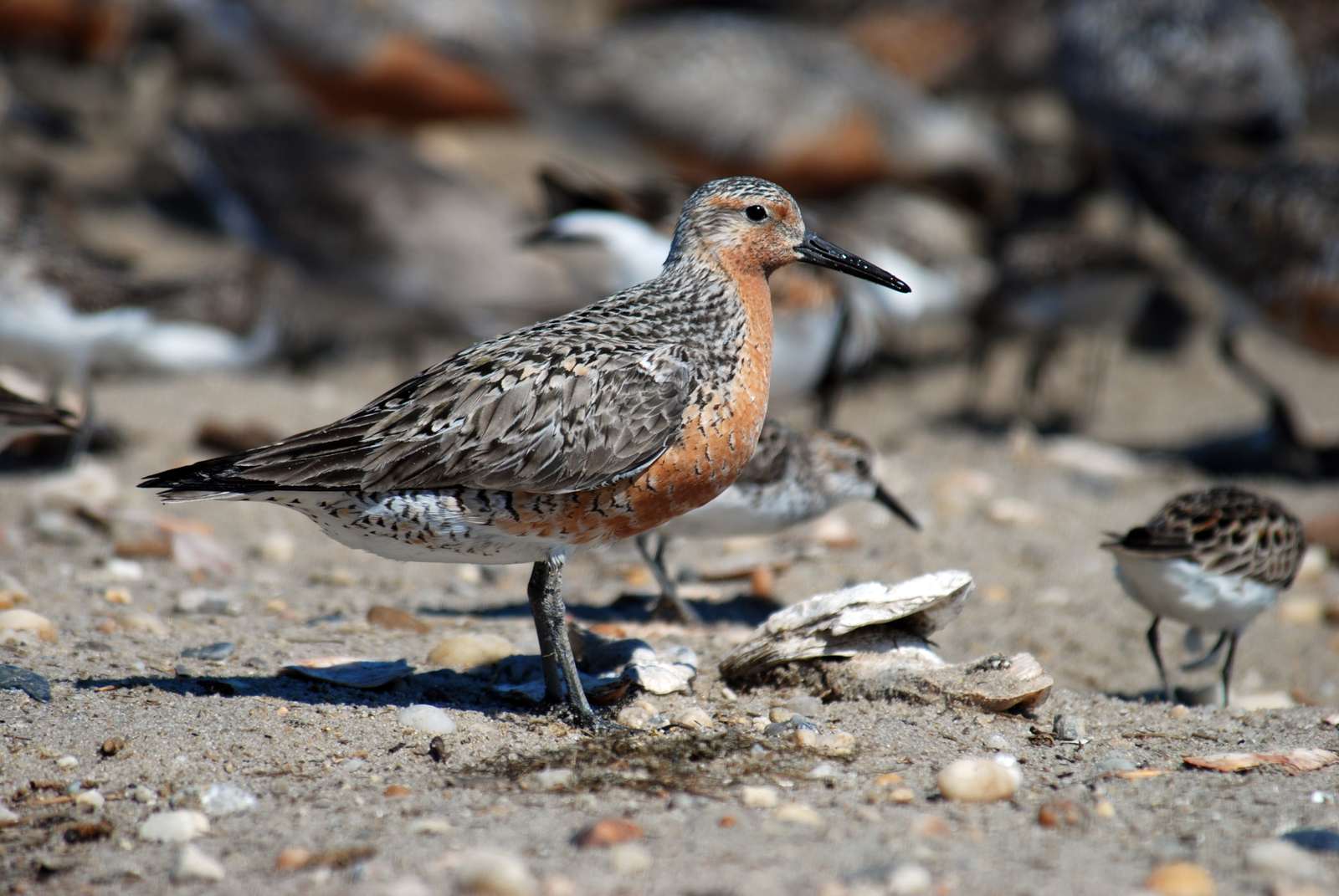
Every spring, small shorebirds called red knots stop on the beaches of Delaware Bay, having flown thousands of miles from South America. They come for one thing: the eggs that horseshoe crabs lay in the sand. The bay holds one of the largest gatherings of the birds on the Atlantic coast, and the crab eggs are the reason. For anglers who fish bloodworms and clams on the bay shore, this is also the reason the beaches change in May.
A bird that flies from the tip of South America
WHYY reported in August 2026 that red knots migrate about 9,000 miles a year and rest and refuel on Delaware Bay by eating horseshoe crab eggs. The story calls them federally threatened. The bay is a stopover, not a destination. The birds arrive thin and leave heavier, and the eggs give them the fuel to finish the trip north.
The crabs and the eggs
Horseshoe crabs come ashore to spawn on the bay’s beaches in spring, around the time of the full and new moons, and a single beach can be covered in eggs. WHYY cited the Fish and Wildlife Service as saying that overharvesting of crabs cut shorebird populations by about 75 percent from the 1980s to the 2000s, and a National Oceanic and Atmospheric Administration petition describes a 70 percent drop in crab spawning numbers from 1990 to the early 2000s. Those are different measures over different periods. The article quotes a biologist who puts egg availability today at about a fifth of historic highs.
The counts
Peak counts of red knots on the bay reached around 95,000 in some years in the 1980s, WHYY reports, and fell below 7,000 in a one-day peak in spring 2021. In 2026, biologists tracked more than 30,000 at the peak count, mostly on the New Jersey side, the highest single-day peak since 2019, according to the article, which links to a state report we did not read. Season-long estimates run higher, and the article notes that critics say they may be inflated. Counts vary by method, so treat any one number with care.
Why New Jersey limits the harvest
WHYY says New Jersey has a moratorium on harvesting horseshoe crabs for bait, with an exemption for the biomedical industry, while Delaware allows a commercial harvest under a quota. We did not find a New Jersey agency page that states the rule, so we do not present it as a rule here. The point of the story is the link between crabs, eggs and birds.
What it means for anglers
The Delaware Bay shore is a bait fishery, and a magazine article on Fortescue says the crab spawn, which starts around the first full moon of May, drives surfcasters off the beach. We did not find an agency page on beach closures to people, so we do not say whether any beach you plan to fish is restricted in spring. If a beach is posted for birds, stay out. Our Delaware Bay shore guide covers the fishing, the rules for fluke and striped bass and what we could not confirm. Across the bay, Delaware has its own shore and its own rules in the Delaware Bay shore guide.
Sources and caveats
This tale rests mainly on a single recent news report from WHYY, and a magazine article on Fortescue Beach. We did not read the Fish and Wildlife Service listing page or the New Jersey annual report, so the listing status is as the news article states it and the counts are the article’s. If you have a primary source, we would like to see it. More stories are in the New Jersey Dock Tales index.
The water behind the story
More fishing guides for New Jersey
Sources
- WHYY: Red knot populations improve slightly along Delaware Bay (Aug 2026) (accessed November 2, 2026)
- The Fisherman: Fortescue Beach (2017) (accessed November 2, 2026)