
A Concrete Ship Sunk Off Sunset Beach
Last verified:
By BCRods
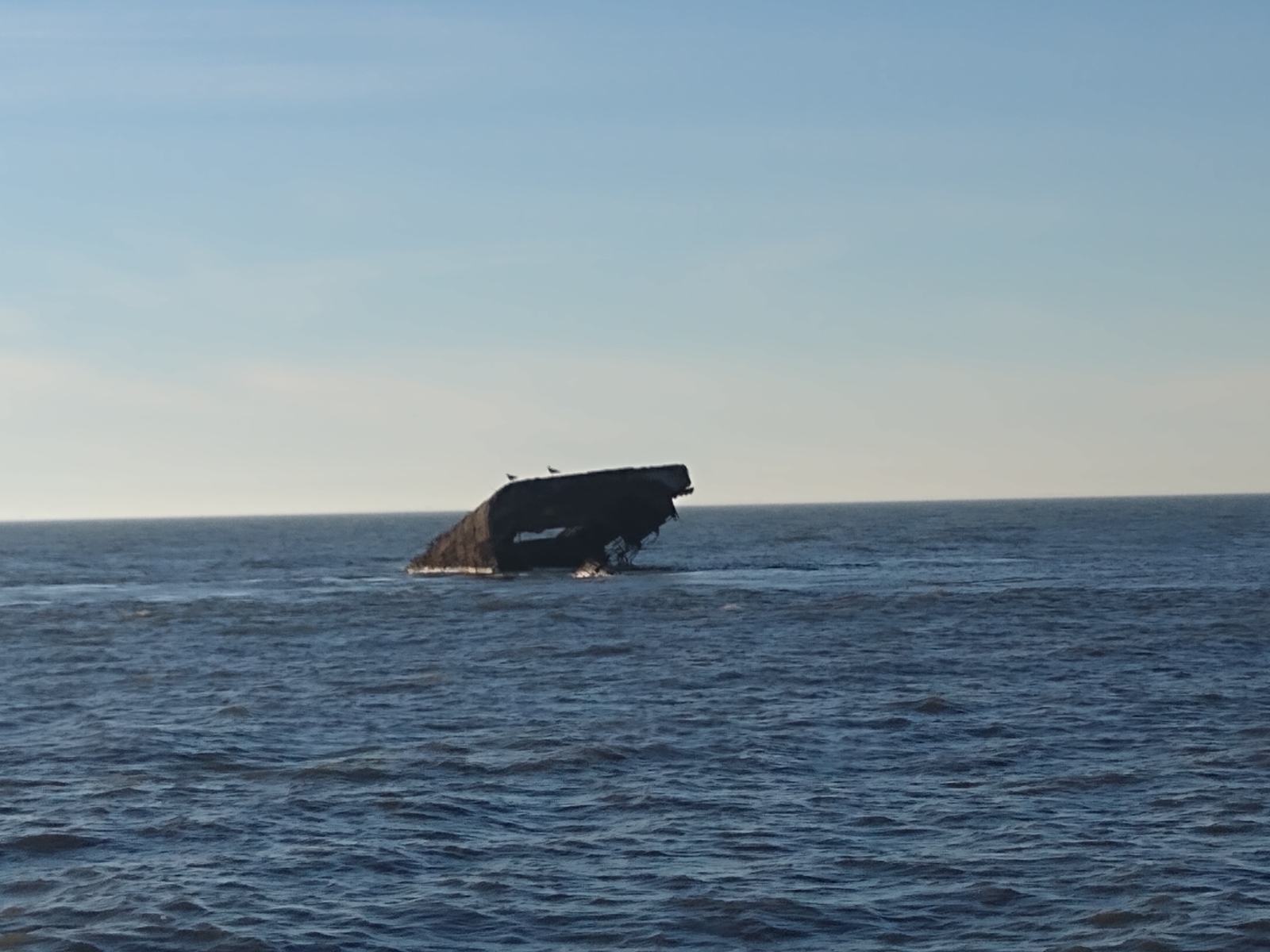
At the foot of Sunset Boulevard in Cape May Point, a concrete ship lies in the water about 150 feet off the beach. She is the SS Atlantus, a hull that was meant to hold up a ferry pier and instead went aground in a storm in 1926. People photograph her from the beach, kayak out to her and watch fishermen cast from the rocks beside her. The story of why a ship was made of concrete explains why she is there.
A ship made of concrete
The Atlantus was one of the experimental concrete ships built under the federal Emergency Fleet Corporation during and just after World War I, when steel was scarce. Cape May Magazine’s 2016 account says she was a hull about 250 feet long and 45 feet wide, and that she weighed about 3,000 tons, with concrete over a steel skeleton and airtight compartments that let her float. The magazine says the first of the fleet was christened a month after the November 11, 1918 armistice in Brunswick, Georgia. The accounts we read disagree on how many of these ships the government planned and built, so we do not give a count.
After the war the ship went to a boneyard at Pig’s Point near Norfolk, Virginia, where the magazine says she was sold in 1920 for scrap.
A ferry that never ran
In 1926 a buyer named Colonel Jesse Rosenfeld bought the hulk. According to Cape May Magazine, he planned a ferry line between Cape May and Cape Henlopen, Delaware, with the Atlantus as the first piece of a concrete wharf and two more concrete ships to form a Y-shaped slip. A groundbreaking was held in March 1926. The magazine says about three months later, during an early summer storm, the ship broke free of her mooring, drifted into the bay and ran aground about 150 feet from shore. Other sources give June 8 and July 10 for the grounding, so we say only that it was in the summer of 1926. The magazine does not say how she traveled from Norfolk.
A caretaker aboard was rescued by a worker from a nearby sand plant, who also saved the man’s cat. Attempts to free the ship failed, and she stayed where she was.
What happened to her
The magazine’s timeline says the Atlantus listed slightly in the 1930s, a seam split in 1937, she broke apart by the mid-1950s and she was in two pieces by 1961. As of that 2016 article, the stern was still visible, the bow showed above water at low tide and the middle section was submerged. A historical marker stands on shore. We did not confirm how much of the wreck is visible today, so check before you plan a trip around it.
What anglers can take from it
The ship sits on the edge of the bay and the Atlantic, just where the line that changes the fluke size limit runs through Cape May, and a wreck like this holds structure that fish use. We did not find a source on what fish hold around her, so we make no claim about that. The wreck is a landmark, and boats and kayaks around it need care in tide and surf. Our Cape May guide covers the jetties, the refuge and the rules at the tip of New Jersey, and the New Jersey Dock Tales index has more stories.
Sources and caveats
This tale rests mainly on a single detailed account in Cape May Magazine (2016), with other accounts used only to note where they disagree. The date of the grounding and the size of the concrete fleet are the main conflicts. If you have a primary source, such as a Cape May County archive record, we would like to see it.
The water behind the story
More fishing guides for New Jersey
Sources
- Cape May Magazine: Beneath the Surface, the story of the SS Atlantus (2016) (accessed November 2, 2026)