
Striped Bass Fishing in Delaware
Last verified:
By BCRods
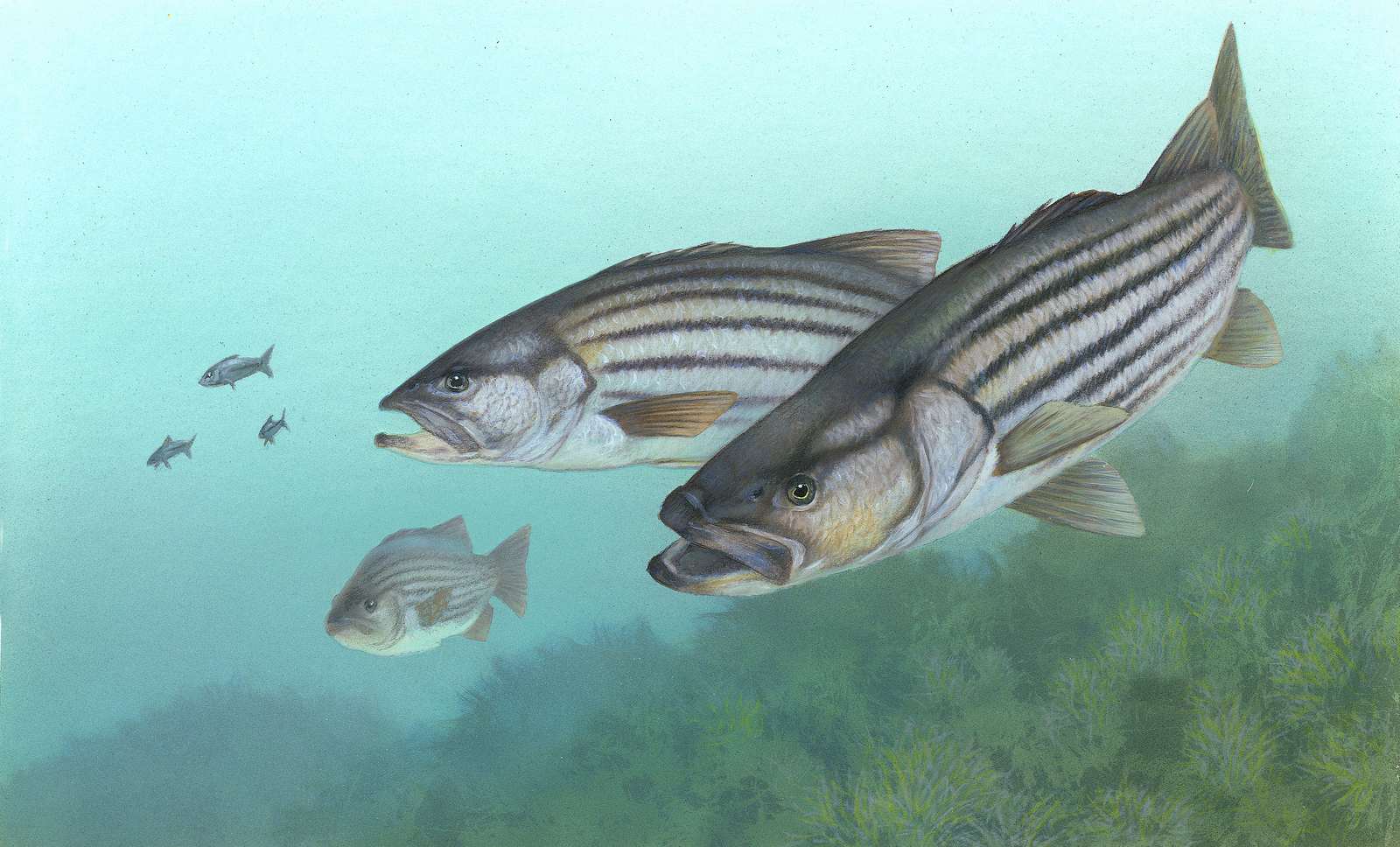
Quick facts
- Limit
- 1 a day, 28 to 31 in; 20 to 24 in only Jul 1 to Aug 31 in Delaware Bay and River
- Spawning grounds
- Catch and release only Apr 1 to May 31
- Hooks
- Non-offset circle hooks with natural bait
- Best season
- Fall run, late October into November
- State record
- 52 lb (2012); hybrid 13 lb 13 oz (1990)
- Stock
- Overfished, overfishing not occurring (ASMFC 2024 update)
Rules snapshot
Striped bass (tidal)
1 fish a day. Size 28 to 31 inches, except 20 to 24 inches only from July 1 to August 31 in Delaware Bay, the Delaware River and their tributaries. Catch and release only on the spawning grounds from April 1 to May 31. The guide notes changes may be needed for some species. · Delaware Fishing Guide, tidal limits (updated Sept. 23, 2026), checked November 1, 2026
Striped bass spawning season
From April 1 through May 31, striped bass may be caught and released only, with no harvest, in the Nanticoke River and its tributaries; the Delaware River and its tributaries north of a line due east from the south jetty at the mouth of the C&D Canal; and the C&D Canal and its tributaries. · 2026 Delaware Fishing Guide (PDF), checked November 1, 2026
Hooks for striped bass with natural bait
Non-offset circle hooks are required when fishing for striped bass with cut or whole natural baits such as clams, squid, mackerel, menhaden, sea worms or eels. · 2026 Delaware Fishing Guide (PDF), checked November 1, 2026
This is not legal advice. Rules change, so confirm with the state agency before you fish.
Delaware’s striped bass rules change with the season and with the water. There is a catch-and-release period on the spawning grounds in spring, a narrow slot at other times and a different slot in the Delaware Bay and River in summer. This guide lays out those rules, where Delaware anglers find striped bass and what the seasons look like. For how to catch them, see the striped bass how-to guide.
The rules
The rules snapshot above shows each rule with the date we checked it. In short, in tidal water the limit is 1 fish a day. The legal size is 28 to 31 inches, except that from July 1 to August 31 in the Delaware Bay, the Delaware River and their tributaries only fish 20 to 24 inches may be kept. From April 1 through May 31 striped bass on the spawning grounds are catch and release only. Those grounds are the Nanticoke River and its tributaries, the Delaware River and its tributaries north of a line due east from the south jetty at the mouth of the C&D Canal, and the C&D Canal and its tributaries.
If you fish with cut or whole natural bait such as clams, squid, mackerel, menhaden, sea worms or eels, you must use non-offset circle hooks. Atlantic coastwide striped bass measures are under review, so the Delaware numbers can change. Check the Delaware Fishing Guide before you keep a fish.
Where to fish in Delaware
Indian River Inlet. The fall run here peaks from late October into November. A white bucktail with a white plastic worm is the top inlet lure in our research, and anglers fish live eels at night from the jetties. Incoming water is better at inlets. See the Indian River Inlet guide.
Surf and Cape Henlopen. Chunks of menhaden from the beach work in the surf, and fall is the main season. See the surf fishing guide and the Cape Henlopen guide.
Delaware Bay shore and boats. Small stripers come to the Woodland Beach pier on bloodworm, peeler crab and shrimp. From a boat, anglers drift live spot, chum, troll and jig structure to reach deeper fish. See the Delaware Bay shore guide and the Delaware Bay boat guide.
Delaware River and the C&D Canal. Shore fishing here is covered in the Delaware River guide. Part of this water is inside the spring spawning-ground closure.
Seasons
Spring fish stack in the rivers and upper bay to spawn, which is why the spawning-ground closure runs April 1 through May 31. In summer fish go deep and feed at night, so live bait, dawn and dusk topwater and cooler deep water are the usual choices. Fall is the best season: bait schools run south and stripers feed hard, with the inlet and surf action peaking from late October into November. In winter fishing is mostly catch and release or closed.
Rods and tackle
For the surf, a 9 to 11 foot medium-heavy rod is typical. From a pier or boat, a 7 to 8 foot medium to medium-heavy fast rod is a common choice, paired with a 4000 to 6000 size spinning reel. These are typical choices and not requirements. Jetty rocks are slippery, tides and rip currents are dangerous, and cleats and a life jacket are worth the weight.
Handling
Because so much Delaware striper fishing is catch and release, keep the fish wet and handle it with wet hands. Use a circle hook with bait, and release a fish you cannot keep as soon as you have measured it.
How the fishery is managed
The Atlantic States Marine Fisheries Commission (ASMFC) lists Atlantic striped bass as overfished but not experiencing overfishing, based on a 2024 assessment update, and a new benchmark assessment is expected in mid-2027. That is why the rules tighten and loosen from year to year, and why Delaware’s numbers can change. An ASMFC addendum adopted in October 2025 also sets a common way to measure a fish: a straight-line total length with the upper and lower lobes of the tail squeezed together. Delaware’s own regulations define total length the same way, from the tip of the jaw or snout to the farthest extremity of the tail with the lobes squeezed. Keep in mind that a fish that barely makes the minimum can shrink after an hour or more on ice, so measure it on the water. No striped bass caught in a recreational gill net may be kept at any time.
State records
DNREC’s records page lists a saltwater striped bass of 52 pounds, caught by Benjamin Smith in 2012. A separate freshwater table lists a hybrid striped bass of 13 pounds 13 ounces, caught by Earl Blevins in 1990, and hybrids are recognized for records only when they are caught in non-tidal water. To replace a record under 25 pounds, a fish must weigh at least 2 ounces more. For a record of 25 pounds or more, the new fish must weigh at least one-half of one percent more than the old one, which for a 52 pound record is roughly 4 ounces. DNREC staff must approve the catch, and the scale must be certified each year by the Delaware Division of Weights and Measures. Live release awards are a separate program, and a fish entered for one cannot also be a state record.
What the late October 2026 report said
DNREC’s weekly fishing report for October 29, 2026 is anecdotal and comes from bait shops, so treat it as a snapshot and not as data. It said a northeast wind had made the ocean and Delaware Bay rough and that fish were coming from sheltered water. A shop at Leipsic reported striped bass mostly in the 24 to 27 inch range in tidal creeks and rivers, with a few reaching the 28 to 31 inch slot, taken on bloodworms and shrimp.
New to this fish? Read How to Catch Striped Bass: Gear, Bait and Technique.
Where to fish for it in Delaware
Delaware River and C&D Canal Shore Fishing
Striper, perch and catfish from Delaware's river shore, with shared-water rules.
Delaware Bay Shore: Woodland Beach to Broadkill Beach
Woodland Beach, Port Mahon, Bowers and Slaughter Beach: where to fish the Delaware Bay shore.
Cape Henlopen State Park: Fishing Pier and Surf
Fishing the quarter-mile pier and drive-on surf at Cape Henlopen State Park.
Fishing Indian River Inlet: Jetties, Currents and Seasons
Currents, jetties, blues, tog and stripers at Delaware's busiest inlet.
Delaware Surf Fishing: Permits, Beaches and Gear
Permits, reservations, baits and rods for Delaware's ocean beaches.
Fishing Delaware Bay by Boat
Black drum, flounder and stripers on Delaware Bay's shoals.
More fishing guides for Delaware
Frequently asked questions
Can I keep a striped bass in Delaware? +
Yes, in the open season: 1 a day at 28 to 31 inches, except 20 to 24 inches only from July 1 to August 31 in the Delaware Bay, River and tributaries. On the spawning grounds, from April 1 to May 31, it is catch and release only.
Sources
- Delaware Fishing Guide: tidal seasons, size and creel limits (updated Sept. 23, 2026) (accessed November 2, 2026)
- 2026 Delaware Fishing Guide (PDF) (accessed November 2, 2026)
- DNREC state records (accessed November 2, 2026)
- DNREC Sport Fishing Tournament rules (record certification) (accessed November 2, 2026)
- DNREC Delaware Fishing Report (Oct. 29, 2026) (accessed November 2, 2026)
- Delaware Fishing Guide: tidal fishing regulations (accessed November 2, 2026)
- ASMFC: Atlantic striped bass (accessed November 2, 2026)