
How to Catch Striped Bass: Gear, Bait and Technique
Last verified:
By BCRods
Quick facts
- Where
- Tidal rivers, bays, inlets, surf, jetties and piers
- Best seasons
- Spring run and the fall migration
- Typical rod
- 9 to 11 foot surf rod, or 7 to 9 foot medium-heavy spinning from piers and boats
- Best baits
- Bunker chunks, bloodworms, live eels, clams
Striped bass are the signature gamefish of the Mid-Atlantic coast. They run from rivers to the surf, they bite baits and lures, and they fight hard enough to test good tackle. This guide covers how to find them, what to fish with, the techniques that work and how to handle the fish, whatever state you fish in. Seasons, size limits and hook rules for striped bass change by state and by year, so use this guide for method and your state’s rules guide for what you may keep.
Know the fish
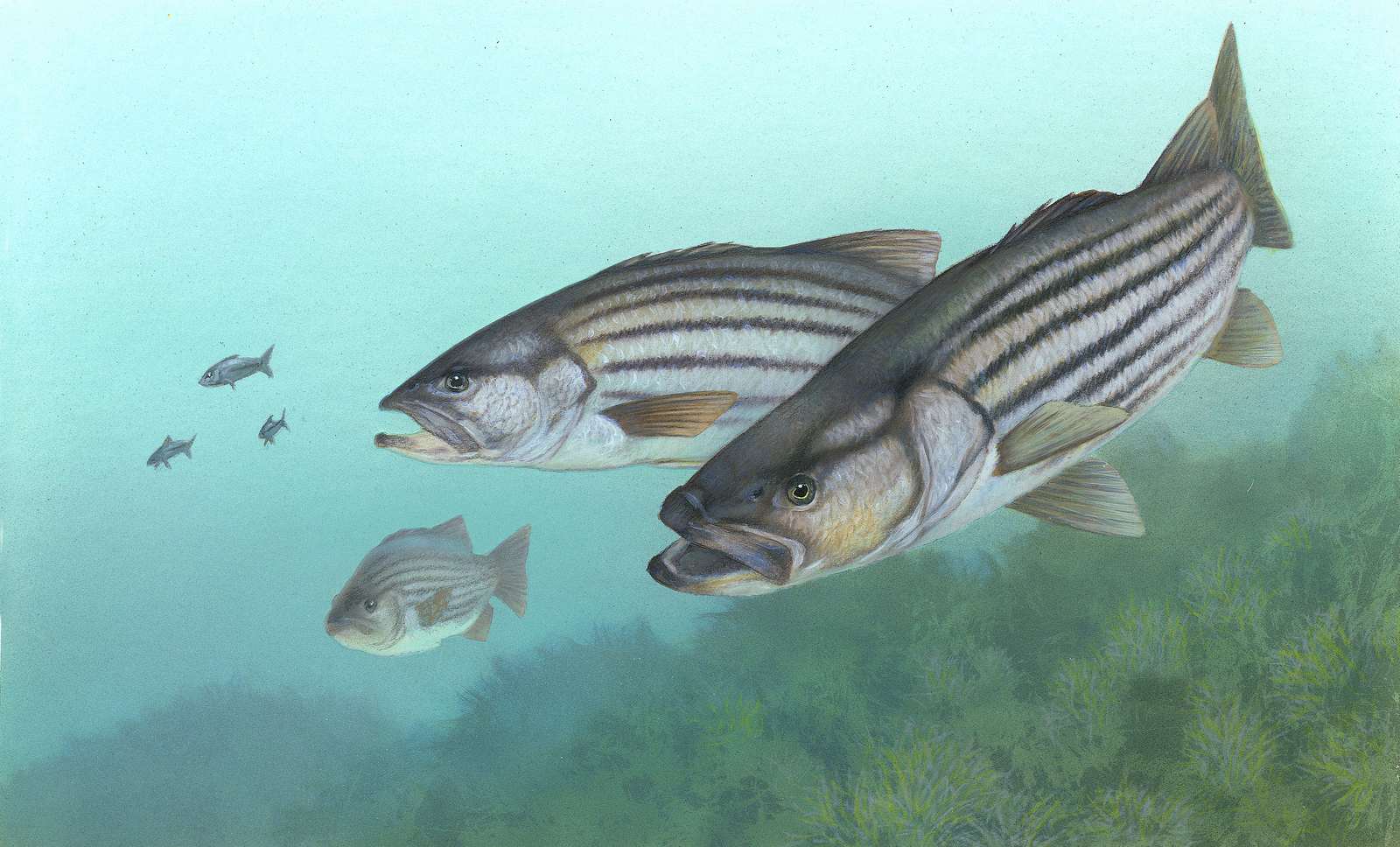
A striped bass is a silvery, olive-backed fish with seven or eight dark stripes running from gills to tail, a forked tail and two separate dorsal fins. White perch look similar but are small and deep-bodied without long stripes. Hybrid striped bass often have broken stripes and a stockier build. NOAA lists a maximum size of about 5 feet and 77 pounds and a lifespan of up to roughly 30 years.
Stripers are anadromous. Adults live mostly in the ocean and return to fresh or brackish water to spawn in spring, and the young stay in estuaries for several years. They are schooling ambush predators that feed on menhaden, spot, herring, sand eels, crabs, squid and eels, and they use current to trap bait against structure. Large females tend to hold in deeper channels and move shallow at night. NOAA reports the coastwide stock as overfished and under a rebuilding plan, which is one more reason to treat every fish as a limited resource.
Where to look
Stripers hold where current meets something solid. Look at:
- bridge pilings and the down-current side of jetty tips,
- inlet throats, seams and eddies,
- points, creek mouths and tide rips,
- rock piles, riprap and oyster shell,
- sandbar troughs and drop-offs along the surf.
Temperature matters. They prefer water of about 50 to 68 degrees and feed most actively between 55 and 65. A rule of thumb that works: fish shallow when it is dark or cold, and deeper in bright sun and heat. Birds working over bait, nervous water, slicks and marks on a depth sounder over structure all point to fish. Moving tide beats slack water almost everywhere.
Tackle that fits
Rods. For the surf, a 9 to 11 foot medium-heavy fast-action rod handles bait and sinkers of a few ounces. For piers, jetties and bay shores, 7 to 9 foot medium-heavy spinning is common. For bucktails and soft plastics from boats or the bank, a 6.5 to 7.5 foot medium to medium-heavy rod suits. A fast tip throws lures and a firm mid-section and strong butt control a large fish in current. Corrosion-resistant guides and reel seats matter in salt water.
Reels and line. A 4000 to 6000 size spinning reel with a sealed drag, rinsed after every trip, is a good match. Many anglers use 20 to 40 pound braid with a fluorocarbon leader of similar strength, or 15 to 20 pound mono where a forgiving line helps. Use a heavier leader around rock and pilings. These are typical setups, not requirements.
Hooks and rigs. Circle hooks are required with bait in a number of states, and they reduce gut-hooking in all of them. Hooks of 6/0 to 9/0 suit chunks on a fish-finder rig, and 3/0 to 5/0 suit bloodworms and clams. Use a pyramid or bank sinker heavy enough to hold bottom, often 2 to 6 ounces.
Baits
Bunker is the standard: fresh chunks and heads, fished on the bottom. Live eels shine at night around jetties and pilings. Bloodworms work along shores and in rivers in spring and fall, clams and peeler crab work in cold water, and live spot drifted from a boat catch larger fish. Fresh bait out-fishes old bait, and in cold water smaller baits and a slower presentation do better.
Hook a bait through the skin or a thick part and let the fish load the rod before you lift. Never set a circle hook with a jerk, because that pulls the hook out of the fish’s mouth.
Lures
Bucktails of 1 to 4 ounces, often with a white soft trailer, are a top choice at inlets. Soft-plastic paddle-tails and shads, soft eels, swimming plugs and pencil poppers all catch fish, with topwater working best at dawn and dusk. Metal jigs and spoons suit feeding blitzes and deeper water. Natural colors suit clear water, and dark or chartreuse patterns suit dirty water and night. Retrieve slowly and steadily, pause near structure and jig bucktails along the bottom with a lift-and-fall.
Three techniques to learn
Chunking from the surf. Pick a trough or cut on a rising tide near sunrise or after dark. Rig a fish-finder with a circle hook on a heavy leader, hook a fresh chunk and cast just past the breakers. Put the rod in a sand spike with a little slack and wait for a steady pull. Lift and reel, do not jerk, and keep the fish out of the shore dump.
Bucktail jigging at an inlet. Fish the incoming tide on the current line. Cast up-current, let the jig sink, then lift and drop it along with the current while keeping contact with the bottom. Feel for added weight on the line and set the hook.
Live-lining at night. Rig a live eel or spot on a circle hook with a short leader and cast near a piling or jetty edge. When a fish takes it, let it run, then engage the drag and fight it away from the rocks.
Seasons and conditions
Spring brings spawning fish to rivers and upper bays, and many areas limit or close fishing then. Summer fish go deep and become nocturnal, so use live bait, dawn and dusk topwater and cooler channels. Fall is the premier season, when bait schools run south and stripers feed hard in inlets, the surf and bays. Winter fishing is limited, and trophy fish may be in warm-water discharges and deep channels. Check closures before you go.
Dawn, dusk and night are the best light, and overcast days extend the bite. A falling barometer and wind-against-tide chop often turn fish on, and a hard cold snap shuts the shallow bite down.
Common mistakes
- Using old, soft bait, or oversized chunks in cold water.
- Fishing slack tide, or arriving too late in the day.
- Setting circle hooks like J-hooks.
- Ignoring a closure or slot limit.
If you are not getting bites, check the tide and move to moving water, switch to fresh bait or a smaller lure, change depth, find the bait first and fish dawn or dusk instead of midday. At an inlet, pay attention to the first hour of the incoming tide, and keep notes on tide, temperature and bait for the water you fish.
Handle fish with care
Wet your hands, keep fights short, support the belly and keep the fish in the water for a photo. Do not drag a fish across sand or rock, and do not hold it vertically by the jaw, which can damage the jaw and organs. Cut the leader on a deeply hooked fish instead of pulling the hook out. Spawning fish in rivers are especially vulnerable, so respect spawning closures.
Striped bass in Delaware
Delaware’s tidal waters hold stripers in the rivers, the bay, the inlets and the surf. In recent DNREC reports, the fall run at Indian River Inlet peaked from late October into November, and anglers used bucktails and live eels there. Start with the Delaware River and C&D Canal, Delaware Bay shore, Indian River Inlet and surf guides. The Delaware rules and license guide has the current size, season and hook requirements.
Build the rod to the water
A custom rod can be built for how you fish: a long surf rod, a short bridge rod or a bucktail stick. Tell us where you fish and what you target, and we can build the rod around it.
In Maryland
Maryland manages Atlantic-coast striped bass and Chesapeake Bay striped bass under different rules, and the Bay seasons change by area and date, including a summer closure. Use the Maryland rules guide for the Atlantic limits we verified and check Maryland DNR for the current Bay calendar.
In Virginia
Virginia has separate striped bass rules for the Chesapeake Bay, the Potomac tributaries, the coast and each landlocked lake, and the lake rules change with the season. See the Virginia striped bass guide for the seasons we verified and where each applies, and check VMRC for any change to the 2026 measures.
In New Jersey
New Jersey uses one slot but different seasons for the ocean, the Delaware River and its other marine waters, and a Bonus Program lets permit holders keep a smaller fish. See the New Jersey striped bass guide for the zones, and check New Jersey Fish and Wildlife for any change to the 2026 measures.
In Pennsylvania
Pennsylvania has migratory striped bass in the tidal Delaware, with a narrow slot that changes by season, and landlocked stripers in lakes such as Raystown, with a simple inland limit. See the Pennsylvania striped bass guide for the seasons we verified, and check the Pennsylvania Fish and Boat Commission for any change to the 2026 measures.
Fishing for it by state
- Striped Bass Fishing in Delaware (Delaware)
- Striped Bass Fishing in Maryland: Seasons, Rules (Maryland)
- Striped Bass Fishing in Virginia: Bay, Coast and Lakes (Virginia)
- Striped Bass Fishing in New Jersey: Seasons, Slots and Where (New Jersey)
- Striped Bass Fishing in Pennsylvania: Delaware River and Raystown (Pennsylvania)
Frequently asked questions
What is the best time of day to catch striped bass? +
Dawn, dusk and night, especially on a moving tide. Overcast days can extend the bite.
Do I need circle hooks for striped bass? +
Many states require them when fishing with bait, and circle hooks reduce deep hooking everywhere. Check your state's rules before you go.
Sources
- NOAA Fisheries: Atlantic striped bass (accessed October 24, 2026)
- 2026 Delaware Fishing Guide (PDF) (accessed November 1, 2026)