
Black Sea Bass Fishing in Delaware
Last verified:
By BCRods
Quick facts
- Season
- May 1 to Dec 31
- Size
- 12.5 in minimum
- Limit
- 15 a day
- Best water
- Reefs and wrecks by boat
- State record
- 7 lb 6 oz (1988)
- Reefs
- 14 permitted sites; Redbird Reef holds 600+ subway cars
- Stock
- Not overfished (ASMFC 2025)
Rules snapshot
Black sea bass (tidal)
Open May 1 to December 31. Minimum size 12.5 inches. 15 a day. · Delaware Fishing Guide, tidal limits (updated Sept. 23, 2026), checked November 1, 2026
This is not legal advice. Rules change, so confirm with the state agency before you fish.
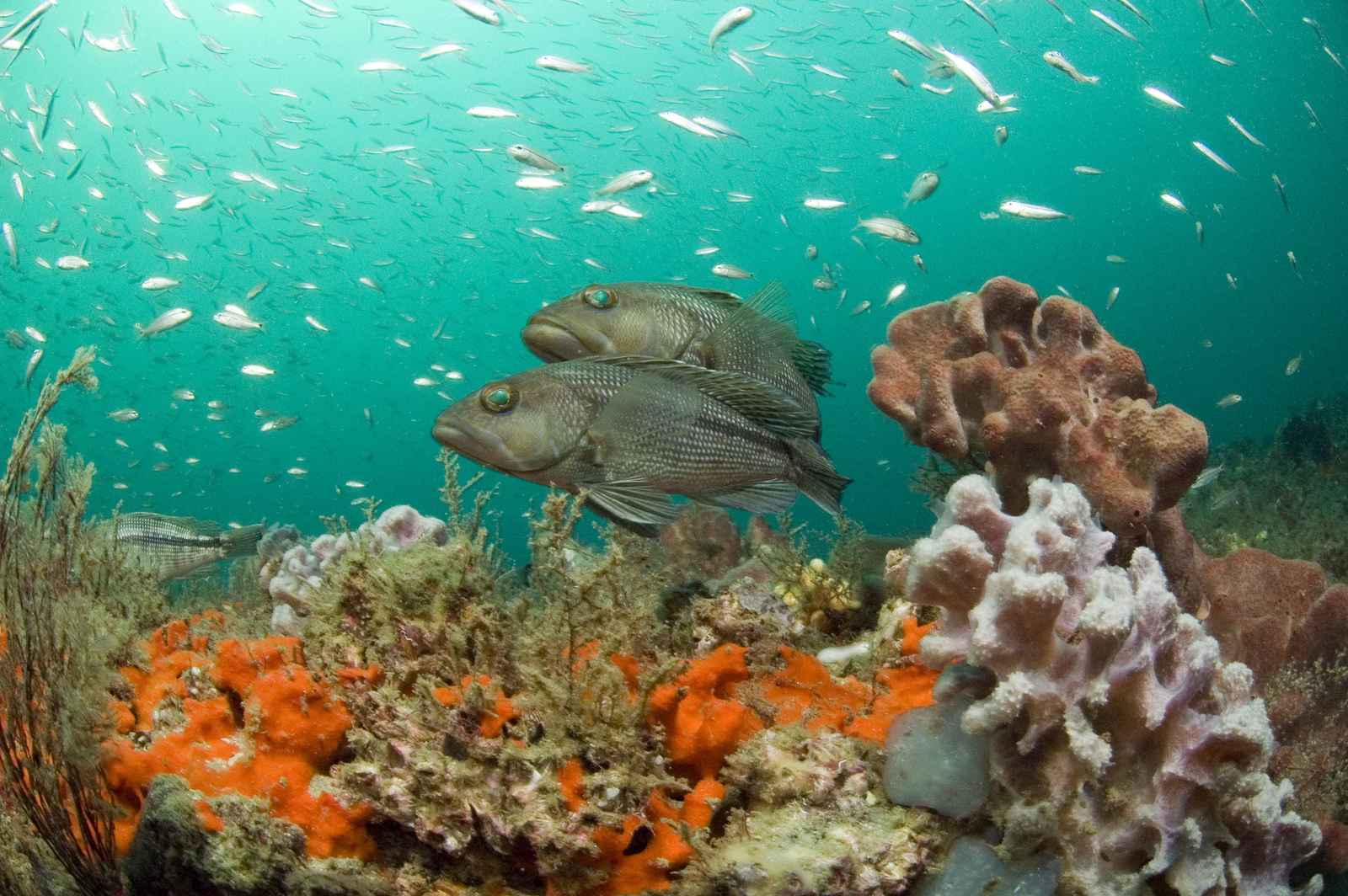
Black sea bass live on hard structure, and in Delaware that means reefs, wrecks and the rock at the inlets. This guide covers the Delaware season and size rule and where anglers fish for them. For how to catch them, see the black sea bass how-to guide.
The rule
The rules snapshot above shows the rule with the date we checked it. In tidal water the season is open from May 1 to December 31, the minimum size is 12.5 inches and the daily limit is 15. Delaware reduced the minimum from 13 inches for the 2026 to 2027 season, and our research notes that alignment with federal waters could change it again. Check the Delaware Fishing Guide before you keep a fish.
Where to fish in Delaware
Artificial reefs. Most keepers come from the reefs, which you reach by boat. See the artificial reefs guide. A DNREC report from October 2026 says deeper water produced more keepers.
Indian River Inlet and Cape Henlopen. Anglers fish the rock jetties and inlet structure from shore. See the Indian River Inlet guide and the Cape Henlopen guide.
Roosevelt Inlet. Small sea bass are common here. See the canal and Roosevelt Inlet guide.
Seasons and timing
The season opens May 1 as fish move inshore. Summer is the peak inshore, and boat fishing around structure is the usual approach. In fall fish move deeper, and sea bass and tautog share some structure. In winter they are offshore, with few opportunities from shore.
Rods and tackle
A 6 to 7 foot medium-heavy rod, spinning or conventional, with a 4000 to 6000 size reel and 30 to 50 pound braid is typical. Clam, squid, sand fleas and cut fish are common baits, and jigs and bucktails tipped with Gulp! are common lures. Bottom fishing with a high-low rig is the usual method. These are typical choices and not requirements.
Shore and boat
The reefs and wrecks are for boats. From shore the jetties and inlet rocks work, but the footing is poor, so wear cleats and a life jacket. See also our Delaware tautog guide, since the two fish often share the same structure.
How the fishery is managed
ASMFC’s 2025 management track assessment found that the black sea bass stock north of Cape Hatteras was not overfished and overfishing was not occurring in 2024, with spawning stock biomass estimated at 2.8 times the biomass target. The recreational fishery is managed by region with a mix of minimum sizes, bag limits and seasons, and the commission’s 2026 and 2027 specifications include a recreational harvest limit of 8.14 million pounds. Delaware’s 12.5 inch minimum and 15 fish limit sit inside that framework, and they can be adjusted when the commission or the state changes the measures. The Delaware table was last updated on September 23, 2026 when we read it.
Delaware’s artificial reefs
Delaware has 14 permitted artificial reef sites in Delaware Bay and along the Atlantic coast, and DNREC began developing the program in 1995. The best-known site is the Redbird Reef, which received more than 600 of the 51 foot long subway cars donated by New York’s MTA, added beginning in 2001. Other material on the reefs includes retired ships and vessels, and DNREC says about a million tons of rock from the 2018 Delaware River channel deepening went to several reef sites. DNREC names tautog, sea bass, scup, spadefish, triggerfish, bluefish, striped bass and weakfish as species the reefs support. The reef locations are in the Delaware Reef Guide, which DNREC publishes as a PDF and in an online map, and DNREC says its Little Creek office hands out printed copies, limited to one per household. We did not read the guide, so we are not publishing reef coordinates or depths. See our artificial reefs guide for the boat access.
State record
DNREC’s records page lists a black sea bass of 7 pounds 6 ounces caught by Steve Samluk in 1988. The page gives no length, location or method. A new record must beat it by at least 2 ounces and be approved by Division staff.
What the late October 2026 report said
DNREC’s weekly report for October 29, 2026 is anecdotal. Rough seas had kept most boats in, but a charter boat caught some black sea bass on one day, and the writer expected the best sea bass fishing of the year once the wind stopped. The report also notes that deeper water produced more keepers earlier in the fall, in line with our note above that the fish move deeper in late fall.
New to this fish? Read How to Catch Black Sea Bass: Gear, Bait and Technique.
Where to fish for it in Delaware
Cape Henlopen State Park: Fishing Pier and Surf
Fishing the quarter-mile pier and drive-on surf at Cape Henlopen State Park.
Lewes–Rehoboth Canal and Roosevelt Inlet Fishing
Flounder and sea bass from the canal, inlet and jetties near Lewes.
Fishing Indian River Inlet: Jetties, Currents and Seasons
Currents, jetties, blues, tog and stripers at Delaware's busiest inlet.
Delaware Artificial Reefs: Sea Bass, Tog and More
Sea bass, tog and bluefish at Delaware's 14 permitted reef sites.
More fishing guides for Delaware
Frequently asked questions
When does black sea bass season open in Delaware? +
May 1, and it runs through December 31, with a 12.5 inch minimum and 15 a day.
Sources
- Delaware Fishing Guide: tidal seasons, size and creel limits (updated Sept. 23, 2026) (accessed November 2, 2026)
- DNREC state records (accessed November 2, 2026)
- DNREC Sport Fishing Tournament rules (record certification) (accessed November 2, 2026)
- DNREC Delaware Fishing Report (Oct. 29, 2026) (accessed November 2, 2026)
- DNREC Artificial Reef Program (accessed November 2, 2026)
- ASMFC: black sea bass (accessed November 2, 2026)