
How to Catch Black Sea Bass: Gear, Bait and Technique
Last verified:
By BCRods
Quick facts
- Where
- Reefs, wrecks, jetties and other hard bottom
- Best seasons
- Spring through fall inshore
- Typical rod
- 6 to 7 foot medium-heavy conventional or spinning
- Best baits
- Clam, squid, sand fleas and crab pieces
Black sea bass live on structure, and if you can find structure you can usually find them. They bite baits and jigs readily, they fight better than their size suggests and they are a mainstay of boat fishing on reefs and wrecks. This guide covers where to find them, how to rig, how to jig and how to handle the fish. Seasons and size limits for sea bass change by state and often by year, so check your state’s rules guide before you keep one.
Know the fish
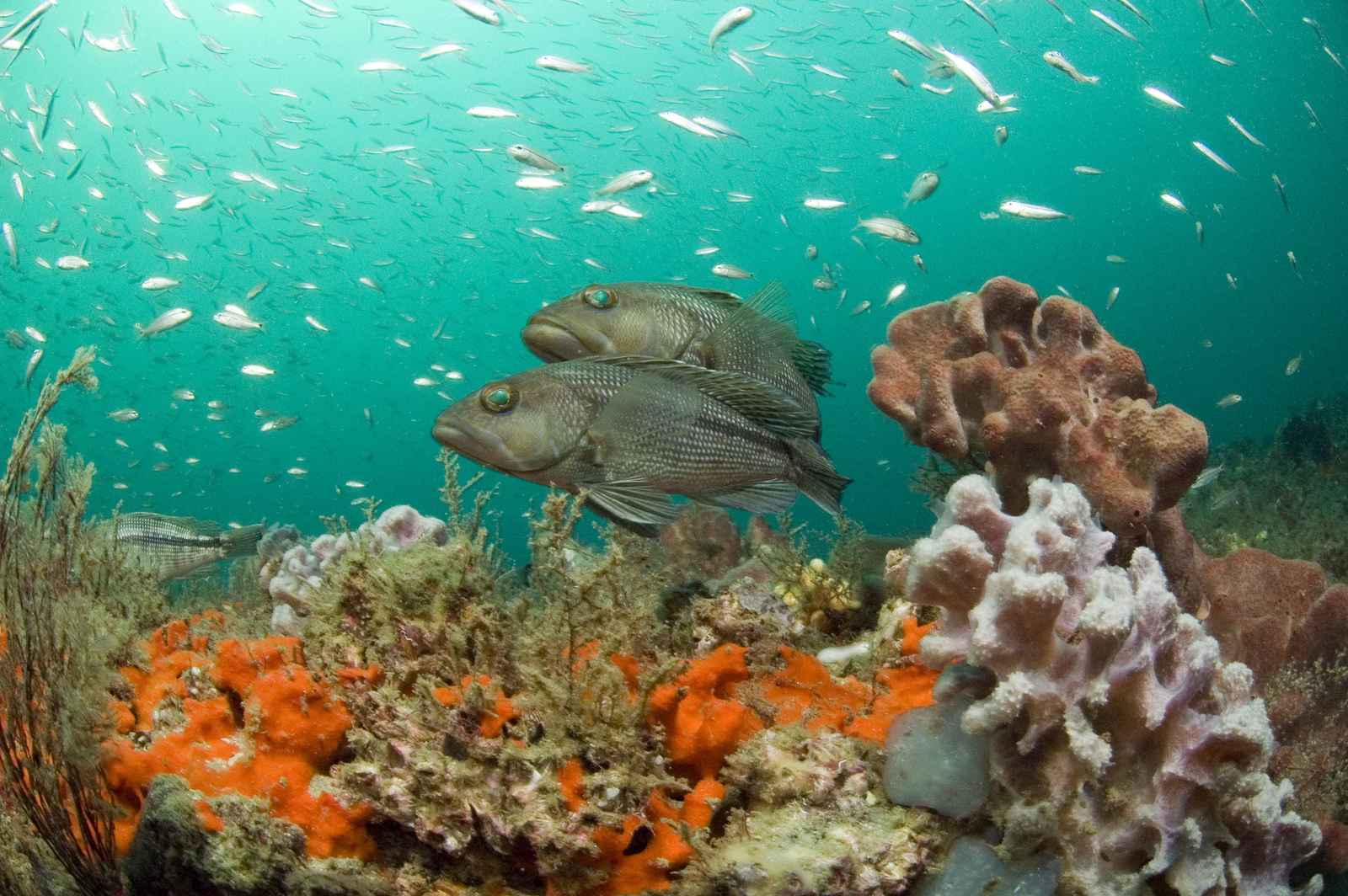
A black sea bass is dark gray to black, with a fan-shaped dorsal fin and a tail with a trailing filament. In breeding season, males develop a bright blue hump on the head. They prefer structured habitat such as reefs, wrecks and oyster beds. North of Cape Hatteras they move inshore in spring and offshore in fall.
They eat crabs, shrimp, worms, small fish and clams, and they grow slowly, reaching up to about 2 feet and 9 pounds. Black sea bass are protogynous hermaphrodites: most start life as females and become males, and spawning runs roughly January through July. Large males are often the keepers.
Where to look
Find hard bottom: shell, rock, wrecks, reef material, jetties, pilings and bridge-tunnel islands. Avoid soft mud. Bay and nearshore fish live in about 10 to 60 feet and move deeper offshore in cold months. A moderate current brings bait, and clear water helps. Fish sit on the edges and along ledges of structure, with larger fish holding deeper and smaller fish roaming shallower.
Tackle that fits
Boat tackle. A 6 to 7 foot medium-heavy conventional or spinning rod with 30 to 50 pound braid is common. A firm butt section and a fast tip lift fish off structure. An abrasion-resistant set of guides and a short handle suit boat use.
Jetty tackle. A shorter, heavy, fast rod pulls fish from rocks. Extra backbone helps.
Reels and line. A 4000 to 6000 spinning reel or a low-profile conventional reel with a sealed drag. Braid of 30 to 50 pounds gives feel at depth, and 30 to 40 pound fluorocarbon leader resists abrasion. These are typical setups, not requirements.
Hooks and rigs. Circle hooks tend to set themselves on sea bass. Hooks of 2/0 to 4/0 on a two-hook high-low rig, with a sinker sized for the depth, are standard. Expect to lose rigs on structure.
Baits and lures
Clams, squid, sand fleas, crab pieces and cut bait all work. Keep baits small and fresh. At jetties in fall, sand fleas and crab are the baits to bring. For lures, use bucktail and jig combinations with scented grubs, metal jigs and soft plastics on jig heads. Drop to the bottom, lift and drop, and use short hops around structure. Brighter colors help in deep or stained water, and heavier jigs help in current.
Three techniques
Bottom fishing with a high-low rig. Anchor or drift over structure. Drop to the bottom and take up the slack. Feel for bites and reel steadily. With circle hooks, do not jerk.
Jigging a wreck. Position up-current and drop a jig. Lift it two or three feet, let it fall and set the hook on a tap.
Jetty bottom fishing. Use a short, heavy rod and drop a crab or clam bait near the rocks. Lift the fish immediately to avoid snags.
Seasons and conditions
Fish arrive inshore in spring, and seasons in many states open in May. Summer is the peak for inshore boat fishing on structure. In fall, fish move deeper, and sea bass and tautog share structures. In winter they are offshore with few shore opportunities. Sea bass feed all day, so time matters less than structure and current. Avoid strong wind that pushes the boat off the structure.
Common mistakes
- Using a sinker too light for the depth.
- Fishing above the structure instead of on it.
If you are not getting bites, move to a different edge or depth, switch to clams or squid, use smaller hooks and fresher bait, and check that the fish you are catching are legal size. Mark structure with GPS, keep the boat lined up with the current and replace rigs often.
Handle fish with care
Measure carefully, and release undersized fish quickly. Sea bass brought up from deep water can have trouble returning, so use a descender device on deep-caught fish where available instead of venting.
Black sea bass in Delaware
Delaware’s artificial reefs are the main boat target. See the artificial reefs guide, and for the inlet rocks, the Indian River Inlet guide. The Delaware rules and license guide has the current season, size and limit.
Build the rod to the water
Reef and wreck fishing wants a firm tip and a strong butt. Tell us how and where you fish and we can build the rod around it.
In Maryland
Maryland sets its own season, size and daily limit for black sea bass in the Atlantic and coastal bays. See the Maryland rules guide for the 2026 figures we verified.
In Virginia
Virginia manages black sea bass through VMRC. We have not published the 2026 limits, so check VMRC before you keep a fish. See the Virginia rules guide.
In New Jersey
New Jersey sets a minimum size and a daily limit that changes by date through the season. The New Jersey rules guide shows the values we verified, and the Cape May guide covers a place where tackle-shop reports describe sea bass on the offshore wrecks.
Fishing for it by state
- Black Sea Bass Fishing in Delaware (Delaware)
Frequently asked questions
What bait works for black sea bass? +
Clam, squid, sand fleas and small pieces of crab or cut fish, fished on the bottom near structure.
Where do you find black sea bass? +
On hard structure such as reefs, wrecks, jetties and pilings, and not on open sand or mud.
Sources
- NOAA Fisheries: Black sea bass (accessed October 24, 2026)
- 2026 Delaware Fishing Guide (PDF) (accessed November 1, 2026)