
How to Catch Red Drum: Gear, Bait and Technique
Last verified:
By BCRods
Quick facts
- Where
- Surf, inlets, shallow bays and structure
- Best seasons
- Spring, and strongly in the fall
- Typical rod
- 10 to 12 foot surf rod; 7 to 8 foot medium-heavy at inlets and from boats
- Best baits
- Cut spot, bunker, mullet, crab and shrimp
Red drum, also called redfish or channel bass, are powerful, long-lived fish that follow the surf and inlets from late spring into fall. Small ones are puppy drum and big ones are bull reds. They are a prized surf target on the Mid-Atlantic coast, and the biggest are almost always released. This guide covers how to find them, the tackle and baits that work and the care they need. Size and bag limits for red drum are narrow slots in most states, so check your state’s rules guide.
Know the fish
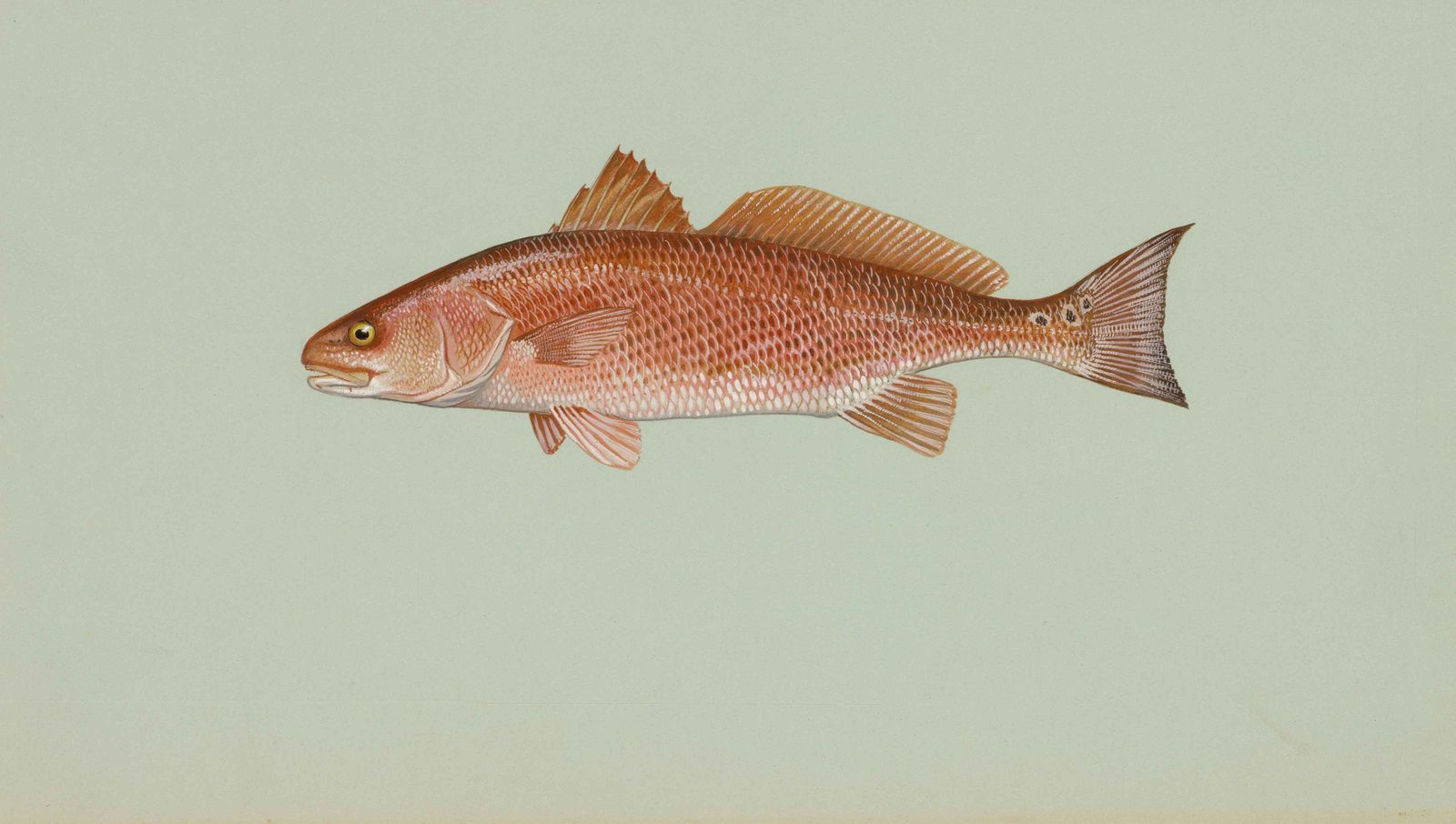
A red drum has a copper-bronze body with one or more black spots near the tail, no chin barbels and a low-set mouth for feeding on the bottom. Black drum have chin barbels and no tail spot.
The Atlantic States Marine Fisheries Commission (ASMFC) says red drum were historically found from Massachusetts to Florida, though few have been reported north of the Chesapeake in recent years. Juveniles use estuaries and inlets, fish older than about 4 live in deeper water, and spawning is at night nearshore in summer and fall. Males mature at 1 to 4 years and females at 3 to 6 years. They can live as long as 60 years and reach 60 inches and over 90 pounds. Big “bull” reds are old, highly productive females, so releasing them protects the breeding stock. Federal waters are closed to harvest.
Where to look
Red drum hold in sand and mud flats, shell and oyster bars, grass beds and inlet rubble. In the surf, fish the first and second troughs. Docks and pilings, bridge-tunnel islands, shoals and sloughs along the beach hold them too. They are active across the warm season, and moving tide is better than slack. Walk the beach, read the troughs and fish the incoming tide.
Tackle that fits
Rod. Delaware surf anglers report using 10 foot rods rated for 15 to 30 pound line and 2 to 4 ounces, and another source suggests 10 to 12 foot medium rods with sinkers of 3 to 6 ounces. For inlets and boats, 7 to 8 foot medium-heavy rods are common. A longer, medium-heavy blank casts heavy rigs past the bar, and a stout butt handles big fish. Corrosion-resistant guides and a secure reel seat matter in salt.
Reel and line. A 5000 to 8000 size spinning reel, or a surf conventional reel, with at least 150 yards of capacity. Line choices run from 20 to 50 pound braid or 17 to 30 pound mono, with a heavy fluorocarbon shock leader of about 10 feet for surf casting. These are typical setups, not requirements.
Hooks and rigs. Fish-finder or bank-sinker rigs with a 6/0 to 9/0 circle hook for cut bait, and a pyramid sinker to hold in the surf. Circle hooks reduce deep hooking, which matters for fish you release.
Baits and lures
Cut spot chunks were a surf choice in Delaware in October 2026. Bunker, mullet, blue crab halves, shrimp and clams also work. Use fresh, bloody bait on a circle hook fished on the bottom, with the rod in a sand spike and a little slack so the hook can set itself. Use larger baits in spring for bulls and smaller baits in fall for slot fish.
For lures, bucktails and paddle-tails at inlets, gold spoons and soft plastics over shallow flats and topwater on calm mornings all take fish. Natural colors suit clear water, and dark or high-contrast colors suit stained water.
Three techniques
Surf cut bait. Walk the beach and read the troughs. Rig a fish-finder with a circle hook and a heavy leader and bait it with a cut spot. Cast just past the second bar and set the rod in a sand spike. When the rod loads, lift and begin reeling steadily, without a hard strike. Land the fish in the wash, measure it and release oversized fish quickly.
Dock and inlet drifting. Move with the tide and drop a live shrimp or cut bait near pilings. Keep slack out of the line, allow a gentle run, then reel.
Sight casting in shallows. In bays with clear shallow water, wade or pole quietly, look for wakes or tails and cast a soft plastic ahead of the fish, retrieving slowly.
Seasons and conditions
Big bulls arrive in spring in some areas, and in Delaware’s surf, oversize fish are mostly released. In summer, slot fish are in bays, inlets and the early and late-day surf. Fall is a strong time for slot and over-slot fish in the surf. In winter the fish leave the northern part of the range.
Fish moving tide, early morning and the hour around dusk. A modest surf with some color is productive. Avoid dangerous swell and strong rips, and never wade into rough surf without a plan.
Common mistakes
- Using stale bait.
- Fishing slack water.
- Ignoring slot and maximum-size rules.
If you are not getting bites, move along the beach to find a trough or hole, switch to fresh bloody cut bait, fish the first two hours of the incoming tide, try a different edge of a bar and downsize baits in fall.
Handle fish with care
Release oversize fish immediately, keep them wet, support the body and use a dehooker. ASMFC notes that the northern stock is not overfished, but fishing mortality is rising, so careful release matters.
Red drum in Delaware
The best Delaware water is the surf and the inlets. See the Delaware surf fishing guide and the Indian River Inlet guide. The rules and license guide and the surf guide give the slot and daily limit.
Build the rod to the water
A rod for surf drum should cast a heavy rig and still turn a big fish. Tell us where you fish and what you target, and we can build the rod around it.
In Maryland
Maryland sets a slot size and a daily limit for red drum in the Atlantic and coastal bays. See the Maryland rules guide and the Assateague surf guide.
In Virginia
Virginia sets a size window for red drum, and the fish are caught around the lower Bay and the bridge-tunnel. See the Virginia rules guide and the bridge-tunnel guide. We have not stated a daily limit, so check VMRC.
In New Jersey
New Jersey allows red drum within a size window, one fish a day, with no closed season. No New Jersey water guide names red drum as a target, so the rules guide is the place to check the window.
Fishing for it by state
- Red Drum Fishing in Delaware (Delaware)
Frequently asked questions
How can you tell a red drum from a black drum? +
Red drum have copper-bronze bodies, a black spot near the tail and no chin barbels. Black drum have chin barbels and no tail spot.
What bait do surf anglers use for red drum? +
Fresh, bloody cut bait such as spot chunks, fished on the bottom with a circle hook.
Sources
- ASMFC: Red drum (accessed October 24, 2026)
- 2026 Delaware Fishing Guide (PDF) (accessed November 1, 2026)