
How to Catch Blue Catfish: Gear, Bait and Technique
Last verified:
By BCRods
Quick facts
- Where
- Tidal freshwater rivers and large reservoirs, along channel edges and deep holes
- Best seasons
- Year-round; warm months for numbers
- Typical rod
- 7 to 8 foot heavy conventional or heavy spinning
- Best baits
- Cut bunker, cut herring and other cut bait
Blue catfish are the largest catfish in North America, and in the Mid-Atlantic they have become one of the biggest freshwater fish you can catch from a bank or boat. They are also an invasive species in the Chesapeake region, which affects how you should treat them. This guide covers where to find blues, the heavy tackle and cut baits that work, the techniques that put fish on the bank and what to check in your state’s rules guide, since some states ask or require anglers not to release them.
Know the fish
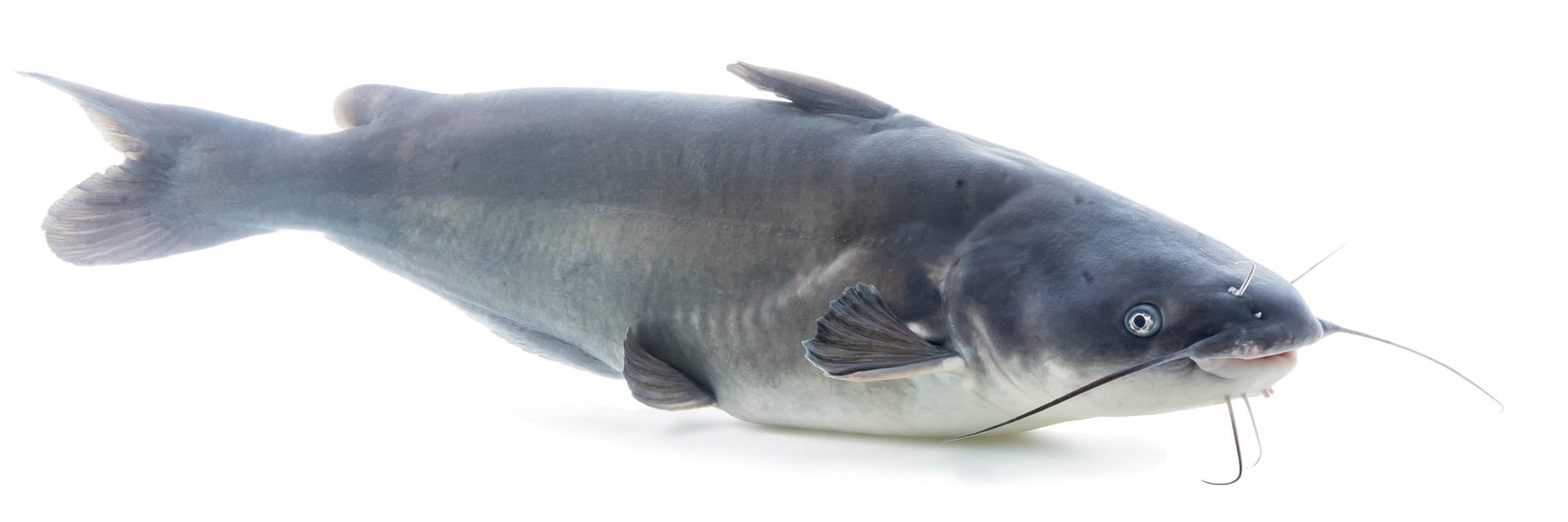
A blue catfish is long and slender with a deeply forked tail and a straight-edged anal fin, as if clipped with scissors. The body is bluish-gray above with a white belly. Blues can exceed 100 pounds. Maryland’s state record is 84 pounds, and Delaware’s record, set in 2023, is 53 pounds.
Blue catfish are invasive in the Chesapeake region, and they feed on a wide range of fish and invertebrates. Maryland asks anglers to kill rather than release blue and flathead catfish and snakehead, and moving live fish to another water body is illegal there. Delaware prohibits possessing live blue or flathead catfish. Rules differ by state, so check yours.
Where to look
Look along channel edges, deep holes, current seams, ledges, bridge piers and deep tidal channels, usually in 10 to 60 feet of water on sand, mud, rock or ledges. Fish current, because moving water and changes in current trigger bites. Larger fish are often in cooler months. Blue catfish are common and large in the Nanticoke River, where DNREC reported cut bunker and any cut bait working in October 2026.
Tackle that fits
Rod. A 7 to 8 foot heavy conventional or heavy spinning rod. Big fish near current and snags need backbone and drag. A long butt gives leverage, strong guides handle heavy braid, and a reel seat should stay tight under load. A protective finish helps in tidal exposure.
Reel and line. A strong-drag reel, 4000 to 6000 class or larger, with high line capacity, and about 50 pound braid or 30 pound and heavier mono. These are typical setups, not requirements.
Hooks and rigs. A 6/0 to 10/0 circle hook on a sliding-sinker rig, with a sinker sized to the current. A Delaware record holder’s advice, as reported by DNREC, was “big bait, big hooks, and patience.”
Baits
Cut bunker or any cut bait is the standard, along with fresh herring or gizzard shad. Chicken liver works for smaller fish. Use large chunks on a circle hook and leave the line slack so the circle hook can set. In cold water, use fresh, oily baits and stay near deep holes. Lures are rarely the best choice, though heavy jigs bounced along current seams occasionally take fish.
Three techniques
Anchored cut-bait fishing. Anchor up-current of a channel edge and rig a sliding sinker with a circle hook. Cast a large chunk to the channel edge. When the rod loads, wait for steady pressure and reel.
Bank fishing. Use a rod holder and check the bait every 20 to 30 minutes.
Chumming. Put cut bait into the current and keep fresh baits flowing.
Seasons and conditions
In spring, fish move into shallower areas as the water warms. In summer they are active at night and in the cool of the evening. In fall, big fish feed up. In winter, trophy fish feed in deeper channels. Fish moving tides, and be ready when the current changes.
Common mistakes
- Using light tackle for big fish.
- Setting the hook too early on circle hooks.
If you are not getting bites, move to a deeper channel, use fresher or larger cut bait, fish through the tide change and check your drag and rod stability. A fish finder helps locate holes.
Handle fish with care
Use heavy-duty gloves, a lip gripper and a big net, because large fish are strong. Where release is not required, do not move fish between waters. Check state consumption advisories before eating large fish.
Blue catfish in Delaware
The Nanticoke River is Delaware’s blue catfish water, and the Delaware River holds them too. See the Nanticoke River guide and the Delaware River and C&D Canal guide. In Delaware, blue and flathead catfish must not be returned to the water, and the rules and license guide explains the details.
Build the rod to the water
A heavy catfish rod should carry load and sit well in a holder. Tell us where you fish and what you target, and we can build the rod around it.
In Maryland
In Maryland, blue catfish are an invasive species. Moving live blue catfish to another water is illegal, and DNR asks anglers to report sightings. See the Maryland rules guide.
In Virginia
Virginia has blue catfish in the tidal James and in Buggs Island Lake. DWR asks anglers not to move catfish between waters. We have not published the tidal James limit, because the 2026 digest is inconsistent, so check DWR. See the James River guide and the Virginia rules guide.
Fishing for it by state
- Blue Catfish Fishing in Delaware (Delaware)
Frequently asked questions
What is the best bait for blue catfish? +
Fresh cut bait such as bunker or herring, fished on the bottom on a sliding-sinker rig.
Are blue catfish invasive? +
In the Mid-Atlantic they are. Some states ask or require anglers not to release them, so check your state's rules.
Sources
- Maryland DNR: Invasive fish (accessed October 24, 2026)
- 2026 Delaware Fishing Guide (PDF) (accessed November 1, 2026)