
Nanticoke River Fishing in Seaford and Upriver
Last verified:
By BCRods
Quick facts
- Water
- Tidal river, Seaford and upriver
- Access
- Seaford (4-lane ramp, fishing pier); Phillips Landing on Broad Creek (3-lane ramp, kayak launch); Woodland Wharf (car-top)
- Striped bass
- Catch and release only April 1 to May 31
- Shad
- Taking American or hickory shad is unlawful on the Nanticoke and its tributaries
- Catfish
- No size or daily limit; blue and flathead catfish must be killed, not released
- Rod fit
- Heavy catfish rod; medium-heavy casting rod for bass
Rules snapshot
Public access on the Nanticoke River
Seaford: boat ramp (4 lanes, ADA courtesy dock) and fishing pier. Phillips Landing on Broad Creek: boat ramp (3 lanes, ADA courtesy dock, kayak launch); no pier, but access along the bulkhead. Woodland Wharf: unimproved, car-top launch only, with access along the bulkhead. Courtesy docks are for launching, not fishing. · 2026 Delaware Fishing Guide, tidal access areas, checked November 1, 2026
Tidal boat ramps
Motorboats launched from tidal access areas run by the Division of Fish and Wildlife must be registered in Delaware or have a valid Tidal Access Boat Ramp Certificate, which cost $35 when we checked. Fishing, crabbing or swimming from the floating courtesy docks at Division boat ramps is prohibited unless posted otherwise. · DNREC boating registration, checked November 1, 2026
Striped bass spawning season
From April 1 through May 31, striped bass may be caught and released only, with no harvest, in the Nanticoke River and its tributaries; the Delaware River and its tributaries north of a line due east from the south jetty at the mouth of the C&D Canal; and the C&D Canal and its tributaries. · 2026 Delaware Fishing Guide (PDF), checked November 1, 2026
Striped bass (tidal)
1 fish a day. Size 28 to 31 inches, except 20 to 24 inches only from July 1 to August 31 in Delaware Bay, the Delaware River and their tributaries. Catch and release only on the spawning grounds from April 1 to May 31. The guide notes changes may be needed for some species. · Delaware Fishing Guide, tidal limits (updated Sept. 23, 2026), checked November 1, 2026
Hooks for striped bass with natural bait
Non-offset circle hooks are required when fishing for striped bass with cut or whole natural baits such as clams, squid, mackerel, menhaden, sea worms or eels. · 2026 Delaware Fishing Guide (PDF), checked November 1, 2026
Shad and river herring
American shad: possession limit 2. Hickory shad: possession limit 10. Taking American or hickory shad from the Nanticoke River or its tributaries is unlawful. River herring (alewife and blueback) are closed to harvest. No fishing with any type of net within 300 feet of a dam or spillway on a tidal river, stream or canal. · 2026 Delaware Fishing Guide (PDF), checked November 1, 2026
White perch (tidal)
Minimum size 8 inches. No daily limit. · Delaware Fishing Guide, tidal limits (updated Sept. 23, 2026), checked November 1, 2026
Catfish, any species (tidal)
No size limit and no daily limit. · Delaware Fishing Guide, tidal limits (updated Sept. 23, 2026), checked November 1, 2026
Snakehead, blue catfish and other invasive fish
It is unlawful to transport, purchase, possess or sell live walking catfish, white amur (grass carp), northern or blotched snakehead, blue catfish or flathead catfish without the written permission of the Director. The guide says that if you catch a northern snakehead, blue catfish or flathead catfish, do not return it to the water: kill it and contact DNRECFisheries@delaware.gov or 302-739-9914. · 2026 Delaware Fishing Guide (PDF), checked November 1, 2026
Largemouth bass in tidal waters
The guide lists largemouth bass limits in its freshwater table and not in the tidal table. Check with DNREC whether the freshwater limits apply on tidal rivers. Delaware Fishing Guide
Delaware fishing license fees
Resident (ages 16 to 64): $8.50 a year. Non-resident (age 16 and over): $20.00 a year, or $12.50 for seven consecutive days. One license covers both fresh and tidal waters and is good for the calendar year. · DNREC license fees, checked November 1, 2026
Who does not need a fishing license
Delaware residents 65 and older (with proof of age and residency) and anyone under 16 are exempt from the license. Anglers 16 and older need a free FIN number, and exempt anglers may need to apply for one separately. · DNREC exemptions, checked November 1, 2026
Fish consumption advisory: Nanticoke and Broadkill rivers
Neither the Nanticoke River nor the Broadkill River is named in DNREC's advisory table, so the default applies: 52 meals a year (8-ounce adult serving) for all finfish. · DNREC fish consumption advisories, checked November 1, 2026
This is not legal advice. Rules change, so confirm with the state agency before you fish.
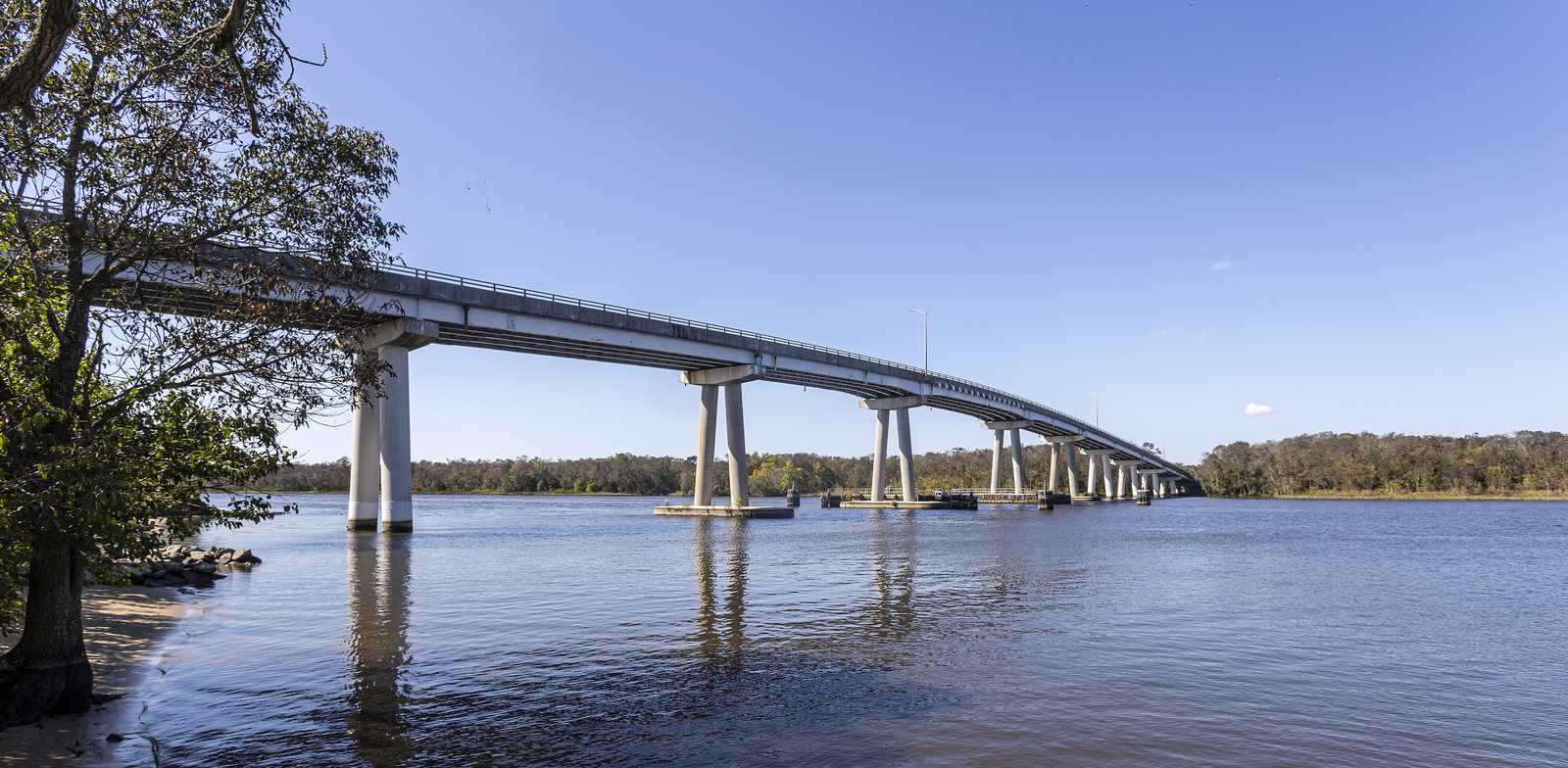
The Nanticoke River in Sussex County is known for big catfish, and it is also a tidal river with its own set of rules for striped bass, shad and tidal fish in general. Seaford is the main hub, with a four-lane boat ramp and a fishing pier. This guide covers where you can get on the water, what the rules say, what to expect from blue catfish and other fish, and how to rig for a tidal river.
Where to get on the water
The Delaware Fishing Guide lists three public access areas on the Nanticoke and its Broad Creek tributary, and the summary above shows each with its facilities.
- Seaford has a four-lane boat ramp with an ADA courtesy dock and a fishing pier. It is the easiest access for anglers without a boat.
- Phillips Landing on Broad Creek has a three-lane ramp, an ADA courtesy dock and a kayak launch. The guide lists no pier there, but it notes access along the bulkhead.
- Woodland Wharf is an unimproved access for car-top boats only, with access along the bulkhead.
Courtesy docks are for launching and loading, and fishing from them is prohibited unless posted otherwise. Motorboats launched from tidal access areas run by the Division of Fish and Wildlife must be registered in Delaware or carry a Tidal Access Boat Ramp Certificate. Shoreline access depends on your own mobility, and the guide suggests visiting a site first or calling the Division if you have questions about access.
Blue catfish and the records
Blue catfish are the headline fish. DNREC’s state records page lists a 53-pound blue catfish, and DNREC’s October 2023 news release about that fish places the catch on the Nanticoke River. A record fish like that is rare, but the river has a reputation for large catfish, and a big catfish is a realistic target with the right gear.
Blue catfish are also an invasive species in Delaware, and that changes how you treat them. It is unlawful to transport, buy, possess or sell a live blue catfish without the written permission of the Director, and the Delaware Fishing Guide says that if you catch a blue catfish, flathead catfish or northern snakehead you should not return it to the water. Kill it and contact DNREC with the details. In tidal waters there is no size limit and no daily limit on catfish of any species, as shown in the summary. The guide asks you to document an invasive catch by freezing the fish or taking a good photo.
Rules to know
The rules summary above covers the points that matter most on this river.
- Striped bass. From April 1 through May 31, striped bass in the Nanticoke River and its tributaries are catch and release only. Outside that window the tidal limit and size range in the summary apply. When fishing for striped bass with cut or whole natural bait, which includes sea worms, you must use a non-offset circle hook.
- Shad. It is unlawful to take American or hickory shad from the Nanticoke River or its tributaries. If you catch one, release it.
- River herring. Alewife and blueback herring are closed to harvest everywhere.
- White perch. The tidal minimum is 8 inches, with no daily limit.
- Largemouth bass. The guide lists bass limits in its freshwater table but not in the tidal table, so we cannot tell you which limit applies on the tidal river. Check with DNREC before you keep one.
Anyone 16 or older needs a Delaware fishing license unless exempt, and Delaware does not offer reciprocity with other states. The Delaware rules and license guide covers licenses and exemptions.
Fishing for catfish
Catfish feed by smell and on the bottom, so the standard approach is a fish-finder or sliding sinker rig with cut bait, fished on or near the bottom in or beside deeper water and current breaks. Fresh cut bait from oily fish and whole small fish such as bluegill are common choices. Circle hooks in a size that suits the bait, such as 6/0 to 10/0 for big baits, hook fish in the corner of the mouth and make releasing a catfish easier, though blue catfish must be killed rather than released. These are widely used starting points, not requirements.
A rod for big river catfish needs backbone and line capacity: typically a heavy spinning or conventional rod in the 7 to 8 foot range, a large reel with a strong drag and braided line in the 50 pound range or heavy monofilament. A custom rod can be built around that job, with a stiff butt section for leverage and a tip that still shows a bite. If you tell us what you fish for and from where, we can build the rod to match.
Fishing for bass and perch
The river also holds largemouth bass, and a medium-heavy casting rod with 10 to 17 pound fluorocarbon or braid suits the cover along the banks. Soft plastics, jigs and spinnerbaits are common choices. White perch are a good option for lighter tackle. DNREC’s recent fishing reports name bloodworms and small shrimp as productive baits for white perch on tidal waters in the area.
Reading a tidal river
A tidal river changes with the water level. Banks, flats and shallow coves that are fishable at high tide can be dry or too shallow at low tide, and current speed in the main channel changes through the day. Check a tide table for the river before you go, plan to launch and return at a tide that works for your boat and let moving water guide where fish hold. Fish tend to set up along current breaks, deep holes, bends and structure where a river’s flow slows. Small boats and kayaks should watch wind and boat traffic.
Safety
Wear a life jacket on the water, check the weather before you launch and tell someone where you are going. Banks along tidal rivers can be soft and slippery. If you fish from the Seaford pier or the bulkheads, watch footing and keep lines clear of other anglers.
Eating the fish
The Nanticoke River is not named in DNREC’s fish consumption advisory table, so the default of 52 meals a year applies. The rules summary has the details and the date we checked it.
For more of Delaware, see where to fish near Lewes, Rehoboth and Millsboro and Delaware fishing.
Fish you can target here
Blue Catfish Fishing in Delaware
Where Delaware's record blue catfish live: the Nanticoke and Delaware River, baits, rigs and the live-possession ban.
Largemouth Bass Fishing in Delaware
Delaware bass rules (12 in, 6/day; Becks Pond 15 in, 2/day), top ponds and tidal rivers, and what DNREC surveys show.
Dock Tales from this water
Nearby waters
Delaware Fishing License, Limits and Rules
More fishing guides for Delaware
Frequently asked questions
Can I keep a blue catfish from the Nanticoke River? +
Yes. There is no size or daily limit on catfish in tidal waters, and the Delaware Fishing Guide says not to return blue catfish to the water. It is unlawful to possess one alive without the written permission of the Director.
Can I keep a striped bass from the Nanticoke in May? +
No. Striped bass in the Nanticoke River and its tributaries are catch and release only from April 1 through May 31.
Where is the best public access on the Nanticoke? +
Seaford has a four-lane boat ramp and a fishing pier. See the rules summary for the other access areas.
Sources
- 2026 Delaware Fishing Guide (PDF) (accessed November 1, 2026)
- Delaware Fishing Guide: tidal access areas (accessed November 1, 2026)
- Delaware Fishing Guide: tidal limits (accessed November 1, 2026)
- DNREC boating registration (accessed November 1, 2026)
- DNREC fish consumption advisories (accessed November 1, 2026)
- DNREC state records (accessed November 1, 2026)
Approximate location: Nanticoke River, Seaford, DE.