
Shenandoah River Smallmouth Fishing: Access and Rules
Last verified:
By BCRods
Quick facts
- Bass rule
- No bass 11 to 14 inches on all three forks; five a day
- Access
- 20 public points on the South Fork, five on the main stem
- Best fish
- Smallmouth, with stocked muskie and walleye
- Rod fit
- Medium-light spinning to wade; heavier for muskie and flatheads
Rules snapshot
Shenandoah River bass rule
North Fork, South Fork and mainstem Shenandoah: no largemouth or smallmouth bass 11 to 14 inches. · 2026 Virginia Freshwater Fishing & Boating digest, checked November 1, 2026
Muskellunge limits
Statewide: one a day, none under 40 inches. New River from Claytor Dam to the Virginia and West Virginia line: one a day; June 1 to the last day of February, none 40 to 48 inches; March 1 to May 31, none under 48 inches. · 2026 Virginia Freshwater Fishing & Boating digest, checked November 1, 2026
Channel, white and flathead catfish limits
20 a day with no length limit. All rivers below the fall line have no daily limit. DWR says flathead catfish are illegally introduced in some rivers and asks anglers not to move them. · 2026 Virginia Freshwater Fishing & Boating digest, checked November 1, 2026
Virginia fish consumption advisories
Fish consumption advisories apply on many Virginia waters. Check the Virginia Department of Health advisory list before you keep fish. Virginia Department of Health
This is not legal advice. Rules change, so confirm with the state agency before you fish.
Rules: Virginia DWR (freshwater)
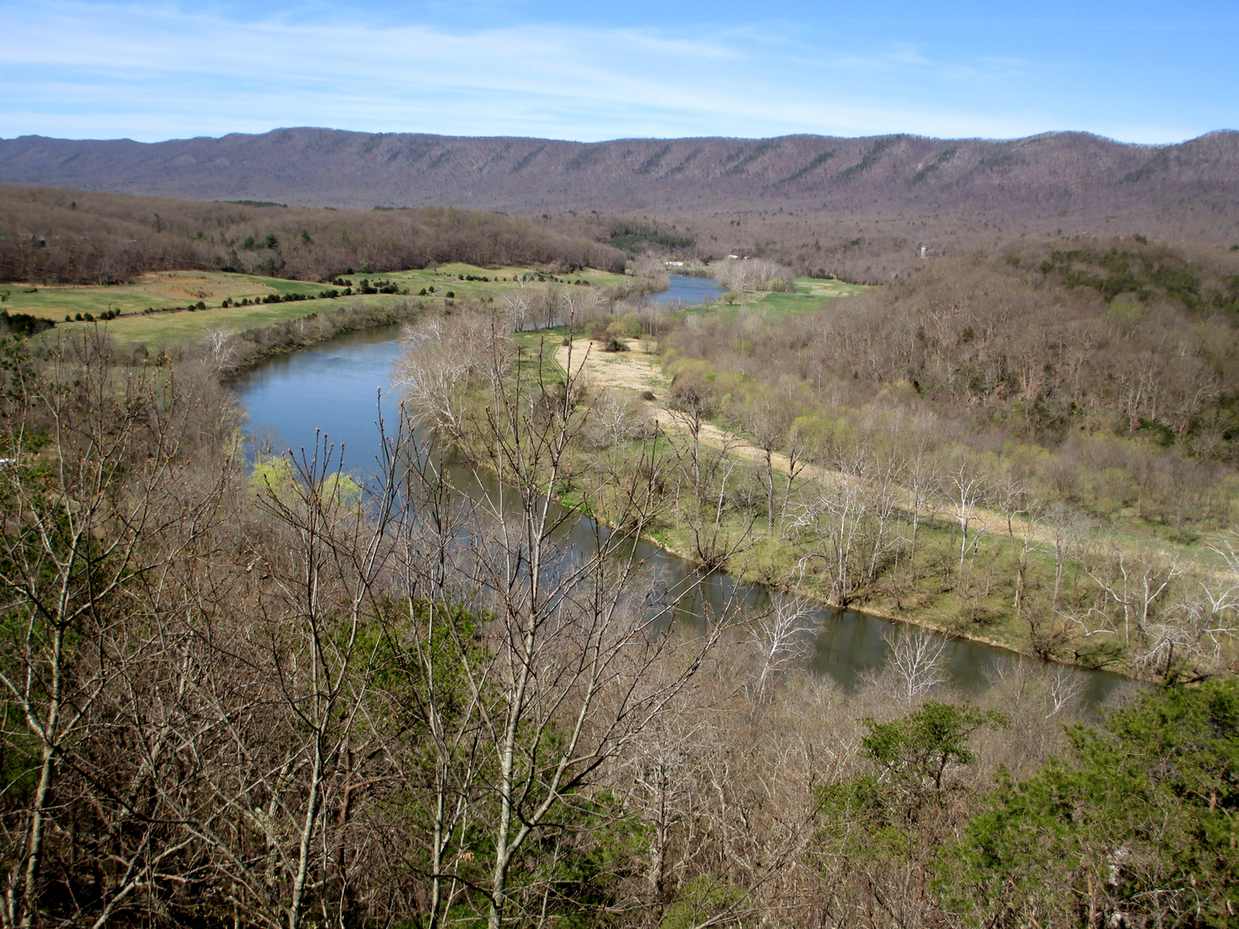
The Shenandoah River is formed at Front Royal where the North Fork and South Fork meet, and Virginia’s Department of Wildlife Resources (DWR) describes it as one of the top smallmouth bass rivers in the eastern United States. It is also a river of rules and private land: nearly all of its banks belong to landowners, the same 11 to 14 inch bass rule covers all three forks, and a few access points are the only places to put in. This guide pulls the DWR’s waterbody pages together into one place: what the three sections offer, where the public ramps are, which rules apply and how to float it safely. It is a good fit for anglers who like to wade or paddle and fish riffles with light tackle.
The three rivers
South Fork. The South Fork begins at Port Republic, where the North and South rivers meet, and runs about 97 miles north to Front Royal. DWR calls it a numbers fishery for smallmouth, with catch rates averaging up to three fish an hour, and notes that fish near 20 inches can turn up. Deep pools hold muskie, redbreast sunfish and rock bass, and DWR says channel catfish grow larger here than in the main stem. It is a popular paddling river, so tubes and canoes crowd the summer.
North Fork. The North Fork runs about 116 miles from northern Rockingham County to Front Royal. Smallmouth density is high and DWR reports catch rates around 1.2 an hour, with experienced anglers boating 50 or more in a day. Bedrock ledges cross the channel in the “seven bends” section between Woodstock and Edinburg and create productive habitat. Low summer flows often force paddlers to walk through shallows, and six dams plus several low-water bridges are the main hazards.
Main stem. Below Front Royal, the main stem flows 35 miles in Virginia before entering West Virginia. Smallmouth are less dense than in the forks, but DWR says growth is better and larger fish are more common, with catch rates up to two an hour. The main stem also holds largemouth up to seven pounds near woody debris, plenty of sunfish, stocked muskie and walleye, and, in the pool below Warren Dam, a good place to try for muskie.
Rules on all three forks
The same bass rule applies from Port Republic and Route 42 on the North Fork down to the state line: five black bass a day in total, and no bass 11 to 14 inches may be kept. DWR also lists 50 sunfish, 25 rock bass, 25 crappie (South Fork and main stem), one muskie of at least 40 inches, 20 channel catfish and, in the South Fork and main stem, no daily limit on flathead catfish. The main stem also lists walleye at 5 a day with an 18-inch minimum. The rules snapshot above quotes the digest and links to the agency, and the full tables are in the Virginia rules guide.
Flathead catfish are not native. DWR says they were accidentally or illegally introduced, were first found in the main stem in the fall of 2021, are reproducing and are most common between Warren Dam and Route 50. It is illegal to move fish between waters without a permit, so never carry a live flathead or any other fish to another river.
Where to put in
DWR counts 20 public access points on the South Fork, five on the main stem and several on the North Fork. Away from them the banks are private, so stay below the high-water line and respect posted land. A few examples from the DWR pages, listed upstream to downstream:
| Access | River | Notes from DWR |
|---|---|---|
| Port Republic | South Fork | Ramp for up to 25 vehicles, at the confluence of the North and South rivers |
| Elkton | South Fork | DWR ramp; riffles and runs downstream for smallmouth |
| Shenandoah | South Fork | Parking above a 10-foot dam; hand-launch below it |
| Newport and Alma | South Fork | Primitive access, not recommended for trailers; a hydroelectric dam lies between them |
| Karo and Simpson | South Fork | Karo has a rough trailer ramp; Simpson is canoe access only |
| Front Royal | South Fork and North Fork | Ramp on Route 681; Riverton landing on the North Fork |
| Meems Bottom, Chapmans Landing | North Fork | Hand launch at Meems Bottom, concrete ramp at Chapmans |
| Seven Bends State Park | North Fork | Two hand-launch points for short evening floats |
| Morgan’s Ford, Farms Riverview, Berry’s Ferry, Lockes, Castleman’s Ferry | Main stem | DWR sites; Morgan’s Ford has no improved ramp |
Warren Dam sits just below Front Royal and there is a developed portage around it, maintained by the power company. Ramp conditions, closures and water levels change, so check DWR’s maps before you go.
When and how to fish
DWR’s own tips for smallmouth are simple: look for faster current directly below riffles and ledges, wade the riffles and runs, and use crayfish imitations, small jigs and spinners. Largemouth sit near woody debris, and a pig-and-jig works behind low dams. Muskie hold in deep pools, and DWR says the pool is where to look. Crappie use jigs and minnows in deep pools near the channel. Channel catfish feed heavily when the water reaches the low to mid 60s Fahrenheit, moving to the heads of pools. Walleye stack up between Warren Dam and the Route 50 ramp in early March and can be caught year-round in deep holes just outside the main current. Smallmouth bite through the cold months, and some of the largest fish come in colder water.
Safety, algae and fish advisories
Summer brings dense aquatic vegetation and heavy canoe and tube traffic. Watch for dams, low-water bridges and rapids, and check gauge readings from the U.S. Geological Survey before a float, because levels change with rain. DWR’s North Fork page warns that parts of the North Fork often have excess algal growth in summer and that some blue-green algae can release toxins that affect people and pets, with current information on the Virginia Department of Health’s website.
Fish consumption advisories apply on parts of the Shenandoah, including because of mercury released decades ago on the South River. We did not get a clean read of the current advisory table, so we do not publish meal numbers. Check the Virginia Department of Health before you keep fish. The history is in the South River mercury tale.
Tackle that fits the river
A 6 1/2 to 7 foot medium-light spinning rod with a fast tip handles most of what DWR describes: small jigs, inline spinners and crayfish baits for smallmouth, and light enough to wade all day. Step up to a medium-heavy rod with heavier line for muskie and flathead catfish. A custom rod can be built for the weight of lure you throw most and for the long wading days this river invites.
Check before you go
DWR’s Verona office can answer river questions at (540) 248-9360. Compare other Virginia rivers in the James River guide and the New River guide, and read the rules and licenses guide for the license that covers you.
Fish you can target here
Dock Tales from this water
Nearby waters
Virginia Fishing License, Limits and Rules
More fishing guides for Virginia
Frequently asked questions
What is the bass rule on the Shenandoah? +
You may not keep bass 11 to 14 inches long, and the daily limit is five black bass combined. It applies to the North Fork, South Fork and main stem.
Can I move a flathead catfish to another river? +
No. DWR says flatheads were illegally introduced into the Shenandoah and it is illegal to stock fish into public waters without a permit.
Is the Shenandoah public land? +
Almost none of it. The banks are private except at DWR access points and a few small public parcels, so use the ramps and stay below the high-water line.
Sources
- Virginia DWR: Shenandoah River, South Fork (accessed November 1, 2026)
- Virginia DWR: Shenandoah River, North Fork (accessed November 1, 2026)
- Virginia DWR: Shenandoah River, main stem (accessed November 1, 2026)
- 2026 Virginia Freshwater Fishing & Boating digest (PDF) (accessed November 1, 2026)
Approximate location: Shenandoah River, Front Royal, VA.