
How to Catch Smallmouth Bass: Gear, Bait and Technique
Last verified:
By BCRods
Quick facts
- Where
- Gravel and rock in cool, clear, moving water
- Best seasons
- Late spring through fall
- Rod
- 6 ft 6 in to 7 ft, medium-light to medium, fast spinning
- Line
- 6 to 10 lb mono, or 8 to 15 lb braid with fluorocarbon leader
Smallmouth bass are a river and rocky-lake fish that fight harder than their size suggests. They are most at home in cool, clear, moving water with rocks and current breaks. This guide covers how to recognize them, where they hold, the light tackle that suits them, three techniques and how to protect them in spring. Seasons and harvest rules differ by state, so always check your state’s current rules.
Know the fish
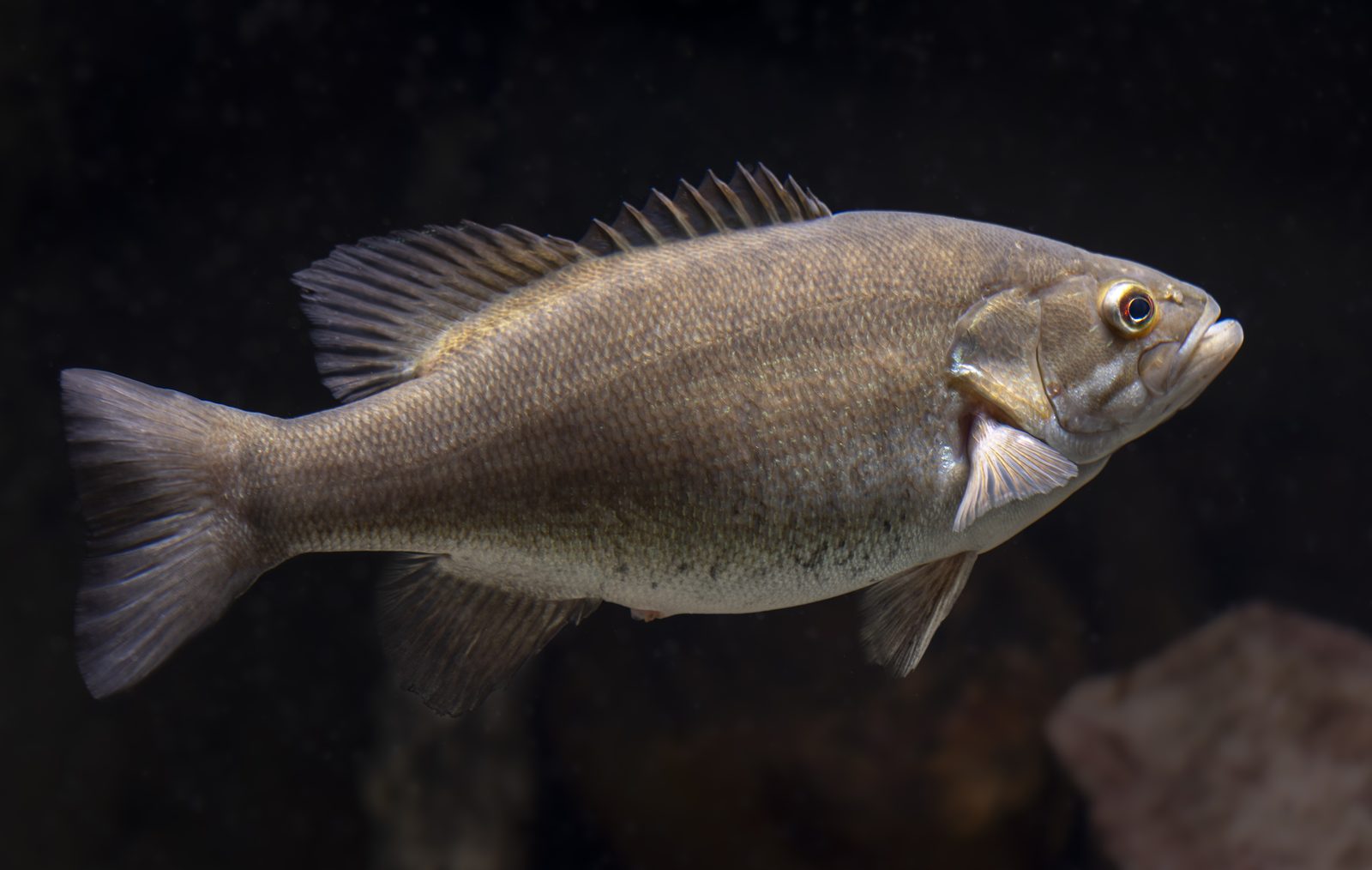
Smallmouth are brown to bronze with vertical broken bars, a white belly and, in some waters, a red eye. The upper jaw does not reach past the back of the eye, which separates them from largemouth. Fish over 20 inches and 5 pounds exist, and they live about 15 years.
What they do
Smallmouth prefer cool, well-oxygenated, gravel-bottom streams and use riffles, runs or deep pools depending on the season. Juveniles eat bottom insects, and adults eat fish, crayfish and frogs. They spawn in spring once the water passes 60 degrees, and males build gravel nests in 2 to 4 feet and guard the young. They are sensitive to silt, heat and pollution, and high spring flows can hurt a year class.
Where to look
Smallmouth live around gravel, rock, boulders and ledges, typically in 2 to 15 feet in rivers and deeper in lakes in summer and winter. Look for pool heads and tail-outs, eddy lines, current breaks behind rocks, boulders, fallen trees and rock points. Soft water beside fast current holds fish, and stable flows are better than rapidly changing ones.
Tackle that fits
Rod. A 6-foot-6 to 7-foot medium-light to medium fast spinning rod is a good all-round choice, with a sensitive tip for tubes and finesse baits and a moderate butt to protect light line. A light blank reduces fatigue when you wade, and corrosion-resistant guides help in wet-wading.
Reel and line. A 2000 to 3000 spinning reel with a smooth drag, spooled with 6 to 10 pound monofilament or 8 to 15 pound braid with a fluorocarbon leader.
Terminal tackle. A 3/0 extra-wide-gap hook for tubes, 1/4 to 3/8 ounce jig heads, and size 1 to 4 hooks for bait. A fly rod in the 6 to 8 weight range with streamers and poppers is a good alternative. These are typical setups, not requirements.
Baits and lures
Crayfish, minnows and hellgrammites, drifted along the bottom or under a bobber, are the classic baits. For lures, use tubes, jerkbaits, crankbaits, spinners, topwater, bucktail jigs and twisters in brown, black, motor-oil green and shad colors. Natural colors suit clear water, and brighter colors suit stained water.
Three techniques
Tube or jig drift. Cast quarter-upstream and let the lure tick bottom as it drifts. When you feel a tick or extra weight, set the hook.
Jerkbait in cool water. Cast across the current, twitch the bait, then pause for 2 to 5 seconds. Strikes usually come on the pause.
Topwater at dusk. Choose a flat stretch and walk a stickbait slowly. Wait for the swirl before you set the hook.
Seasons and conditions
Smallmouth are on rocky flats before spawning in spring, then fish early and late in summer when topwater is effective. In fall they feed hard and move to deeper pools as the water cools, and in winter they sit in deep holes. Stable weather and flows matter, and very high or muddy water is not worth the effort. Check river gauges before you wade.
Shore and boat
Wading and shore access are common on rivers, and drift boats and kayaks open more water. Wear a life jacket, use a wading staff and watch for rising water and releases from dams.
Common mistakes
- Heavy line and big lures in clear water.
- Fishing fast through current.
Expert tips
Read river gauges, target current seams and rotate lures every 15 minutes or so. Polarized glasses help you see fish and structure.
Handle fish with care
Wet your hands, keep fights short, and release spawn-guarding fish quickly. Do not cast again and again at visible nests, and avoid stressing fish in warm water.
Smallmouth in Maryland
Maryland has strong smallmouth fishing in the upper Potomac, Deep Creek Lake and the lower Susquehanna. For rules, see the Maryland rules guide.
In Virginia
Virginia is a strong smallmouth state, with the James, the Shenandoah, the New River and the Jackson all covered on this site. Each river has its own slot rule, so read the Virginia smallmouth guide and the Virginia rules guide before you keep a fish.
In New Jersey
We could not confirm a separate statewide smallmouth limit for New Jersey, so check the agency. The Delaware River has its own bass catch-and-release window, described in the Delaware River guide, where smallmouth are the summer fish.
In Pennsylvania
Pennsylvania has some of the East’s best smallmouth water and some of its strictest rules: the Susquehanna and Juniata are catch and release only for bass all year, and a spring release window applies on the Delaware and in Big Bass lakes. See the Pennsylvania smallmouth guide.
Fishing for it by state
Frequently asked questions
What is the best lure for smallmouth bass? +
Tubes, jerkbaits, crankbaits, spinners and topwater in natural colors. Drift tubes along bottom, pause jerkbaits and walk topwater at dusk.
Where do smallmouth hold in a river? +
Pool heads and tail-outs, eddy lines and current breaks behind rocks, ledges and fallen trees.
Sources
- Virginia DWR: smallmouth bass (accessed October 24, 2026)