
How to Catch Bluefish: Gear, Bait and Technique
Last verified:
By BCRods
Quick facts
- Where
- Surf, inlets, bays, piers and nearshore ocean
- Best seasons
- Spring through fall; big fish in the fall
- Typical rod
- 7 to 9 foot medium-heavy spinning
- Best lures
- Metal lures, poppers and swimming plugs
Bluefish are fast, aggressive, toothy schooling predators, and when they are in, the fishing can be nonstop. They hit metal lures and cut bait hard, and they will bite through light leaders. This guide covers how to find them, what to throw, how to rig so you keep your lures and how to handle a fish with a mouthful of teeth. Limits for bluefish are set by state and change, so check your state’s rules guide.
Know the fish
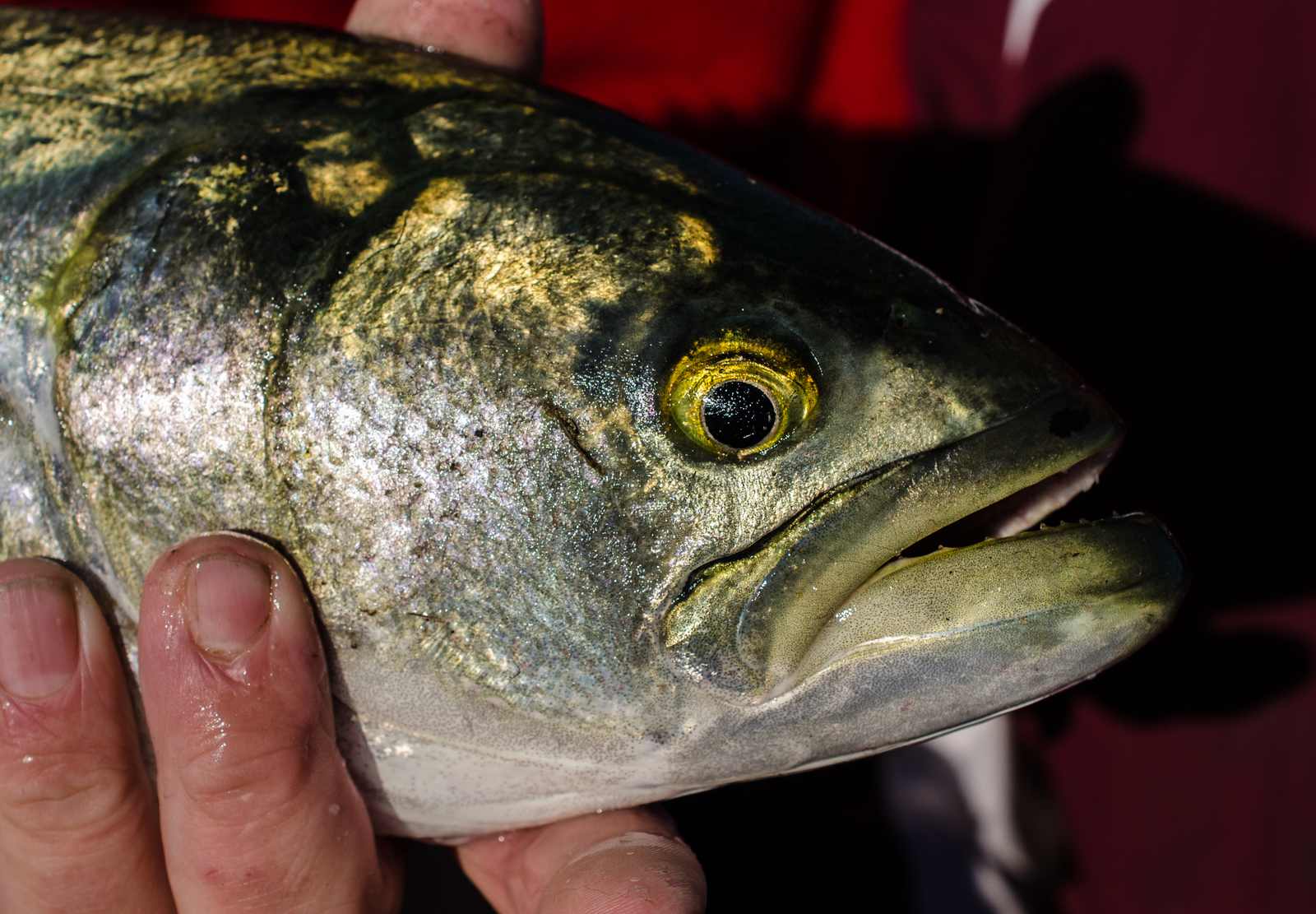
A bluefish has a blue-green back, silver sides, a forked tail and sharp teeth. Small ones are called snappers, and big ones are called choppers. According to the Atlantic States Marine Fisheries Commission (ASMFC), bluefish school by size, in groups that can cover tens of square miles. They concentrate from Maine to Cape Hatteras in summer and move offshore between Hatteras and Florida in winter. They are found near inlets, shoals and rips, can exceed 39 inches and 31 pounds, mature at about age 2 and spawn offshore. The 2023 assessment found the stock no longer overfished but still rebuilding.
They are migratory predators that chase bait to the surface. A feeding blitz looks like boiling water with diving birds.
Where to look
Bluefish are not bottom fish. They follow bait schools, and you will find them at inlet mouths, rips, jetty ends and surf troughs, over sandy shoals and structure, from the surface to midwater. They prefer moving water, so an incoming tide at an inlet is a good place to start. Look for birds, spraying bait and oil slicks. At Indian River Inlet, DNREC reports have described blues from snappers to over 10 pounds on metal lures on the incoming tide.
Tackle that fits
Rod. A 7 to 9 foot medium-heavy spinning rod is a good match. A fast tip casts light metal lures, a strong mid-section handles hard runs, and a long handle helps in the surf.
Reel and line. A 4000 to 5000 size spinning reel with a strong drag. Many anglers use 20 to 30 pound braid with a wire leader or a 40 to 60 pound fluorocarbon bite leader, because bluefish cut through light leaders. These are typical setups, not requirements.
Hooks. Single hooks on lures cause less damage to fish and anglers than trebles, and trebles need careful handling. For bait, use a 5/0 to 7/0 hook on a wire or heavy leader.
Baits and lures
Cut bunker is the classic bait, also mullet and live spot. Cut chunks about 2 to 3 inches long, hook them through the skin and fish them on a fish-finder rig with a wire leader. Fresh, oily bait is best in fall.
For lures, metal lures of 1 to 3 ounces, poppers, swimming plugs and bucktails all work. Retrieve fast and steady or erratically, since speed and flash trigger strikes. Use flashy patterns on sunny days and darker ones at night.
Three techniques
Casting metal. Look for diving birds, bait on the surface or slicks, and move toward the activity without running through it. Cast a metal lure beyond the school and let it sink a few seconds. Reel fast with the rod tip up. When a fish hits, keep the line tight instead of slamming the hook, and use a short wire or heavy fluorocarbon leader.
Chunking with cut bait. Hook a chunk through the skin on a heavy leader. Cast beyond the breakers, or drop at an inlet edge, using enough weight to hold bottom. Keep the rod in a holder and watch for a sharp pull, then lift to set the hook.
Trolling. Troll spoons or deep-diving plugs behind planers or a downrigger at 4 to 6 knots along rips and bait lines, using wire or heavy fluorocarbon leaders. Work the edges of rips where bait collects.
Seasons and conditions
Adults arrive as water warms, and surf and inlet action builds from May. Summer brings the best surf and inlet fishing at dawn and dusk, with snapper blues showing up in bays late in the season. In fall, larger fish follow migrating bait along the beaches, and cut bunker from the beach works. In winter they leave nearshore waters.
Incoming tide, early morning and evening are best, and overcast days extend the bite.
Common mistakes
- Using light fluorocarbon or no leader.
- Lifting a fish by hand instead of using pliers or a lip gripper.
- Casting into the school and then retrieving slowly.
- Leaving the hook-out tool at home.
If you are not getting bites, look for birds and bait, speed up the retrieve, change lure size or flash, and move along the beach to find the school.
Handle fish with care
Bluefish have sharp teeth, so use pliers and gloves. Release the fish quickly if you are not keeping it. If you are, keep only what you will eat, and bleed and ice it promptly, because bluefish are best fresh.
Bluefish in Delaware
Bluefish show up at Delaware’s inlets, surf, piers and bay shore. See the Indian River Inlet, surf fishing and Cape Henlopen guides. The rules and license guide has the current limits, and DNREC’s consumption advisories cover how often large bluefish should be eaten.
Build the rod to the water
A rod for blues should cast light metal and still handle a hard run. Tell us where you fish and what you target, and we can build the rod around it.
In Maryland
Maryland split its 2026 bluefish daily limit between shore or private-boat anglers and for-hire anglers. The numbers are in the Maryland rules guide.
In Virginia
Virginia manages bluefish through VMRC. We have not published the limits, so check VMRC. See the Virginia rules guide.
In New Jersey
New Jersey has no closed season and no minimum size for bluefish, with a per-person limit that is higher on a qualifying party or charter vessel. Reports describe bluefish at the Rip off Sandy Hook through much of the year. See the Sandy Hook guide and the rules guide.
Fishing for it by state
- Bluefish Fishing in Delaware (Delaware)
Frequently asked questions
Do bluefish bite through line? +
Yes. Their teeth cut light mono and fluorocarbon, so anglers use a short wire or heavy fluorocarbon leader.
What is the best bait for bluefish? +
Fresh, oily cut bait such as bunker or mullet, fished in chunks of about two to three inches.
Sources
- ASMFC: Bluefish (accessed October 24, 2026)
- 2026 Delaware Fishing Guide (PDF) (accessed November 1, 2026)