
How to Catch Black Drum: Gear, Bait and Technique
Last verified:
By BCRods
Quick facts
- Where
- Bays, shoals, channel edges and surf
- Best seasons
- The spring run, in May and June in Delaware Bay
- Typical rod
- Heavy 7 to 8 foot boat rod, or a heavy surf rod
- Best baits
- Clam, crab and shrimp
Black drum are big, powerful bottom feeders that move into Mid-Atlantic bays in spring, and the biggest are old breeding females. Catching one means heavy tackle, fresh clams and, in Delaware Bay, usually a night on an anchored boat. This guide covers how to find them, what to fish with, how to play and release one safely and what to check in your state’s rules guide before you keep a fish.
Know the fish
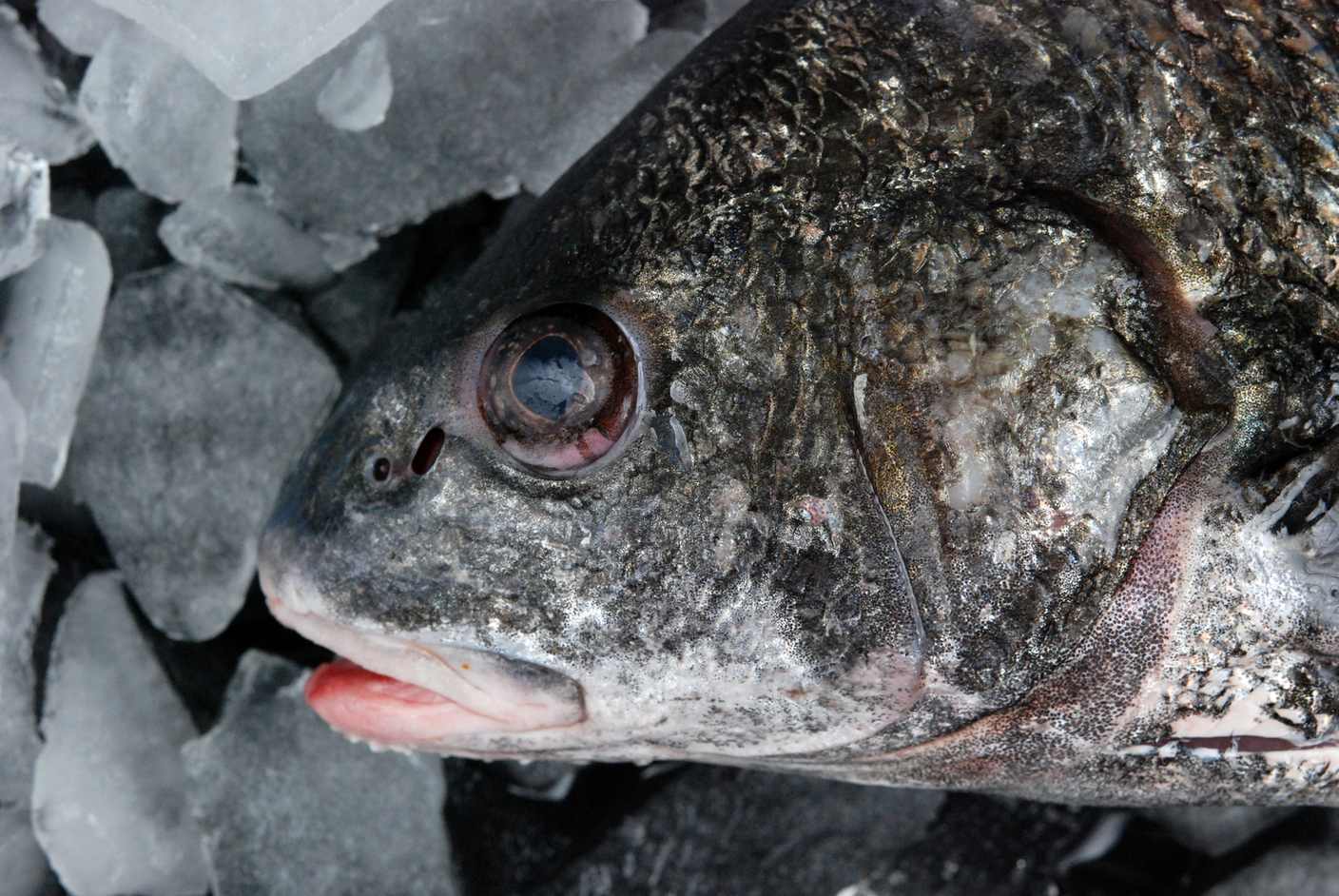
A black drum is gray to silver with a high-arched back and barbels on the chin. Young fish show vertical black bars. They resemble red drum but have chin barbels and no tail spot.
The Atlantic States Marine Fisheries Commission (ASMFC) says black drum range from the Gulf of Maine to Florida, can exceed 46 inches and 120 pounds and can live up to 60 years. They migrate inshore and north in spring and south in fall, feed mostly on the bottom and spawn from April through June in northern areas. The 2023 assessment found the stock not overfished. In Delaware Bay, the May and June run brings large fish, mostly females, and many anglers release them.
Where to look
Black drum feed on sand, shell and rubble that hold mollusks and crabs, usually in 10 to 40 feet in bays and in deeper holes and channel edges. Shoals, channel edges and bridge-tunnel structure are the usual places. Rising spring water temperatures, in the 50s and 60s, trigger the run, and tide and current matter. In Delaware Bay, regional reports describe fish on the shoals out of Lewes and Slaughter Beach. Surf fishing for them is also possible on Mid-Atlantic beaches.
Tackle that fits
Rod. Heavy 30-pound class tackle is the standard on a boat, with a heavy 7 to 8 foot rod, or a heavy surf rod. A strong butt and a progressive taper absorb big runs. Corrosion-resistant guides and a secure reel seat matter, and handle length should suit fighting from a boat.
Reel and line. A 6000-size or larger spinning reel, or a 30-pound conventional reel, with a smooth, strong drag. Many anglers use 40 to 80 pound braid with a heavy, abrasion-resistant leader of 50 to 80 pounds to deal with shell and structure. These are typical setups, not requirements.
Hooks and rigs. An 8/0 to 12/0 circle hook on a fish-finder rig with a 4 to 8 ounce sinker in current. A single large circle hook is safer for release.
Baits
Clam is the standard spring bait in Delaware Bay. Blue crab, peeler crab and shrimp also work. Thread several clams on the hook and use bait elastic to keep them on. Fresh clam matters, and chum can help at anchor. Lures are rarely used.
Three techniques
Anchored clam fishing at night. Boats in Delaware Bay typically leave before sundown. Anchor on a shoal edge and fish two rods with clam baits. Hold a rod, and when a drum bites, lift and set. Keep the fish away from the anchor line and use a long-handled net.
Surf fishing. Choose a trough near the bar and cast a fish-finder with clam or crab. Fish high tide into the first part of the ebb.
Structure fishing. Drift bait along rock islands or other structure, and be ready for a bruising fight near the rocks.
Seasons and conditions
The spring run, May and June in Delaware Bay, is the main window. Smaller fish stay through summer with little targeted fishing, a few fish show up in fall in some areas and there are few in northern waters in winter. Night and low-light periods are best in Delaware Bay, and a moving tide improves bites. Night boating requires lights, life jackets and good judgment about wind and waves.
Common mistakes
- Using weak tackle or a poor drag setting.
- Not fishing after dark in Delaware Bay.
If you are not getting bites, check that you are fishing the right time and place, use fresh clam and heavier weight, move to a shoal edge or channel break, and be patient, because drum take a while to find bait.
Handle fish with care
Large drum are breeding females. Release the biggest ones quickly, weigh and measure fast and support the fish horizontally. Do not drag it across hard surfaces.
Black drum in Delaware
Delaware Bay is the destination. See the Delaware Bay by boat guide, and for the current size and daily limit, the rules and license guide.
Build the rod to the water
Big-drum tackle should be built for load. Tell us how you fish and we can build the rod around it.
In Maryland
Maryland sets a minimum size and daily limit for black drum, with a separate limit for boats. See the Maryland rules guide.
In Virginia
Virginia manages black drum through VMRC. We have not verified the current limits, so check VMRC and see the Virginia rules guide and the bridge-tunnel guide.
In New Jersey
New Jersey has a single black drum rule, a 16 inch minimum and three fish. Recent reports describe drum on clams and bloodworms along the Delaware Bay shore in spring. See the Delaware Bay shore guide.
Fishing for it by state
- Black Drum Fishing in Delaware (Delaware)
Frequently asked questions
What is the best bait for black drum? +
Clam is the standard spring bait in Delaware Bay. Blue crab, peeler crab and shrimp also work.
Why do anglers fish for black drum at night? +
In Delaware Bay, regional reports say the best fishing is after dark during the spring run.
Sources
- ASMFC: Black drum (accessed October 24, 2026)
- 2026 Delaware Fishing Guide (PDF) (accessed November 1, 2026)