
Northern Snakehead Fishing in Maryland
Last verified:
By BCRods
Quick facts
- Season and limit
- None. Anglers are encouraged to keep them year round
- Live possession
- Illegal; fine up to $2,500 per fish
- State record
- 21.8 pounds, Susquehanna River, June 2025
- Rod fit
- Medium-heavy to heavy, 7 to 7 ft 6 in, with 50 to 80 lb braid
Rules snapshot
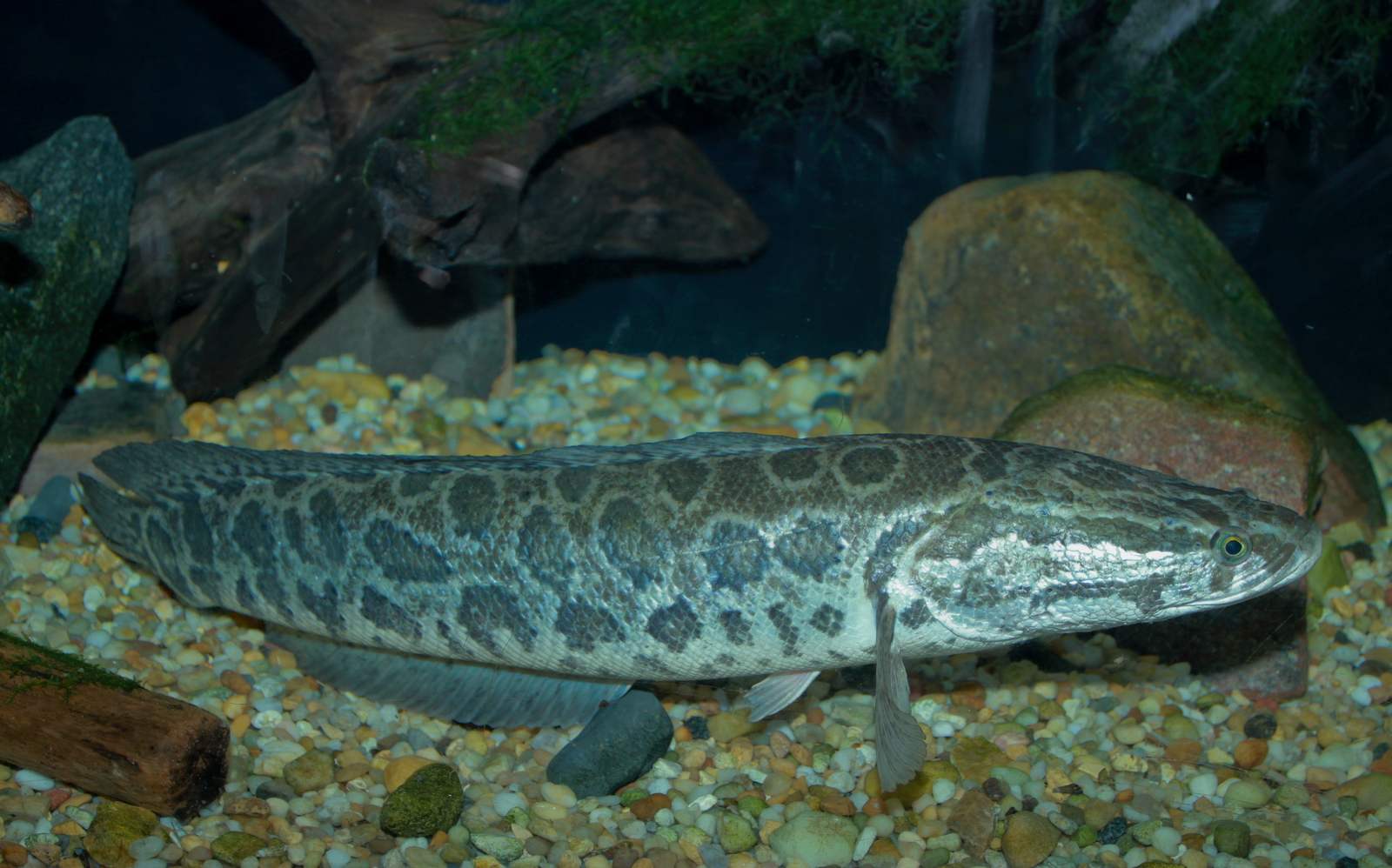
Northern snakehead (Chesapeake channa)
No season, minimum size or creel limit, and anglers are encouraged to catch and keep them year round. It is illegal to possess a live snakehead in Maryland, punishable by a fine of up to $2,500 per fish and up to $25,000 per incident. If you plan to eat the fish, kill it immediately. Report a tagged snakehead to the U.S. Fish and Wildlife Service at 800-448-8322. · 2026 Maryland Guide to Fishing and Crabbing, checked November 1, 2026
Blue and flathead catfish limits
There is no minimum size or creel limit for blue or flathead catfish, and anglers are encouraged to keep them for food or other beneficial uses year round. Releasing a live catfish into a waterbody different from where it was caught is illegal, punishable by a fine of up to $2,500 per fish and up to $25,000 per incident. · 2026 Maryland Guide to Fishing and Crabbing, checked November 1, 2026
Reporting invasive fish
To report the illegal transport or unauthorized introduction of invasive species, contact the Natural Resources Police at 800-628-9944. DNR asks anglers to report blue catfish or flathead catfish with a picture using Maryland's Invasive Fish Tracker, and to report a tagged Chesapeake channa to the U.S. Fish and Wildlife Service at 800-448-8322. · 2026 Maryland Guide to Fishing and Crabbing, checked November 1, 2026
This is not legal advice. Rules change, so confirm with the state agency before you fish.
Maryland has one of the plainest snakehead rules in the Mid-Atlantic, and one of the strictest penalties for getting it wrong. There is no season, no size limit and no bag limit, and the state encourages anglers to keep them. What you may not do is possess one alive or move one to another water. This guide lays out the Maryland rules from the 2026 Maryland Guide to Fishing and Crabbing and DNR’s invasive-fish page, and where the fish is found. For how to catch one, see the snakehead how-to guide.
The Maryland rule in plain terms
- The state calls the fish the Chesapeake channa.
- There is no season, minimum size or creel limit, and anglers are encouraged to catch and keep them year round.
- It is illegal to possess a live Chesapeake channa. The guide says the penalty is a fine of up to $2,500 per fish and up to $25,000 per incident.
- If you want to eat the fish, you must kill it immediately.
- The same rule against moving live fish applies to blue catfish and flathead catfish: it is illegal to release a live fish into a waterbody different from where it was caught.
- If you catch a snakehead with a tag, report the tag number, location, date and time to the U.S. Fish and Wildlife Service at 800-448-8322.
- To report illegal transport or an unauthorized introduction, call the Natural Resources Police at 800-628-9944.
DNR’s invasive-fish page asks anglers to remove and kill snakehead. We do not describe how to keep a live snakehead, because that is illegal. The rules snapshot above shows each rule with the date we checked it. Bowfishing and other methods have their own rules, and we have not covered them: check DNR for the method you plan to use.
Where snakehead are found in Maryland
The 2026 guide’s state record list gives the best fixed point: the state record Chesapeake channa, 21.8 pounds, was caught in the Susquehanna River in June 2025. Our Conowingo Dam guide covers the lower Susquehanna and the safety rules for the tailrace.
The rule is statewide. Our Upper Potomac guide covers that river, including the flathead catfish problem, which carries the same rule against releasing live fish into another water. We are not publishing a full list of snakehead waters because the sources we could verify do not give one.
How anglers fish for them
Snakehead live in warm, weedy, slow water: tidal rivers, backwaters, ponds and canals, in lily pads and shallow weed mats. The standard lure is a weedless hollow-body frog walked over the vegetation, with buzzbaits and spinnerbaits as alternatives. Heavy tackle matters because the fish sits in thick cover: a 7 to 7 and a half foot medium-heavy to heavy rod and 50 to 80 pound braid are typical.
What to do with the fish
Kill it quickly and humanely. DNR asks for removal, and it discourages catch-and-release. If you plan to eat it, clean it as you would any fish.
Records, awards and selling your catch
Snakehead have their own state record division. DNR’s records page says fish in the Invasive Division, currently northern snakehead, blue catfish and flathead catfish, can be caught and kept, and that all legal recreational fishing gear is eligible, including rod and reel, bow and spear. The state record Chesapeake channa weighed 21.8 pounds and was caught in the Susquehanna River on June 7, 2025. The state records for the other invasive catfish are 84.0 pounds for a blue catfish (Potomac River, 2012) and 57.0 pounds for a flathead (Susquehanna River, 2020).
FishMaryland, DNR’s angler recognition program, includes an Invasive Species Award for anglers who report their harvest of blue catfish, northern snakehead or flathead catfish. The fish must be kept or harvested to qualify.
The guide also notes that there may be licenses that let anglers sell Chesapeake channa, blue catfish or flathead catfish they catch, using hook and line or archery equipment for channa. For details, contact DNR Licensing and Registration Service at 410-260-3220.
If you catch a snakehead outside the usual waters
DNR relies on anglers to report where invasive fish turn up. Report illegal transport or an unauthorized introduction to the Natural Resources Police at 800-628-9944, and report catfish with a photo through Maryland’s Invasive Fish Tracker.
Eating the fish
We could not read Maryland’s consumption advisory tables, so we are not publishing advisory figures. Check the Maryland Department of the Environment’s advisory list before you eat any fish you catch.
License
You need a Maryland non-tidal license on freshwater and a tidal license or registration on tidal water. See the Maryland rules guide.
New to this fish? Read How to Catch Northern Snakehead: Gear, Bait and Technique.
More fishing guides for Maryland
Frequently asked questions
Is there a limit on snakehead in Maryland? +
No. There is no season, minimum size or creel limit, and DNR encourages anglers to catch and keep them. Possessing a live one is illegal.
Who do I call about a tagged snakehead? +
The Maryland guide says to report the tag number, location, date and time to the U.S. Fish and Wildlife Service at 800-448-8322.
Sources
- 2026 Maryland Guide to Fishing and Crabbing (PDF) (accessed November 1, 2026)
- Maryland DNR invasive fish (accessed November 1, 2026)