
How to Catch Northern Snakehead: Gear, Bait and Technique
Last verified:
By BCRods
Quick facts
- Where
- Weedy tidal rivers, backwaters, ponds and canals
- Best seasons
- Late spring through early fall
- Rod
- 7 ft to 7 ft 6 in, medium-heavy to heavy
- Line
- 50 to 80 lb braid
Northern snakehead, called the Chesapeake channa in Maryland, are an invasive, air-breathing predator that hits a frog with real violence. Anglers here are not just allowed to remove them; wildlife agencies ask for it. This guide covers how to recognize the fish, where to find it, the heavy gear that works and what to do after you land one. Rules differ by state, so always check your state’s current guide.
Know the fish
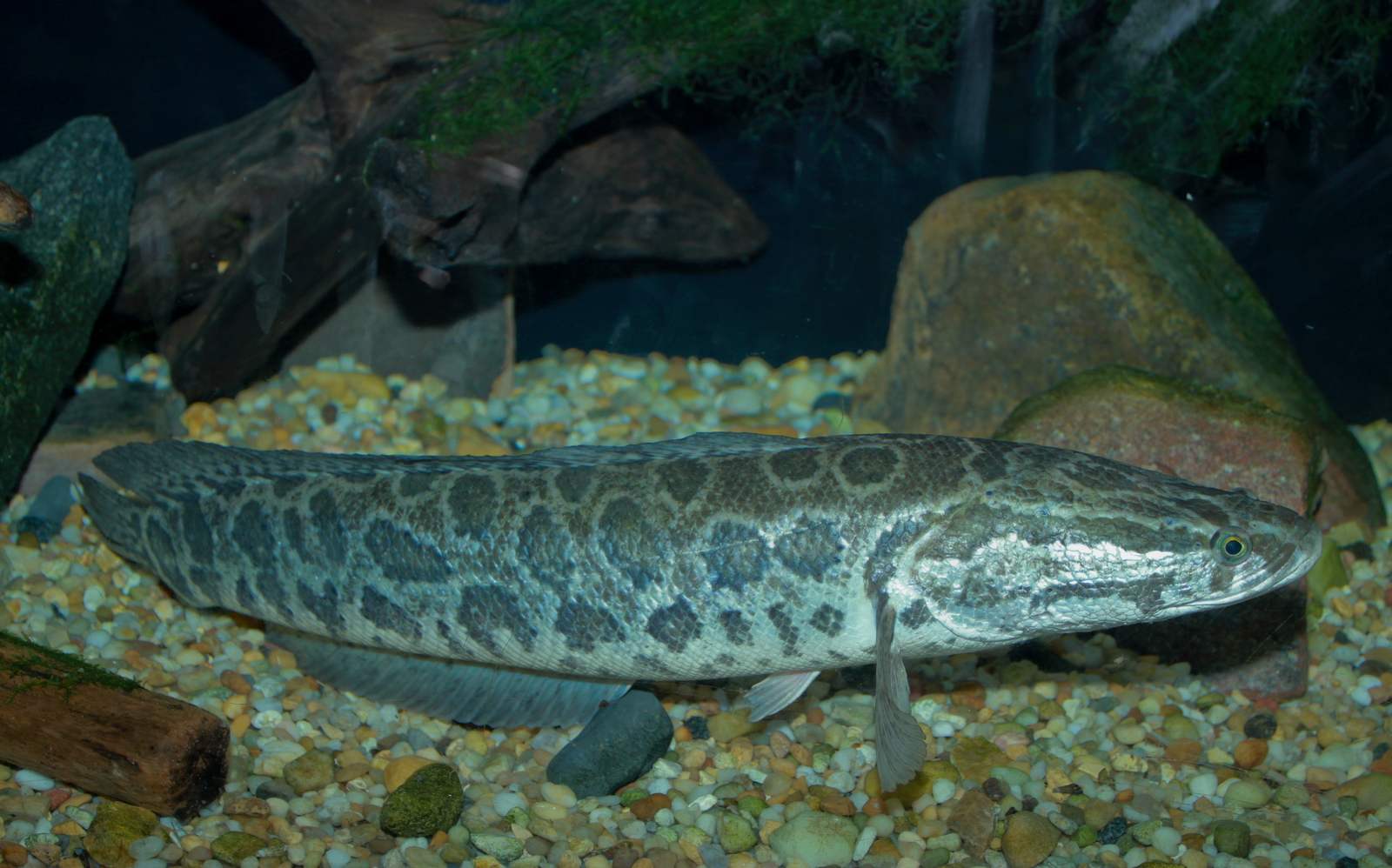
A snakehead is long and snake-like, with a protruding lower jaw, sharp teeth, a long single dorsal fin and a long anal fin made of soft rays. Its body has dark irregular blotches and a squared-off tail. Most reach about 3 feet. It can breathe air, and it can survive a long time out of water if kept moist, which is one reason it is dangerous to move one alive.
What they do
Snakehead are ambush predators. They guard nests and young aggressively and use their air-breathing ability to survive in low-oxygen water. They thrive in warm, slow, weedy water. Maryland’s record is a 21.8 pound fish taken by bowfishing below Conowingo Dam on June 7, 2025.
Where to look
Look in tidal rivers, weedy backwaters, ponds and canals. The fish prefer dense vegetation: lily pads, mats, shallow weeds and wood. They sit near the surface and in shallow vegetation, gather on weedy shorelines on sunny days and are most active from late spring through early fall.
Tackle that fits
Rod. A 7-foot to 7-foot-6 medium-heavy to heavy fast rod suits frog fishing. You need power to winch a fish out of vegetation, a sensitive tip for pitching frogs and a durable reel seat.
Reel and line. A baitcaster with a high retrieve ratio, around 7:1, or a strong 4000 to 5000 spinning reel. Braid in the 50 to 80 pound range is typical.
Hooks. Weedless hooks, double-hook frogs and heavy-duty hooks. These are typical setups, not requirements.
Baits and lures
Weedless hollow-body frogs, buzzbaits, spinnerbaits and topwater poppers are the standard lures. Black or natural frog colors work well. Live frogs or minnows hooked through the lips can work near weeds, but check your state’s bait rules first.
Three techniques
Frog over mats. Cast beyond a hole in the vegetation and walk the frog across the mat. Pause at openings. When a fish hits, wait a beat and then set the hook hard.
Buzzbait. Retrieve along weed edges at a steady speed.
Pitching soft plastics. Pitch into holes and pockets and let the bait sink.
Seasons and conditions
Snakehead are shallow in spring and in their summer peak. Fall action stays strong until the water gets cold, and winter slows the bite, though some fish are still caught. Warm, sunny, calm days over weeds are the best bet. In tidal rivers, fish moving water.
Shore and boat
Weedy banks work from shore, and kayaks are excellent in shallow backwaters. Snakehead have sharp teeth, so do not handle them by the mouth.
Common mistakes
- Setting the hook too early on a frog strike.
- Using light line around heavy cover.
If you are not getting bites, slow down, change frog size, fish deeper holes and pause longer.
What to do with your catch
Maryland asks anglers to remove and kill northern snakehead and discourages catch-and-release. Moving a live snakehead to another water is illegal, and you should report tagged fish through the state’s reporting channels. We do not describe how to keep a snakehead alive, because possessing one alive is illegal in Maryland. Dispatch the fish quickly and humanely, and check your state’s rules about keeping and transporting fish.
Snakehead in Maryland
The specific Maryland rules, including the fines, are in the Maryland rules guide.
In Virginia
Virginia has no daily or length limit for snakehead, but DWR asks you to kill any you keep immediately and to report it, and it is illegal to move a live one. See the Virginia rules guide.
Fishing for it by state
- Northern Snakehead Fishing in Maryland (Maryland)
Frequently asked questions
What lure works best for snakehead? +
Weedless hollow-body frogs walked over weed mats are the standard, with buzzbaits, spinnerbaits and topwater poppers as alternatives.
Should I release a snakehead? +
Maryland asks anglers to kill northern snakehead and discourages release. Moving a live one to another water is illegal.
Sources
- Maryland DNR: snakehead (accessed October 24, 2026)
- Maryland DNR: invasive fish (accessed October 24, 2026)