
Red Clay Creek Fly-Only Water at Auburn Valley
Last verified:
By BCRods
Quick facts
- Water
- Stocked trout stream with a short fly-only reach
- Stocked reach
- Dam below the state line, about 1.4 miles to the Auburn Valley State Park boundary
- Fly-only water
- Downstream side of Yorklyn Road, about 0.4 miles downstream
- Gear
- Fly rod and artificial flies on one single-pointed hook, maximum two flies
- Rod fit
- 4 to 5 weight fly rod
Rules snapshot
Stocked trout stream reaches
White Clay Creek: Pennsylvania line to the downstream side of Paper Mill Road. Red Clay Creek: from the dam just below the state line about 1.4 miles downstream to the Auburn Valley State Park boundary. Wilson Run: Route 72 through Brandywine Creek State Park. Beaver Run: Pennsylvania line to the Brandywine River. Christina Creek: Maryland line through Rittenhouse Park. Mill Creek: Brackenville Road to Route 7. · DNREC freshwater trout, checked November 1, 2026
Fly-only (restricted) trout water
White Clay Creek from a point 25 yards above Thompson Bridge at Chambers Rock Road to the Pennsylvania state line. Red Clay Creek from the downstream side of Yorklyn Road about 0.4 miles downstream to the Auburn Valley State Park boundary. Only artificial flies on one single-pointed hook and a fly rod may be used, with no more than two flies on the line. Spinners, spoons, plugs, other lures and natural bait are prohibited. · DNREC freshwater trout, checked November 1, 2026
Delaware fishing license fees
Resident (ages 16 to 64): $8.50 a year. Non-resident (age 16 and over): $20.00 a year, or $12.50 for seven consecutive days. One license covers both fresh and tidal waters and is good for the calendar year. · DNREC license fees, checked November 1, 2026
Who does not need a fishing license
Delaware residents 65 and older (with proof of age and residency) and anyone under 16 are exempt from the license. Anglers 16 and older need a free FIN number, and exempt anglers may need to apply for one separately. · DNREC exemptions, checked November 1, 2026
Trout stamp fees
Resident ages 16 to 64: $4.20. Resident young angler (ages 12 to 15): $2.10. Non-resident (age 12 and over): $6.20. Delaware residents 65 and older are exempt from the trout stamp. · DNREC license fees, checked November 1, 2026
When a trout stamp is required
On designated trout streams, from the first Saturday in April through June 30 and from the first Saturday in October through November 30. · DNREC freshwater trout, checked November 1, 2026
2027 trout season and stocking dates
Dates not yet announced. Check DNREC. DNREC freshwater trout
Trout daily limit and size
Six trout a day, or four a day in fly-fishing streams. There is no minimum size. Once you have your limit, you may not keep fishing designated trout streams that day. · DNREC freshwater trout, checked November 1, 2026
Trout fishing hours
Legal fishing begins half an hour before sunrise and ends half an hour after sunset. On youth opening day, fishing begins at 7 a.m. · DNREC freshwater trout, checked November 1, 2026
Pre-season closure
No fishing is allowed in any designated trout stream in the two weeks before spring opening day. · DNREC freshwater trout, checked November 1, 2026
Fish consumption advisory: Red Clay Creek
All finfish from the creek mouth to the Pennsylvania line: 3 meals per year (8-ounce adult serving). · DNREC fish consumption advisories, checked November 1, 2026
This is not legal advice. Rules change, so confirm with the state agency before you fish.
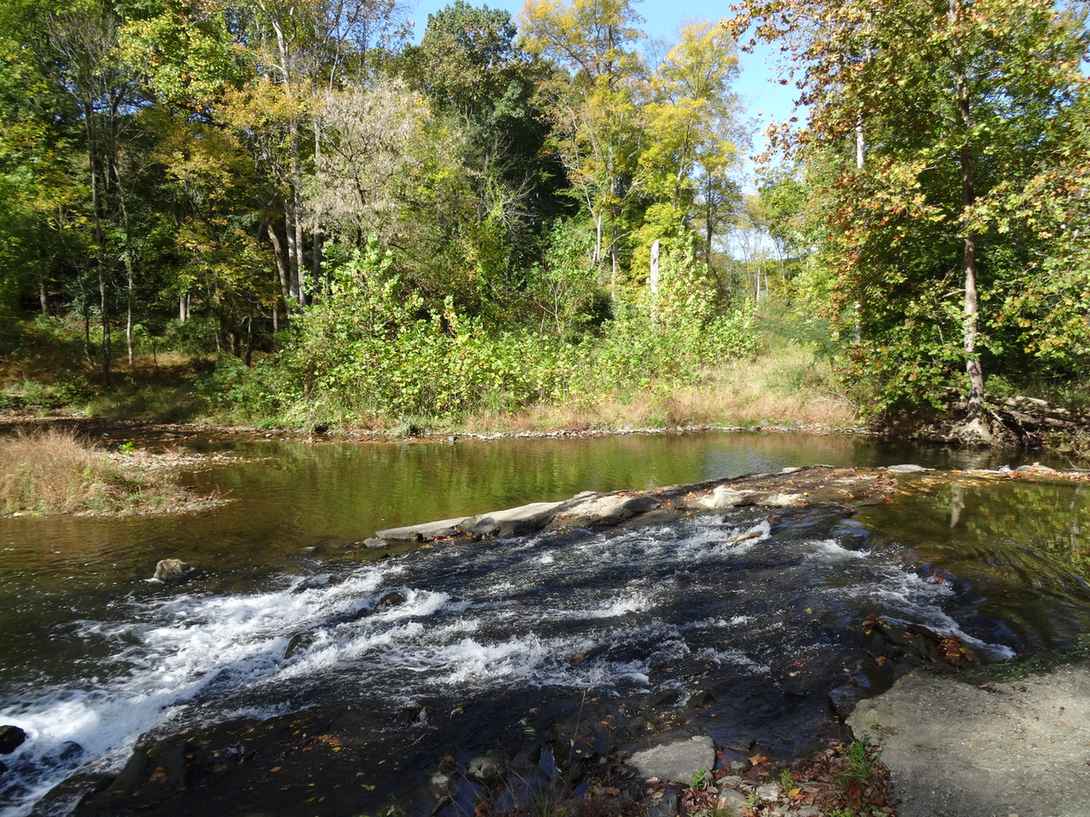
Red Clay Creek is Delaware’s second fly-only trout water, and it asks more of an angler than the open stretches of stocked streams. The restricted reach is short, the creek is small, and the rules on gear are strict. This guide explains where the fly-only water is, what the rules require, what to carry, and how to fish a small, clear creek without spooking every fish in the first pool.
Where the water is
DNREC stocks Red Clay Creek from the dam just below the Pennsylvania line about 1.4 miles downstream to the Auburn Valley State Park boundary, which sits next to Creek Road. Within that stocked reach, the fly-only section begins on the downstream side of Yorklyn Road and runs about 0.4 miles downstream, ending at the Auburn Valley State Park boundary.
DNREC publishes boundary coordinates for both ends of the fly-only reach, and the agency’s description is the one to rely on if you are unsure where you are standing. Before you rig up, confirm which side of the boundary you are on. A short walk with the creek on your left or right is not enough, and a spinning rod in the wrong place is a violation.
What fly-only means here
In the restricted water you may use only artificial flies on one single-pointed hook and a fly rod. You may have no more than two flies on the line. Spinners, spoons, plugs and other lures are prohibited, and so is natural bait. That rules out the worm and the corn kernel as well as the metal lure, which surprises casual anglers who assume that only hardware is restricted.
If you have not fished with a fly rod before, Red Clay Creek is not the easiest place to learn. The better first step is the open water on another stocked stream, where you can use either gear. Our guide to White Clay Creek covers a stream that has both a fly-only reach and open water, and the Delaware trout roundup compares the options.
Rules snapshot and what changed
The summary above lists the limit, hours, pre-season closure and stamp requirements, with the date we checked each one. One point is worth repeating. Older news notices described Red Clay Creek as exempt from the two-week pre-season closure. DNREC’s current trout page states the closure for designated trout streams without listing an exemption, so plan on the closure applying here. If you want to be certain for your visit, check DNREC before you go.
Fishing hours begin half an hour before sunrise and end half an hour after sunset. A trout stamp is required during the spring and fall windows shown above. Dates for the 2027 season have not been announced yet.
Gear
A fly rod in the 4 to 5 weight range, around 8 1/2 to 9 feet, is a typical choice for small Mid-Atlantic trout creeks. Many anglers pair it with a floating line and a leader that tapers to a fine tippet, because the water can be low and clear and fish get wary quickly. Small nymphs fished under an indicator or on a short line, and streamers such as woolly buggers, are common starting points. These are suggestions, not requirements, and a short rod can help in places where branches hang over the water.
Since the reach is short, a careful approach matters more than the particular fly. Wear muted clothing, wade slowly and keep your shadow off the water. Barbless hooks make releasing fish easier and are kinder to the trout, although the rule here requires a single-pointed hook rather than a barbless one.
A rod built for this kind of water can make a difference: a lighter tip for fine tippets, a grip that suits a long day of short casts, and guides sized to keep weight down. If you tell us where you fish and what you target, we can build the rod around it.
Fishing a short, clear creek
Approach every pool from downstream so that you cast upstream and the fish are facing away from you. Begin at the tail of a pool and work your way up, covering the near water first so you do not wade through fish. Look for seams where fast and slow water meet, the heads of pools where food collects, and undercut banks and boulders that break the current.
Stocked trout can be less wary than wild fish at first but settle into the same habits quickly. If a pool has been disturbed by a heavy-footed angler ahead of you, move on and come back later. Rest a pool for a few minutes after a hooked fish splashes through it.
Seasons and timing
Spring is the main season, with most of the stocking shortly before and during the spring window, and a fall season runs from the first Saturday in October. DNREC publishes its stocking schedule each year, and the schedule can change, so check it before you plan around a particular date. Cool mornings and overcast days are the most comfortable, and stream temperatures climb in summer.
Safety, access and etiquette
Much of the trout water in this part of Delaware is bordered by private property. Stay on public ground, respect posted signs and park only where it is clearly allowed. Rocks along the stream are slippery, and cold water in spring and fall can chill you quickly, so wear boots with good traction and carry a wading staff if you are unsure of the footing. Give other anglers space, and leave nothing behind.
Eating the fish
DNREC’s consumption advisory lists Red Clay Creek at 3 meals per year for all finfish, based on an 8-ounce adult serving. That is a stricter advisory than the one for most other designated trout waters. Women who are or may become pregnant or breastfeeding and children should follow the state’s guidance. The rules snapshot above carries the exact wording and the date we checked it.
Nearby waters
Fishing Brandywine Creek State Park and Wilson Run
Smallmouth, panfish and stocked trout at Brandywine Creek State Park and Wilson Run.
Tidbury and Newton Pond Trout Fishing
Stocked trout ponds in Kent and Sussex counties: season, stamps and access.
White Clay Creek Trout Fishing in Delaware
Stocked trout, fly-only water, stamps and season rules on White Clay Creek in Delaware.
Delaware Fishing License, Limits and Rules
More fishing guides for Delaware
Frequently asked questions
Is Red Clay Creek exempt from the pre-season closure? +
DNREC's current trout page states the two-week closure for designated trout streams and lists no exemption for Red Clay Creek. Older notices differed, so check DNREC before your visit.
Can I use bait in the fly-only section? +
No. Natural bait, spinners, spoons, plugs and other lures are prohibited in the restricted water.
Sources
- DNREC freshwater trout fishing (accessed November 1, 2026)
- DNREC license fees (accessed November 1, 2026)
- DNREC license exemptions (accessed November 1, 2026)
- DNREC fish consumption advisories (accessed November 1, 2026)
Approximate location: Auburn Valley State Park, Yorklyn, DE.