
How Cold Water Made a Trout River
Last verified:
By BCRods
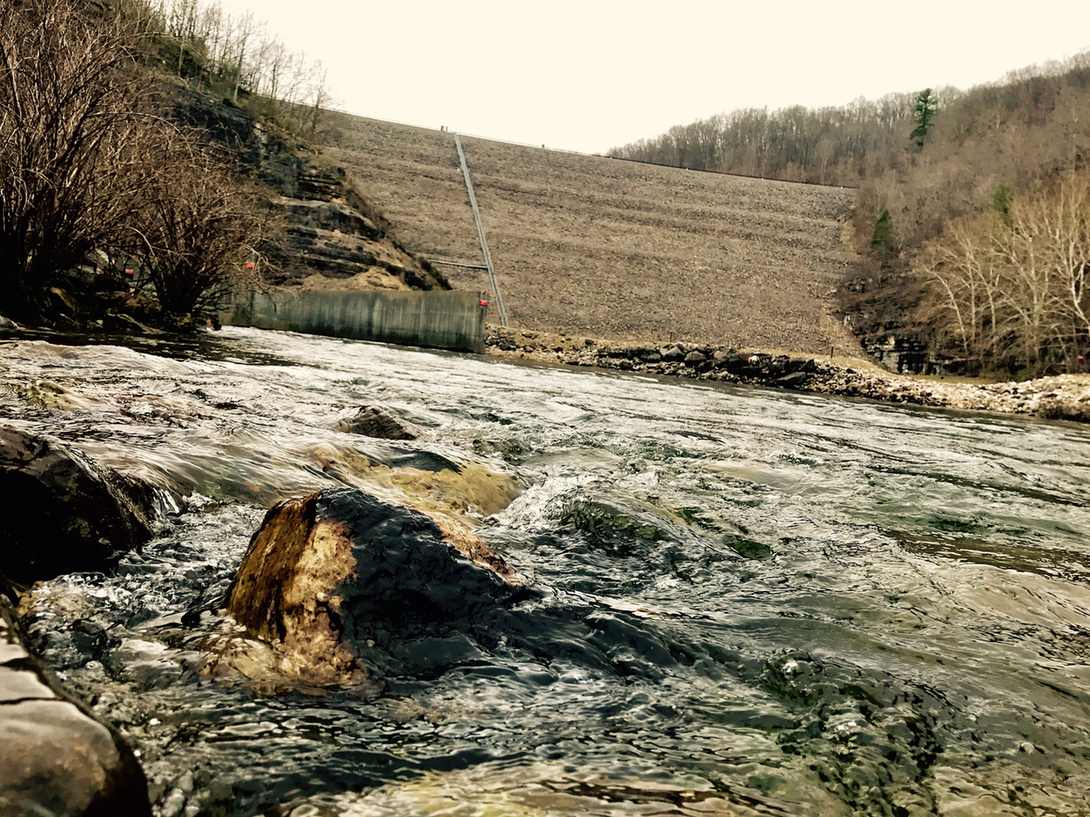
The Jackson River below Gathright Dam holds wild rainbow and brown trout that nobody stocks anymore, in a state where warm summers normally limit trout to high mountain streams. That is unusual enough that Virginia’s Department of Wildlife Resources (DWR) calls it the premier wild trout tailwater in the state. The reason is an engineering choice made in 1989: take the water for the river from the cold bottom of the lake instead of the warm top. This is the story of how it worked, drawn from DWR’s 2015 report on the fishery.
A river that was too warm
Lake Moomaw was formed in Alleghany and Bath counties in the early 1980s, and the river below Gathright Dam became a tailwater in 1982. The Army Corps of Engineers controls the flow to protect water quality, manage floods and support recreation. DWR’s report says that from 1982 to 1989 only surface water was released from the lake into the Jackson. In summer that water was too warm for a trout population that could reproduce. Anglers caught smallmouth bass, rock bass, redbreast sunfish, chain pickerel and stocked trout during those seven years.
Negotiations during construction had produced two agreements: five public access areas along the river, and a commitment to develop the tailwater into a self-sustaining trout fishery. The dam was built with an intake tower of ten multi-level portals so that managers could choose which layer of the lake the water came from.
Pulling water from the cold layer
In October 1989 the managers began releasing water from the cold, oxygenated layer of the lake, and trout management in the tailwater began. The first truckload of trout was stocked on an ice-cold day that December. DWR’s report says about 25,000 brown trout and 25,000 rainbow trout advanced fingerlings were stocked each year until 1997, and the stocking used half-wild browns and Kamloops rainbows mixed with other strains to add genetic variety.
Water was taken only from the cold layer until June 1993. Then managers started blending it from the warm, oxygenated surface and the cold, oxygen-poor depths. That kept the lake’s cold layer intact deeper into summer, which preserved habitat for trout in the lake as well. Today, water just below the dam usually runs between 58 and 60 degrees Fahrenheit.
Wild fish take over
After eight years of stocking, enough mature trout remained in the river for natural reproduction to begin. The report says hatchery stocking ended in the mid-1990s once the wild population became self-sustaining, and that today’s rainbow and brown populations came from that stocking campaign. Rainbow numbers rose in the upper river and plateaued around 2005, and brown trout densities have steadily increased through the tailwater over 15 years or more. The fishery is dominated by rainbows under 12 inches, browns make up most of the larger fish, and browns over 18 inches have become more common.
What it means for anglers
The river is managed with a split rule meant to build size: rainbows 12 to 16 inches and browns under 20 inches must be released, and the limit is four trout with only one a brown over 20 inches. The wild trout still depend on spawning success and on what the dam does. The Corps can increase releases for flood control at any time, and DWR’s report notes that high flows during spawning can hurt the year’s hatch. In June 2014 a Virginia Department of Environmental Quality investigation estimated about 89 trout died along part of the river, and could not determine the cause. DWR said the changes it measured were within the natural range for wild trout.
Today, the rules, access list and cautions about private banks are in the Jackson River and Lake Moomaw guide, and the trout license window is in the Virginia trout roundup. More stories from Virginia waters are in the Dock Tales index.
The water behind the story
More fishing guides for Virginia
Sources
- Jackson River Tailwater Report 2015 (Virginia DWR) (accessed November 1, 2026)
- Virginia DWR: Jackson River (accessed November 1, 2026)
- Virginia DWR: Lake Moomaw (accessed November 1, 2026)