
How to Catch Walleye: Gear, Bait and Technique
Last verified:
By BCRods
Quick facts
- Where
- Rock, gravel, ledges, tailraces and current seams
- Best seasons
- Early spring, fall and winter; summer at night
- Rod
- 6 ft 6 in to 7 ft 6 in, medium to medium-light, fast spinning
- Line
- 6 to 12 lb mono, or 8 to 14 lb braid with fluorocarbon leader
Walleye are low-light predators with glassy eyes that reflect light, and they reward anglers who fish structure at dawn, dusk and night. They are a fish for patient people with sensitive gear. This guide covers how to recognize them, where they hold, the tackle and baits that work, three techniques and how to handle them. Walleye size, season and slot rules differ by state and by water, so always check your state’s current rules before you keep one.
Know the fish
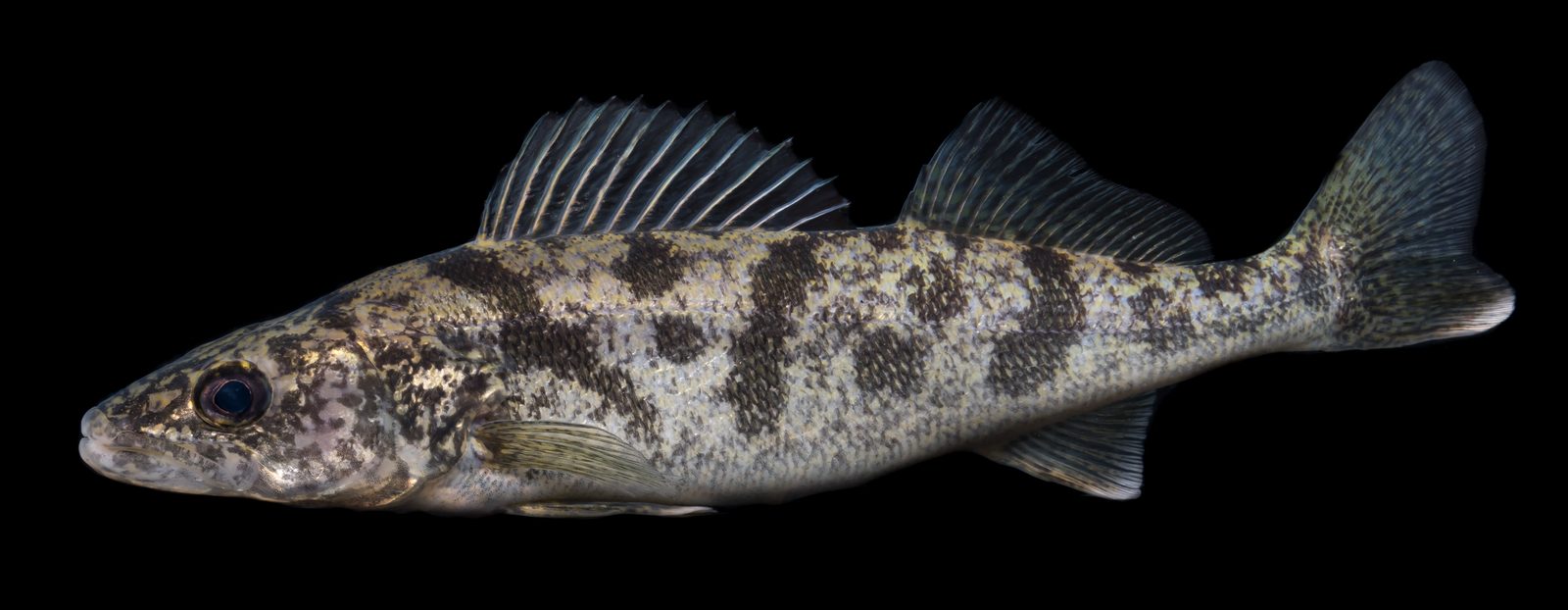
Walleye are olive-gold with a dark blotch at the rear of the first dorsal fin, a white tip on the lower lobe of the tail, large glassy eyes and strong teeth. In the Mid-Atlantic they are usually over 20 inches, and larger fish run past 30. They live about ten years and reach legal size at three to five. They eat mostly fish, with crayfish, amphibians and insects as a side dish, and their light-sensitive eyes mean they hide near cover on bright days and feed as the light fades. They spawn in late winter at 40 to 50 degrees over clean rocky bottom. Many East Coast walleye fisheries are stocked, and managers track them with surveys and tagging.
Where to look
Walleye hold on hard bottom: gravel, rock, boulders and ledges. Look at dam tailraces, points, humps, rock ledges and the edges of weed beds, and at current seams in big rivers. They like cooler, larger waters and are most comfortable between about 55 and 70 degrees. At night they move onto shallows of 4 to 10 feet to feed, while by day or in clear water they sit in 10 to 30 feet.
Tackle that fits
Rod. A 6-foot-6 to 7-foot-6 medium or medium-light fast spinning rod is the usual choice. A sensitive, fast tip lets you feel a jig tick bottom and control it, while a moderate butt forgives soft takes. A longer rod helps with trolling and with managing line in current, and a light blank keeps you fresh through a long night.
Reel and line. A 2500 to 4000 spinning reel with a smooth drag is typical, spooled with 6 to 12 pound line or with 8 to 14 pound braid and an 8 to 12 pound fluorocarbon leader. A line-counter reel helps if you troll.
Terminal tackle. Jig hooks in the 3/0 to 4 range, slip-sinker rigs, and crawler harnesses on #4 to #6 hooks. These are typical setups and not requirements.
Baits and lures
Minnows, leeches and nightcrawlers on a jig head or slip rig, fished on or near bottom, are the standard live baits. Minnows work in cold water, and crawlers do better when it warms. Hook a minnow through the lips and drag or jig it slowly.
For lures, jigs, crankbaits, twisters and spinners from 1/8 to 1 ounce are common. Choose bright greens, yellows, golds and silvers in stained water and natural shades in clear water, and go dark at night. Hop jigs along the bottom, and slow-roll crankbaits near ledges.
Three techniques
Jig and minnow. Position upcurrent of a ledge or tail-out, cast and let the jig reach bottom, then hop it with gentle lifts. Set the hook when the line ticks or goes heavy.
Casting crankbaits at night. Pick a rocky flat and cast a minnow-style crankbait. Retrieve it slowly. A walleye strike often comes as a thump, so reel down and lean into the fish.
Slow trolling a crawler harness. Use a bottom bouncer and troll at roughly 0.8 to 1.5 miles an hour along drop-offs. Planer boards help on big open water.
Seasons and conditions
Walleye are often on shallow structure after spawning in spring. In summer they are best at night or deep. Fall is a strong feeding period as river fish move to deeper pools, and winter fishing happens in deep holes or through the ice where it is safe. Dawn, dusk, a wind-ruffled surface and stable weather extend the bite. Many waters have spring closures or slot limits, so check dates before you plan a trip.
Shore and boat
From shore, work tailraces, points and riprap. From a boat, trolling and drifting cover more water. At night a boat needs proper lights, and near dams you should watch for sudden releases.
Common mistakes
- Fishing the middle of a bright day without structure.
- Setting the hook too slowly on soft takes.
If you are not getting bites, try dusk or night, find structure and slow down, switch to live bait, and check the size and slot rules before keeping a fish.
Expert tips
Use sonar to find ledges. Track light and wind, because walleye react to both. Glow and fluorescent colors can help after dark.
Handle fish with care
Wet your hands, support the belly and hold the fish horizontally. Release oversize fish carefully, because many waters protect fish in a slot.
Walleye in Maryland
Maryland’s walleye are found in Deep Creek Lake, the upper Potomac and below the Susquehanna dams. The state’s rules differ by water, so use the Maryland pages for the limits: see the Maryland rules guide.
In Virginia
Virginia walleye fishing centers on the New River and Claytor Lake, where a special slot applies. See the New River guide and the Virginia rules guide, and check the exact boundary of the slot because DWR’s web page and the printed digest differ.
In New Jersey
New Jersey makes walleye catch and release only from March 1 to April 30, then sets a size minimum and a limit. Lake Hopatcong and the Delaware River are the waters most often named. See best lakes for fishing in New Jersey and the Delaware River guide.
In Pennsylvania
Pennsylvania walleye are 15 inches with a limit of six on Lake Erie, Pymatuning and most inland waters, with an 18 inch, three-fish limit on the Delaware River. See the Lake Erie guide and our Pennsylvania lakes guide for Pymatuning, and check the current seasons.
Fishing for it by state
Frequently asked questions
When is the best time to catch walleye? +
Dawn, dusk and night, and wind-ruffled, low-light days, are the best windows. In summer, fish at night or deep.
What is the best bait for walleye? +
Minnows, leeches and nightcrawlers on a jig head or slip rig fished near bottom. Minnows work in cold water and crawlers when it warms.
Sources
- Virginia DWR: walleye (accessed October 24, 2026)