
How to Catch Largemouth Bass: Gear, Bait and Technique
Last verified:
By BCRods
Quick facts
- Where
- Ponds, mill ponds, tidal rivers and reservoirs
- Best seasons
- Spring, fall, and dawn and dusk in summer
- Typical rod
- 6.5 to 7.25 foot medium to medium-heavy, fast action
- Best lures
- Soft plastics, spinnerbaits, chatterbaits, jigs and crankbaits
Largemouth bass are the most widely fished freshwater gamefish in the country, and they live in nearly every pond and tidal river in the Mid-Atlantic. They are ambush predators that hold on cover, so finding the cover is most of the job. This guide covers where bass live, the rods, lines and lures that work, three core techniques and how to handle fish in spring. Size and bag limits, and spring catch-and-release rules, vary by water and by state, so check your state’s rules guide.
Know the fish
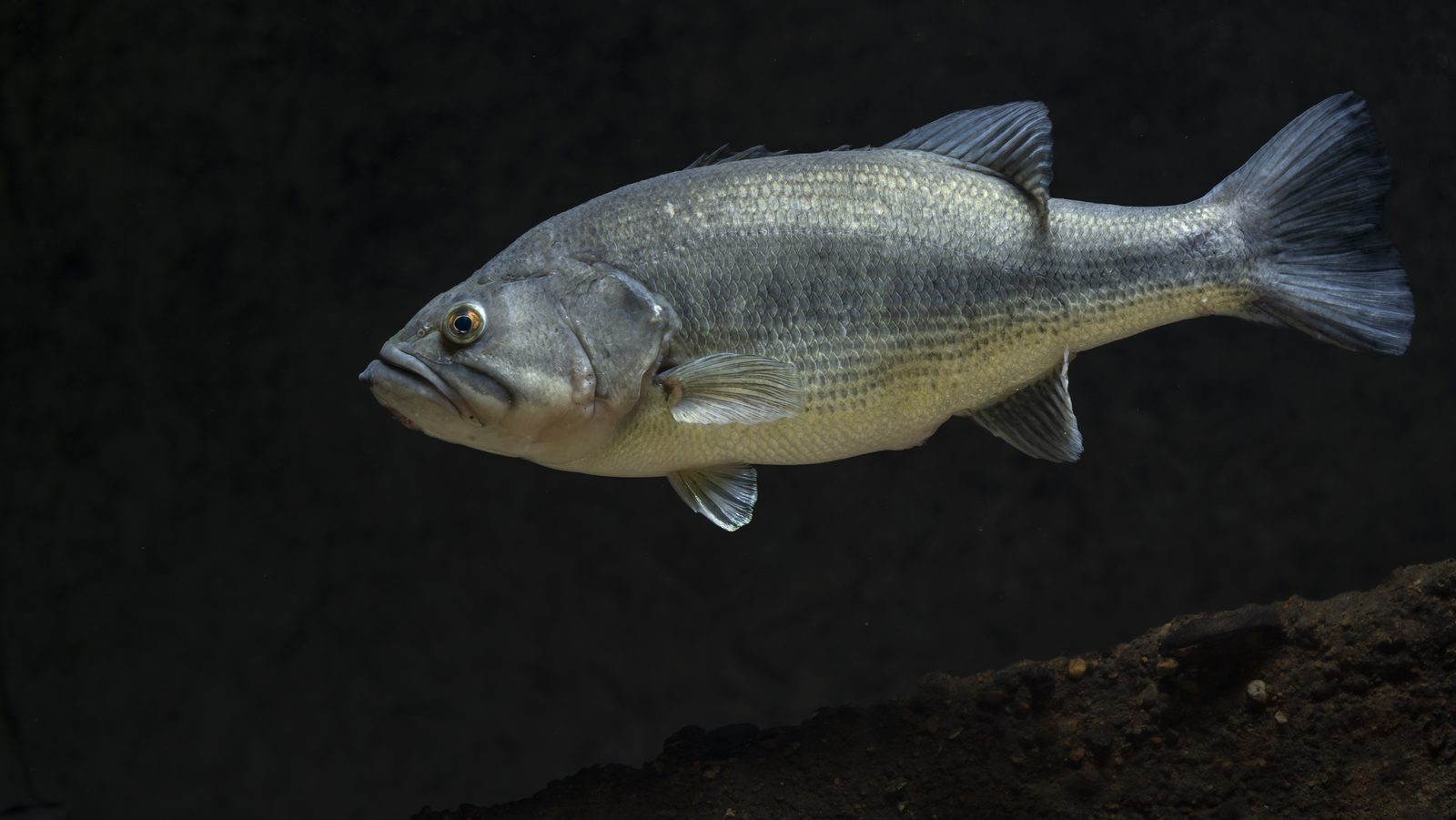
A largemouth has a green-olive back with a dark stripe along the side, and its jaw extends past the back edge of the eye. Smallmouth bass have vertical bars and a jaw that stops at the eye. Typical Mid-Atlantic fish run 1 to 4 pounds, and 8 pounds is a trophy.
Bass are opportunistic ambush predators that eat fish, amphibians, crayfish and insects, and they are most active in low light. They spawn in spring, when males build nests in sand or clay and guard the eggs and fry. Their depth use shifts through the year.
Where to look
Look for cover and edges: logs, rootwads, laydowns, vegetation, docks, lily pads, points, creek mouths, culverts and weed edges. In spring, fish may be in 1 to 6 feet of water. In summer they hold in shade or deeper water, 8 to 20 feet depending on the lake. In winter they are slow, in deeper water. Bass are best in water of about 55 to 80 degrees and slower in the cold. On tidal rivers, fish move with the tide, and the first hours of the falling tide near points and culverts can be good.
Tackle that fits
Rod. A 6.5 to 7.25 foot medium to medium-heavy rod with fast action, spinning or casting. A fast tip sets single hooks on jigs and soft plastics, and a strong butt pulls fish from cover. Match power to the technique: lighter for wacky rigs, heavier for frogs and flipping.
Reel and line. A 2500 to 4000 spinning reel for light presentations, or a baitcaster for heavy cover. Many anglers use 10 to 17 pound fluorocarbon, or 20 to 40 pound braid in vegetation. These are typical setups, not requirements.
Hooks. A 3/0 to 5/0 offset or weedless hook for soft plastics, a Texas rig with a bullet weight, or a wacky rig on a light-wire hook.
Baits and lures
Live shiners, minnows and crayfish all catch bass, and live bait shines in cold water and on pressured fish. Hook a live bait lightly through the lips or back and fish it under a float near cover.
For lures, soft plastics are the most versatile. Spinnerbaits, swim shads, chatterbaits, jigs, crankbaits, buzzbaits, plastic worms and poppers all work around cover. Black, brown, purple and green are common colors, with natural colors in clear water and dark or chartreuse in stained water. Cast to cover, retrieve at varied speeds and let the lure fall on a semi-slack line. In thick weeds, pitch and flip weedless presentations.
Three techniques
Texas-rigged soft plastic. Rig a 4 to 7 inch worm or craw on a 3/0 to 4/0 offset hook with a bullet weight. Pitch it into a laydown or weed pocket and let it sink on a semi-slack line. When the line twitches or moves, reel down and set the hook hard.
Spinnerbait or chatterbait. Cast beyond the cover and retrieve steadily so the blades turn. Bump the cover and pause at gaps.
Live shiner under a bobber. Hook a shiner behind the dorsal fin and set the float so the bait rides above the weeds. Be patient, and set the hook once the bobber disappears.
Seasons and conditions
In spring, pre-spawn fish push shallow as water warms to about 55 degrees. Many waters have spring catch-and-release rules, so release nesting fish quickly. In summer, fish dawn, dusk and shade, target deeper structure at midday and throw frogs in vegetation. Fall fish feed up and follow bait into creek channels, where crankbaits and swim jigs shine. In winter, use slow presentations on deep structure.
Overcast and windy conditions help. A cold front can shut off the bite for a day.
Common mistakes
- Fishing too fast through cover.
- Using line too light in vegetation.
- Ignoring the day’s weather.
If you are not getting bites, slow down and downsize, switch to a more natural color, fish closer to cover, change depth, try a live shiner under a float and go at dawn or dusk.
Handle fish with care
Wet your hands, support the fish and release it quickly, especially a nesting fish in spring.
Largemouth bass in Delaware
Delaware’s public ponds hold bass in every pond that DNREC surveys, and the tidal Nanticoke and Broadkill also hold them. See the ponds and lakes guide, Lums Pond and Wagamons Pond. The rules and license guide has the current limits.
Build the rod to the water
A bass rod should match the lures you throw most. Tell us where you fish and what you target, and we can build the rod around it.
In Maryland
Maryland handles tidal and non-tidal largemouth bass under different rules. We have not verified the Maryland bass limits yet, so check Maryland DNR before you keep a fish.
In Virginia
Virginia sets a statewide daily bass limit, and the big lakes and several rivers add their own length rules. See the Virginia rules guide, and the Virginia lakes roundup for Smith Mountain, Lake Anna and Buggs Island.
In New Jersey
New Jersey closes bass harvest on most waters from April 15 to June 15, and a list of Lunker Bass Lakes has a larger minimum and a lower limit. See best lakes for fishing in New Jersey and the rules guide.
In Pennsylvania
Pennsylvania’s Big Bass Program sets a 15 inch minimum and a four-fish limit on listed lakes, with a catch and release window from April 11 to June 12 in 2026. Lake Nockamixon is one of them. See our Pennsylvania lakes guide and the Pennsylvania rules guide.
Fishing for it by state
- Largemouth Bass Fishing in Delaware (Delaware)
Frequently asked questions
What is the best lure for largemouth bass? +
Soft plastics are the most versatile. Spinnerbaits, chatterbaits and jigs also catch bass around cover.
When is the best time to fish for bass? +
Early and late in the day, on overcast days and in stable weather. Bites slow after a cold front.
Sources
- Virginia DWR: Largemouth bass (accessed October 24, 2026)
- 2026 Delaware Fishing Guide (PDF) (accessed November 1, 2026)