
How to Catch Brown Trout: Gear, Bait and Technique
Last verified:
By BCRods
Quick facts
- Where
- Cold streams, deep pools, undercut banks and trophy reservoirs
- Best seasons
- Spring and fall, in low light
- Rod
- 7 to 9 ft light spinning or 4 to 5 wt fly
- Baits
- Nymphs, streamers, spinners, worms and minnows
Brown trout are the wary, deep-bodied trout that make a stream or a reservoir feel difficult and rewarding. In the East they live in cold rivers and spring creeks, where some are stocked and some are wild, and in a few deep lakes, where they grow large. This guide covers how to recognize them, where they hold, the rods, lines and baits that work, a few techniques and how to handle fish you plan to release. Rules differ by state and by stream, so always check your state’s current guide.
Know the fish
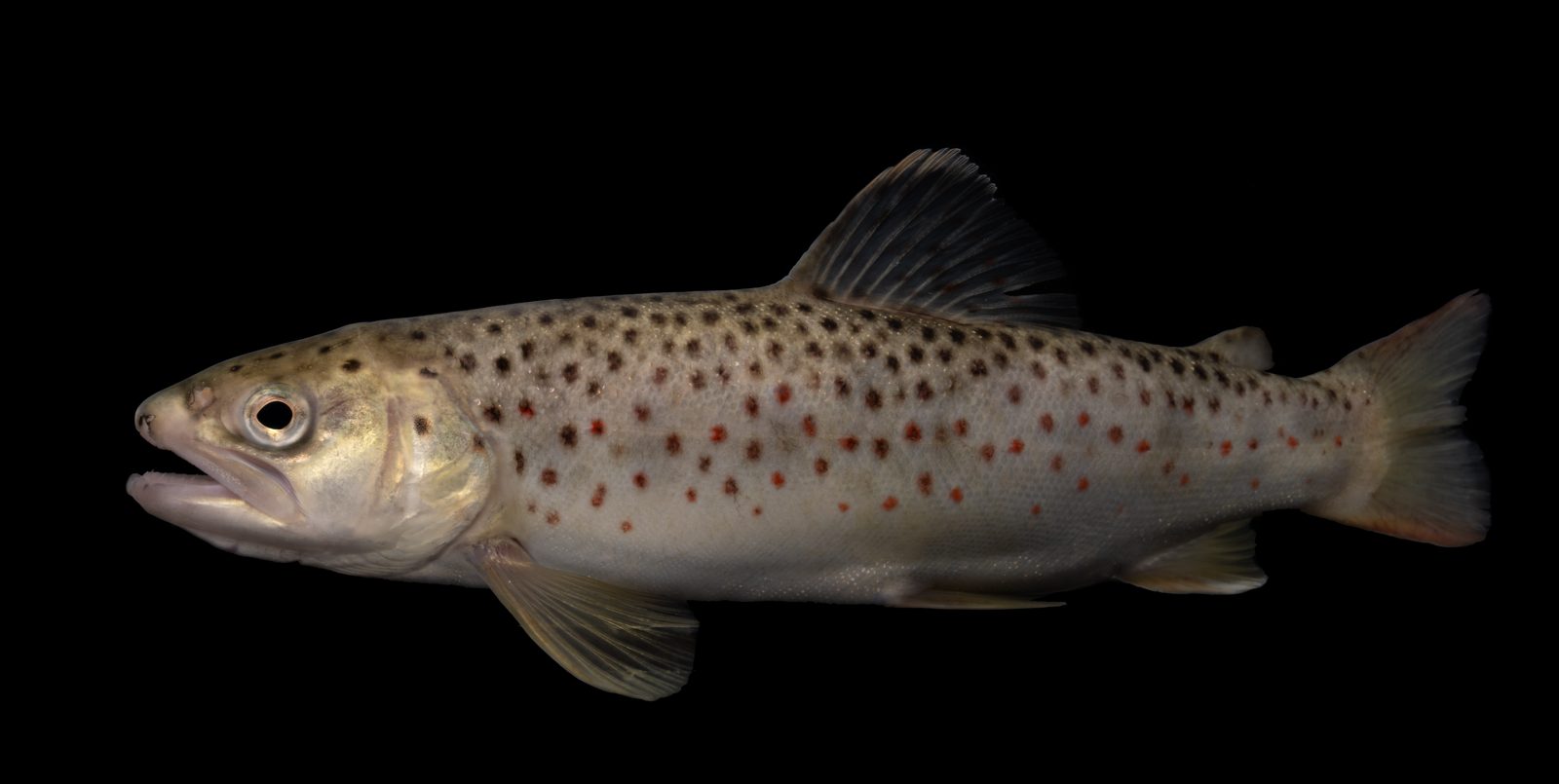
A brown trout has a golden-brown body with dark spots, often with red or orange spots ringed in pale blue, and usually few or no spots on the tail. The fins have a pale edge in some fish. A rainbow trout has a pink stripe and spots on the tail, and a brook trout has pale worm-like marks on the back. That difference matters, because some streams have separate rules for each species. New Jersey, for example, requires anglers to release any brook trout caught in its Brook Trout Conservation Zone.
What they do
Browns tend to be more wary and more nocturnal than other trout. They hold near cover such as undercut banks, logs, boulders and deep pools, and they feed on insects, minnows and crayfish. Big browns feed heavily at dawn, dusk and at night. In lakes and reservoirs they follow baitfish, so a forage fish such as shiners or alewives shapes where they feed.
Where to look
In streams, look at the edge of fast water, deep runs, the tails of pools and behind obstructions. On a reservoir like Round Valley in New Jersey, The Fisherman describes anglers working slip floats and flat lines 20 to 50 feet down for browns and rainbows, and trolling with downriggers or lead-core line. Wild fish need cold, clean water, so look for shade and groundwater.
Tackle that fits
Stream rod. A 7 to 9 foot light to medium-light spinning rod with 4 to 6 pound line, or a 4 to 5 weight fly rod, matches most small streams.
Reservoir rod. A medium spinning rod around 7 feet for shore bait, or a medium-heavy trolling rod for downriggers or lead-core line.
Leader. A fluorocarbon leader helps in clear water, since browns are wary.
These are typical setups, not requirements.
Baits and lures
Small spinners, spoons and minnow-shaped lures work in streams. Worms, minnows and bait paste are traditional, though some waters allow artificial lures and flies only. On a fly rod, nymphs and streamers cover most of the water. For big fish in a reservoir, shiners and herring are common baits where bait is allowed.
Three techniques
Drift a nymph. Cast upstream, let the fly drift with the current at the speed of the water and watch the line for a pause.
Swing a streamer. Cast across the current, let the fly swing and strip it in short pulls near cover.
Slip float or flat line. On a reservoir, set a float at a depth and fish a bait at that depth, or cast a line with a weight and let the bait sit near the bottom.
Seasons and conditions
Browns feed best in cool, stable water and low light. Overcast days and the hours around dawn and dusk are productive, and cold water often slows the bite to a pause. Some states close streams for stocking and set opening days, as New Jersey does on stocked rivers. In New Jersey the closure on stocked rivers runs from March 23 until the opening day, which was April 11 in 2026.
Shore and boat
Most stream trout are caught by wading or from the bank. In lakes, shore anglers use bait rigs and a boat lets you troll to the depth where fish hold. Check the motor limits and ramp rules of the water you plan to fish.
Common mistakes
- Walking up to a pool in plain sight.
- Using heavy line in clear water.
- Fishing the middle of the stream and skipping the banks.
- Keeping fish on a water where trout must be released.
- Wading through spawning gravel in fall.
Expert tips
Approach from downstream, keep low and fish the closest water first. Change flies or lures before you change spots. Watch for rising fish and for insects on the water.
Handle fish with care
Wet your hands, use barbless hooks where you plan to release the fish, keep fights short and keep the trout in the water while you remove the hook. Do not squeeze the fish, and let it recover facing the current. Trout stress in warm water, so stop fishing when the water warms.
Brown trout in New Jersey
New Jersey’s trout rules are layered, with a stocking closure, conservation areas and a stamp. Our New Jersey trout guide explains them, and the Round Valley guide covers the reservoir, where brown and rainbow trout are limited to two fish of 15 inches combined.
Build the rod to the water
A custom rod can be built for a small stream, a long reservoir cast or a trolling setup. Tell us where you fish and what you target.
In Pennsylvania
Pennsylvania has wild browns in limestone creeks such as Spring Creek and the Letort, where fly-only, catch-and-release sections apply, and big lake-run browns off Erie, where the state record came from in 2020. See our Pennsylvania trout guide and the Lake Erie guide. A trout permit is required on top of the license.
Frequently asked questions
What is the best time of day for brown trout? +
Dawn, dusk and night, and overcast days.
Can I keep brown trout? +
Rules vary by water. Check your state guide, since many streams have special limits.
Sources
- The Fisherman: Round Valley Reservoir hot spot (accessed November 2, 2026)
- eRegulations New Jersey: trout fishing regulations (accessed November 2, 2026)