
The New River and Its Giant Salamander
Last verified:
By BCRods
Quick facts
- Hellbender
- Up to 2 ft and 4 lb; release if hooked
- Federal status
- Proposed endangered Dec 2024; no final rule found
- Endemic fish
- Eight species in the basin
The New River is a fishing river for smallmouth bass and muskie that flows north, and it is home to a protected, rarely seen amphibian, the eastern hellbender. This is what is reported about the river and its giant salamander, with the places where the sources disagree marked.
An old river
The New River is described as one of the oldest rivers on Earth, and it may have followed its present course for at least 65 million years. A widely repeated claim that it is the second oldest river in the world is disputed by the West Virginia Geological and Economic Survey and the National Park Service, so we do not repeat it. The river basin has eight endemic fish species, including the Kanawha darter and the New River shiner.
The hellbender
The eastern hellbender is the largest aquatic salamander in the United States. It grows up to 2 feet long and can weigh up to 4 pounds. A Virginia State Parks post of July 14, 2025 says that killing a hellbender is illegal and that an angler who hooks one should release it. In December 2024 the U.S. Fish and Wildlife Service proposed listing the eastern hellbender as federally endangered. We have not found a final rule.
Why it is remarkable
It is unusual to find a protected amphibian beside a fishery for muskie and smallmouth, and most visitors will never see one.
Connection to the waterway
The river is covered in the New River guide. If a hellbender takes your bait, it is not a fish to keep or to photograph for long. Release it gently, handle it as little as possible and keep it wet.
The river today
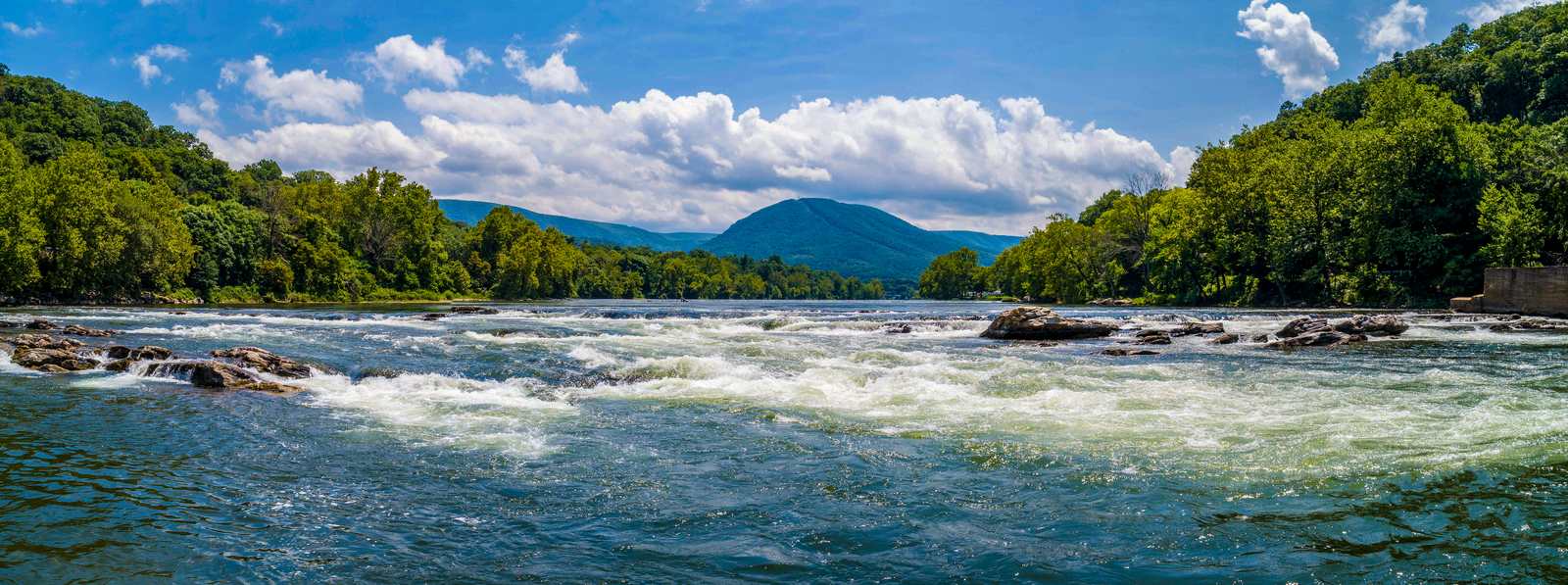
The New River enters Virginia from North Carolina near Galax, flows north through Pulaski, Montgomery and Giles counties and crosses into West Virginia past Narrows. Fries, Byllesby and Buck dams and Claytor Dam, which forms Claytor Lake, interrupt it. DWR says some anglers consider the smallmouth fishing world-class and that several state records have come from the river. It also holds muskie, walleye, rock bass, catfish, crappie and yellow perch.
Launch sites include Routes 93 and 58 at Mouth of Wilson, Bridle Creek, the Fries landing, Austinville, Jackson Ferry, Claytor Dam, Peppers Ferry, Whitethorne, Narrows and Glen Lyn. Fries, Byllesby and Buck dams require portages, and Claytor Dam has no portage path.
Rules and safety
The bass rule from Fields Dam to the West Virginia line, excluding Claytor Lake, allows no bass between 14 and 22 inches, one over 22 inches and five total per day. Muskie and walleye have their own slot rules, and the river page lists a 42-inch muskie rule that does not appear in the 2026 table, so confirm it. Dam releases can change levels quickly, so check Appalachian Power’s flow and forecast site.
What anglers can take from it
Know what a hellbender looks like before you go, since it can be mistaken for something else. Use the release guidance from the State Parks post and check the status of the federal listing. More stories from Virginia waters are in the Dock Tales index.
Sources and caveats
This tale uses Wikipedia’s article on the New River and the Virginia State Parks post “Saving the Eastern Hellbender” (July 14, 2025). The State Parks post says hellbenders live in western Virginia mountain streams and does not name the New River, so the claim that they live in the New River rests on Wikipedia alone. The age claims are qualified in the source. A federal or state wildlife source would strengthen this story.
The water behind the story
More fishing guides for Virginia
Sources
- Wikipedia: New River (Kanawha River) (accessed November 2, 2026)
- Virginia State Parks: Saving the Eastern Hellbender (July 14, 2025) (accessed November 2, 2026)