
How to Catch Landlocked Striped Bass: Gear, Bait and Technique
Last verified:
By BCRods
Quick facts
- Where
- Open water near baitfish: points, humps, creek channels and dam faces
- Best seasons
- Spring and fall at the surface; winter at warm-water areas; deep in summer
- Rod
- 7 to 8 ft medium-heavy
- Line
- 12 to 20 lb mono or 20 to 40 lb braid with a fluorocarbon leader
Landlocked striped bass are the same species as the ocean-run fish, trapped behind dams and kept going by hatchery stocking. Hybrids, a cross between a striped bass and a white bass, share their habits. Both are open-water predators that follow schools of shad, and they reward anglers who find the bait first. This guide covers how to recognize them, where they hold, the tackle and baits that work, three techniques and how to protect the fish in hot weather. Seasons, size and daily limits differ by lake and by season, so always check the current rules for the water you fish.
Know the fish
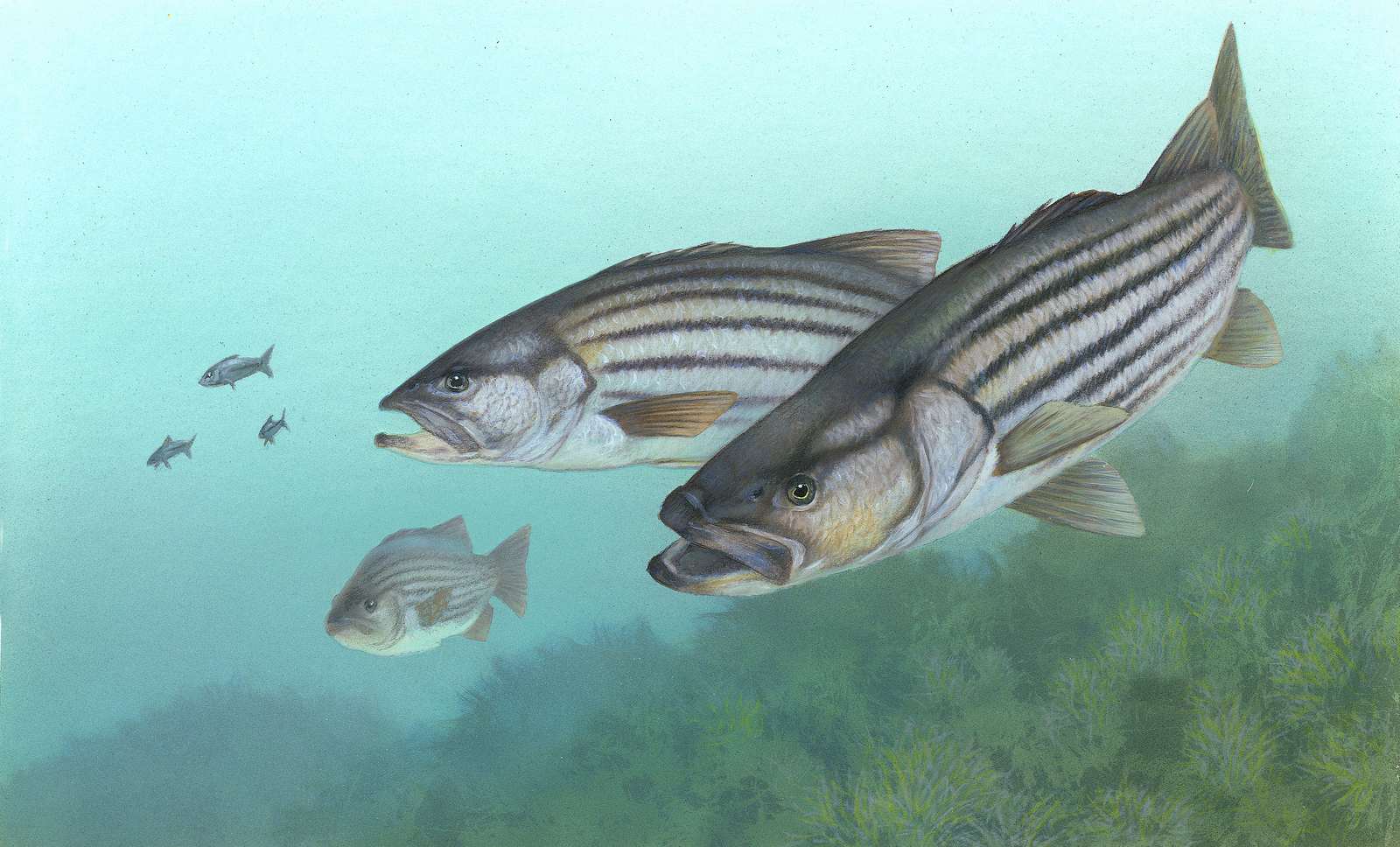
Landlocked stripers have the same unbroken horizontal stripes as coastal fish. Hybrids usually have broken stripes, a deeper body and a more compressed shape. In reservoirs they feed on gizzard or threadfin shad and, where present, landlocked alewife and blueback herring. They may run tributaries to spawn, but in most reservoirs spawning almost never succeeds, so the fishery depends on stocking. In Virginia, the state agency notes this applies to lakes such as Smith Mountain and Lake Anna.
Where to look
These fish are not bottom-oriented. They suspend near baitfish and hold around points, humps, main-lake flats, creek channels and the faces of dams. In spring and fall they feed at the surface, and in a hot summer they pull down into cooler, oxygenated water just above the thermocline. A water temperature of 50 to 70 degrees is preferred. Use sonar to find baitfish, then fish beside and below them. Moving water near dams and warm-water discharges can hold fish in winter, which is why some power-plant lakes are winter hotspots.
Tackle that fits
A 7 to 8 foot medium-heavy rod suits live bait, and a shorter casting rod works for topwater. A 4000 to 6000 size spinning reel or a baitcaster with a strong drag and room for a long run is typical. Mainline of 12 to 20 pound mono or 20 to 40 pound braid with a 15 to 25 pound fluorocarbon leader sized to the bait covers most situations. Use circle hooks from 3/0 to 6/0 for live shad. Treat these figures as a starting point, not a requirement.
A custom rod for this fish has a strong butt with a medium-fast tip to protect the leader on explosive runs, guides sized for braid, a long handle for two-handed fights and a sensitive tip for free-spooled bait.
Baits and lures
Live shad, alewife and herring are the standard baits. Free-line them behind a boat, or fish them on a downline to the depth where sonar shows fish. Use larger baits in fall and winter and smaller baits in summer. Topwater plugs, swimbaits, bucktails and spoons are the usual lures, in white or silver patterns that match shad and brighter colors in stained water. A fly rod in 9 or 10 weight with a sinking line can work near dams.
Three techniques
Free-lining live bait. Find baitfish with sonar, free-line a live shad behind the boat or from an anchored position, let the bait swim and set the hook after the run.
Casting to boils. Watch birds and surface breaks. Cast beyond the school and retrieve fast so the lure crosses the feeding fish.
Trolling. Troll swimbaits or umbrella rigs at the depth where the baitfish sit.
Seasons
In spring, fish gather near tributaries and dams. In summer they go deep into cool, oxygenated water. In fall they feed on the surface on pods of shad. In winter, warm-water areas fish well, and Virginia’s Lake Anna is known for it.
Handling and conservation
Summer heat is the biggest threat to these fish. Many landlocked stripers die after release in warm water, and Virginia’s wildlife agency recommends stopping once you have your limit rather than catching and culling fish. Support a fish horizontally, minimize time out of the water and avoid fishing in extreme heat if you plan to release. Keep fish only within the limit and size rules for your lake.
Common mistakes
Fishing at the wrong depth and fishing hot water while planning to release fish are the usual ones. If you are not getting bites, find baitfish first, move to the thermocline, try fresh live bait and fish early and late. Check the lake level, and keep fish in the water.
By state
The rules for Virginia’s lakes are in striped bass in Virginia. See also Smith Mountain Lake, Lake Anna and Buggs Island.
In Pennsylvania
Pennsylvania’s inland striped bass and hybrids are a 20 inch minimum with two a day, and the 2026 book lists no special rule for Raystown Lake, home of the 53 pound 12 ounce state record. See our Pennsylvania lakes guide.
Frequently asked questions
What is the best bait for landlocked stripers? +
Live shad, alewife or herring, free-lined or fished on a downline where sonar shows fish.
Should I release stripers in summer? +
Virginia wildlife managers advise against it at its big lakes because many released fish die; stop once you have your limit.
Sources
- Virginia DWR fishing (accessed November 1, 2026)