
Where Eagles Gather Below Conowingo Dam
Last verified:
By BCRods
Quick facts
- Count
- 150+ eagles (2023); 60 to 80 (Dec 2025)
- Where
- Below Conowingo Dam, Susquehanna River
- Counts
- Single-observer reports, not a census
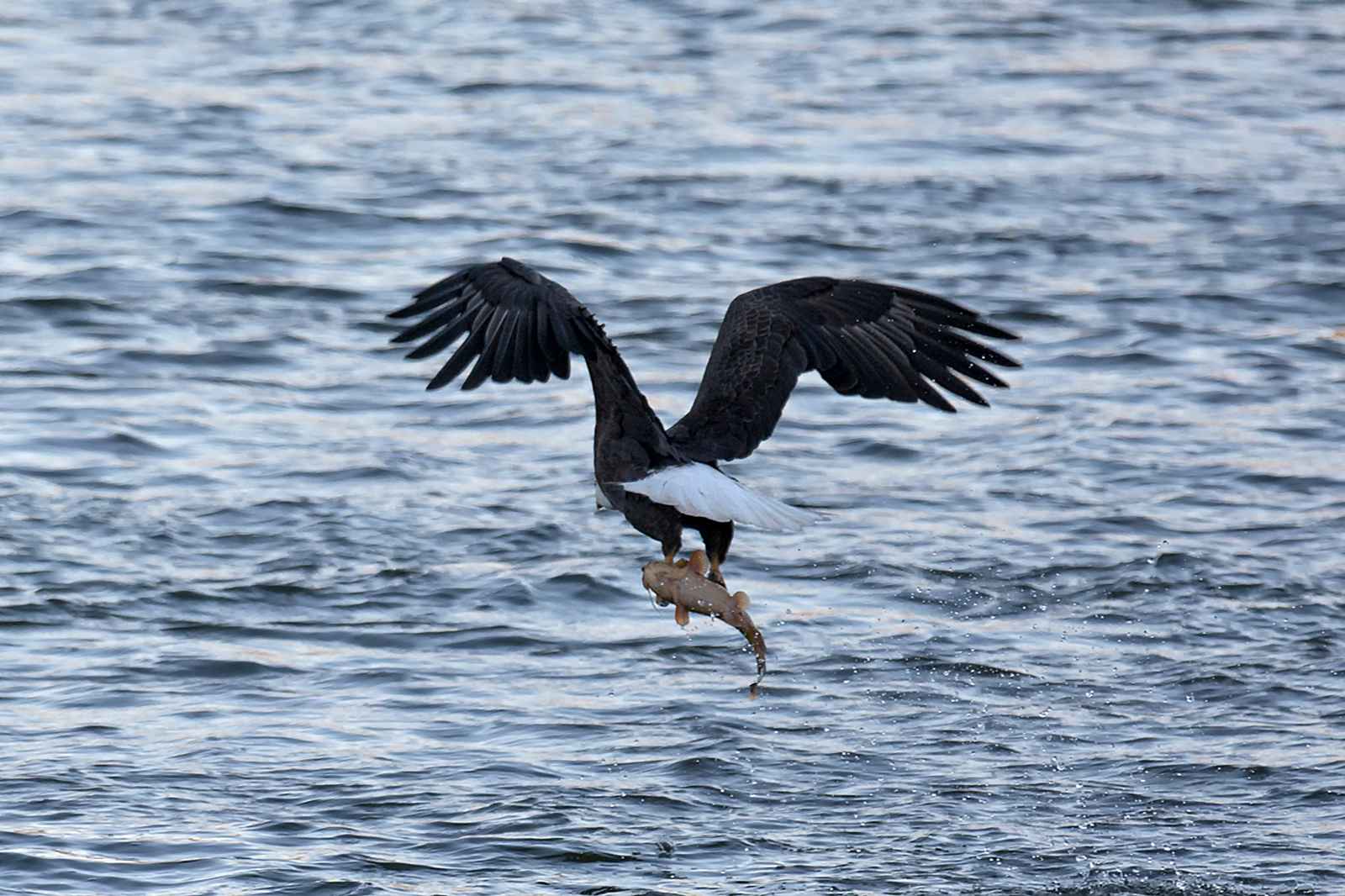
Below Conowingo Dam on the Susquehanna River, bald eagles gather in numbers that surprise first-time visitors. A writer for Chesapeake Bay Magazine counted more than 150 of them on several occasions in 2023, perched on rocks, power-line towers and trees. This is a short account of what draws them, drawn from two published accounts, and what it means for anyone fishing at the foot of the dam.
Why the eagles come
The birds are there to eat. The turbines at the dam pull fish through, and injured and stunned fish come up in the tailrace, where eagles take them. The 2023 account describes eagles hunting those hurt fish and also stealing fish from each other, and says they become alert as soon as the turbines start. An early December 2025 account from a Susquehanna wildlife blogger counted roughly 60 to 80 eagles of several age classes along the shorelines, working mostly on gizzard shad in the tailrace. Cormorants and ring-billed gulls worked the same fish.
The two accounts agree on the behavior. The numbers are individual observations by one counter on one day, not an official census, and they vary with the season and the day.
Why it is remarkable
It is one of the clearest places on the East Coast to watch eagles feed within sight of anglers. The same turbine schedule that draws the birds also changes the river: when the turbines start, a siren sounds and the water rises below the dam.
Connection to the waterway
Fisherman’s Park sits at the foot of the dam, and it is the access point covered in the Conowingo Dam guide. The tailrace is also a catfish and shad spot. The accounts describe early morning and late afternoon as the best times for both fishing and birding.
The tailrace beyond the eagles
Fisherman’s Park sits at the foot of Conowingo Dam, at 2569 Shure’s Landing Road in Darlington, and is owned by Exelon. A 2023 Chesapeake Bay Magazine article gives the park’s hours as 30 minutes before sunrise to 30 minutes after sunset, and adds that the times are often more liberal. Some trails were closed in 2023 for avian flu, so check with Exelon Recreation before you go.
The same water that feeds the eagles holds a spring run of American and hickory shad, striped bass, perch and snakeheads at certain times of year. Blue catfish are always present, with fish well over 20 pounds reported, and channel catfish and walleye are also taken near the dam. The article describes a fluorescent green spoon with an in-line weight taking hickory shad, and says snags are the main challenge.
A siren and rising water
Turbine starts affect both the birds and the people. A siren sounds and lights flash, and anglers must leave the water and move gear to higher ground. The water at the wharf can rise more than two feet. Maryland’s blue catfish and shad rules at this site were not retrieved for this page, so check DNR’s current rules.
What anglers can take from it
When the turbines start, leave the water. The siren and rising flow are the warning, and the eagles’ sudden alertness is an early sign that a release is about to begin. Give the birds room; they are feeding, and a crowd on the rocks can push them off. More stories from Maryland waters are in the Dock Tales index.
Sources and caveats
This tale uses Chesapeake Bay Magazine, “Birding, Hiking and Fishing the Conowingo Dam” (May 25, 2023), and Susquehanna Wildlife, “Eagle Time at Conowingo Dam’s Fisherman’s Park” (December 6, 2025). The counts are single-observer observations. We did not find a count from the dam owner or a state agency.
The water behind the story
More fishing guides for Maryland
Sources
- Chesapeake Bay Magazine: Birding, Hiking and Fishing the Conowingo Dam (May 25, 2023) (accessed November 2, 2026)
- Susquehanna Wildlife: Eagle Time at Conowingo Dam's Fisherman's Park (Dec 6, 2025) (accessed November 2, 2026)